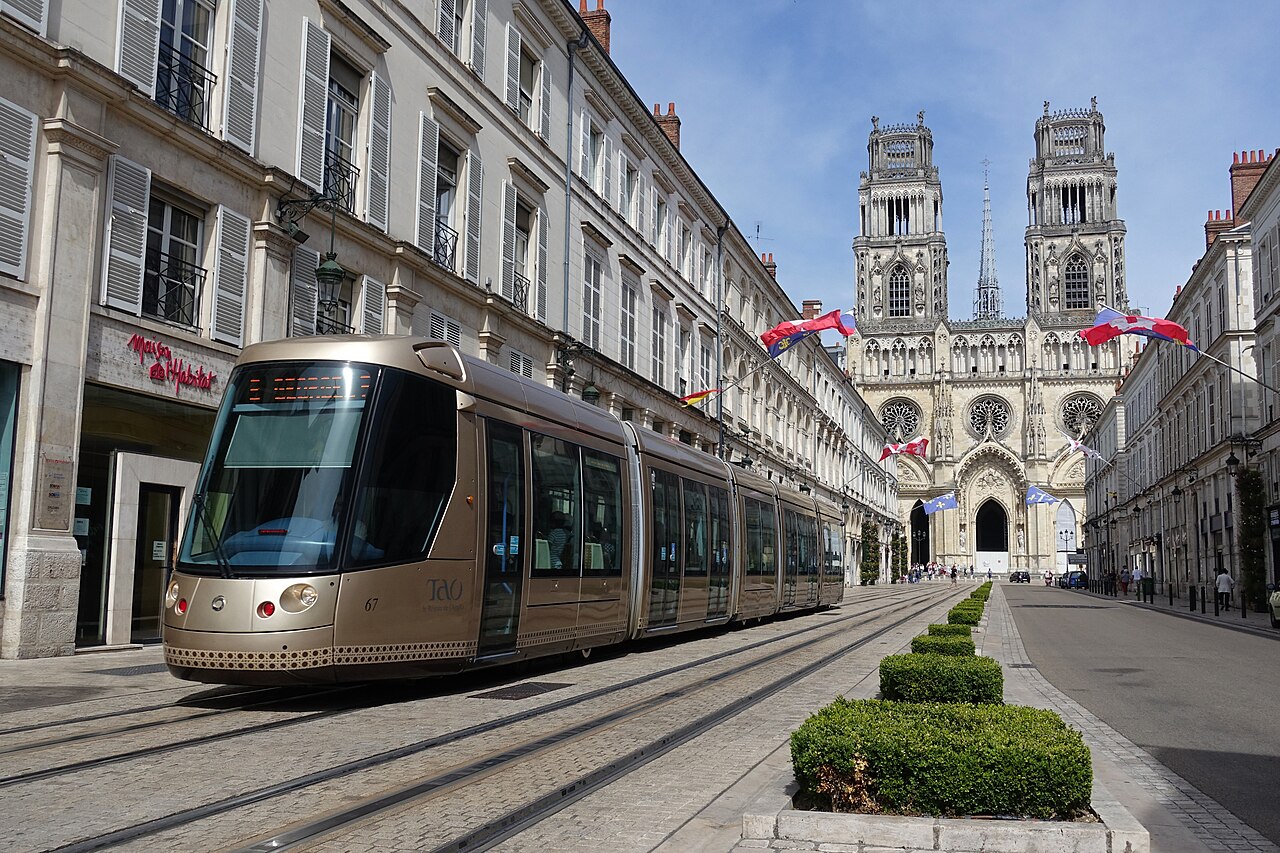
Orléans sits at the northernmost bend of the Loire, where the river makes its great arc southward before heading to the Atlantic. It is a city that wears its history openly — most visibly in the figure of Joan of Arc, who broke the English siege here in 1429 and gave Orléans its defining moment. Statues, streets, and an entire festival keep her memory very much alive.
The centrepiece of the old town is the Cathédrale Sainte-Croix, a Gothic church of considerable scale that was largely rebuilt after the Wars of Religion left it a ruin. Inside, nineteenth-century stained glass windows trace the story of Joan's campaign, and her pedestal stands on an altar carved with scenes from her life. The Maison de Jeanne d'Arc on Place du Général-de-Gaulle reconstructs the house where Joan stayed in 1429 and is engaging enough for children as well as history enthusiasts.
Beyond the Joan of Arc trail, Orléans has a well-preserved old quarter of half-timbered houses and Renaissance townhouses around the Rue de Bourgogne — the city's main artery since Roman times, when it was the road connecting the north and south of Gaul. The Musée des Beaux-Arts holds a rare collection of French pastels alongside strong French and Flemish painting. The Orléanais Historical and Archaeological Museum in the Hôtel Cabu has Gallo-Roman treasures including the famous dancing horse bronze. The riverfront has been restored in recent years, and walking along the Loire embankment in the late afternoon, with the cathedral rising above the rooftops, is one of the quieter pleasures the city offers.
Orléans makes a good base for exploring the western Loire Valley châteaux. Chambord and Blois are both within easy reach by car or on organised day tours.