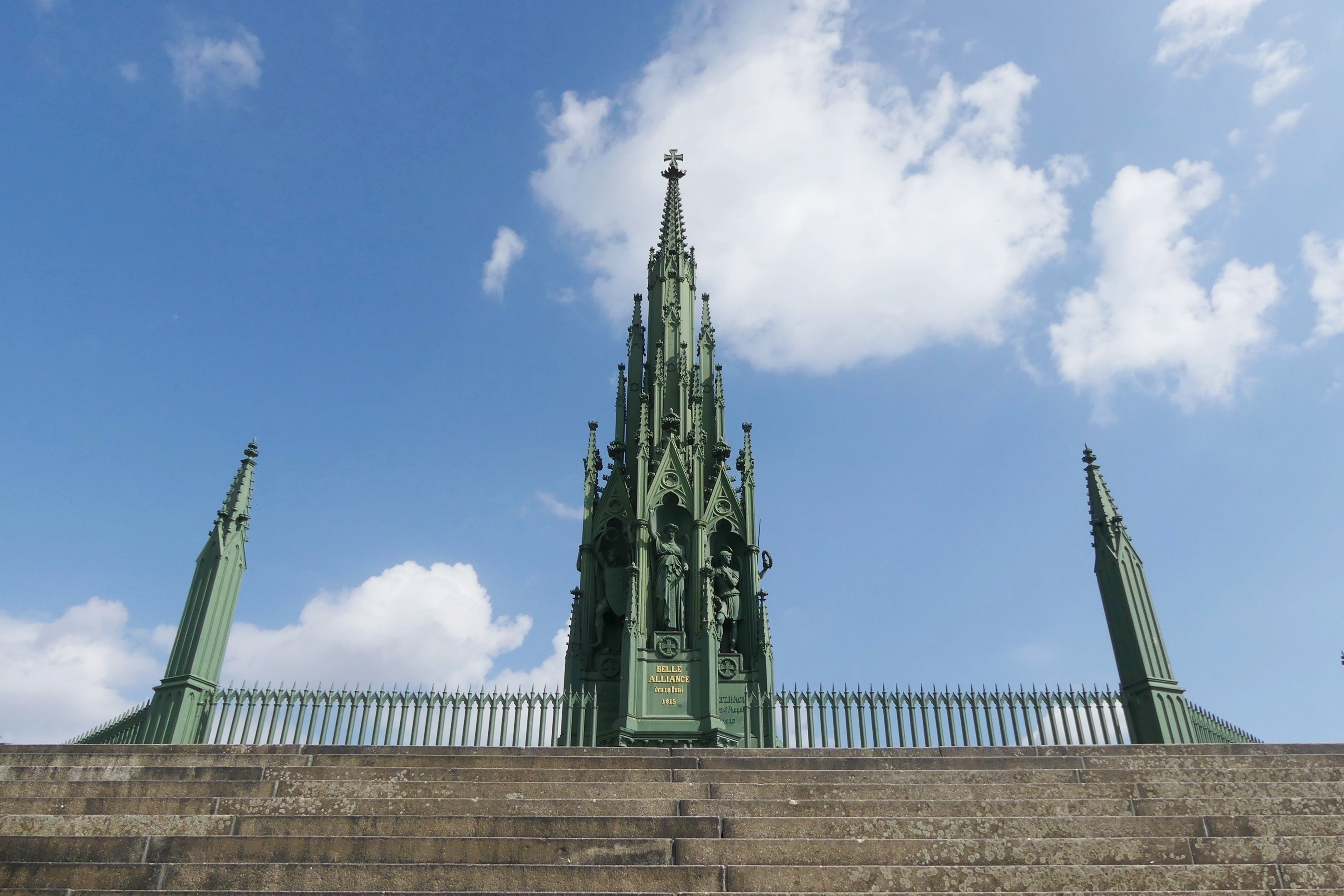
Kreuzberg is the Berlin of clichés — multicultural, scruffy, left-wing, relentlessly lived-in. Walled off on three sides during the Cold War and cheap enough to draw squatters, punks, draft-dodgers and Turkish guest-worker families, it became the counterweight to East Berlin's officialdom and West Berlin's bourgeoisie. Even with gentrification eating away at the edges, the district still carries an attitude you won't find anywhere else in the city.
The old SO36 postal code, east of Kottbusser Tor, is the rougher and more interesting half. Oranienstraße is its spine — kebab shops, vintage stores, queer bars, late-night dives, the venerable SO36 punk venue. Further south, the Landwehr Canal cuts through the neighbourhood with a ring of cafés and the huge Turkish Market on its banks every Tuesday and Friday. On May Day the whole area still turns out for what started as a riot and is now mostly a party. West Kreuzberg (SW61) is calmer: tree-lined streets, the Jewish Museum in Daniel Libeskind's zinc-clad building, the Berlinische Galerie for 20th-century Berlin art, and the monumental remains of the old Anhalter Bahnhof.
Food is Kreuzberg's other identity. This is where the döner kebab was invented, at Kottbusser Tor in the 1970s, and the neighbourhood still sets the standard. Beyond Turkish, every kind of international cooking has a foothold — some of the best is hidden in unpromising courtyard entrances around Bergmannstraße and Graefekiez.