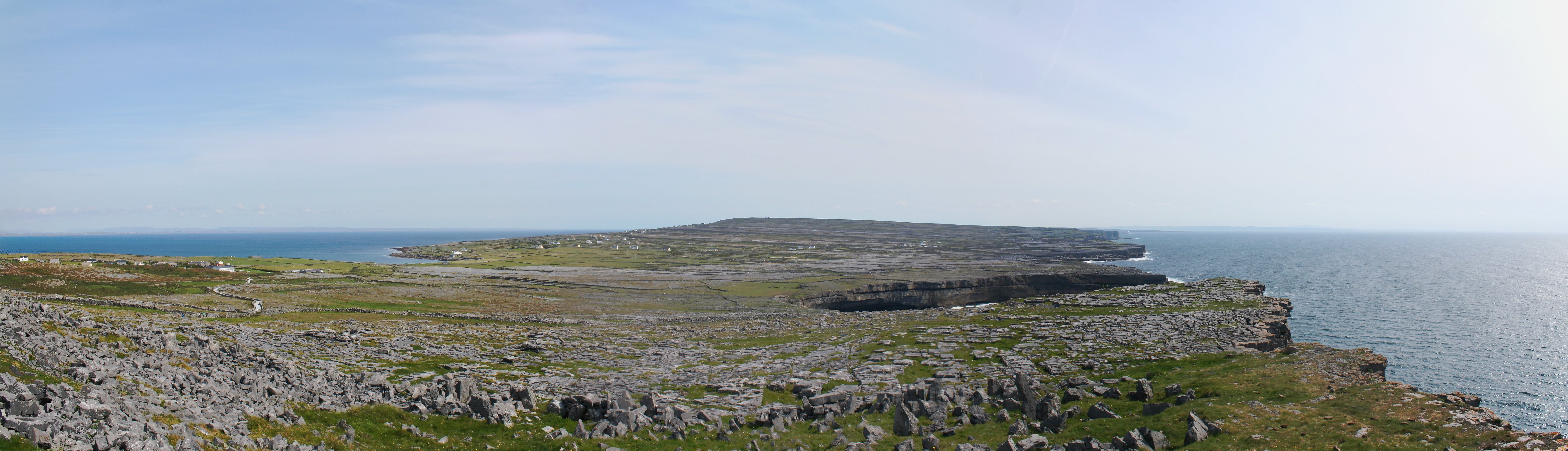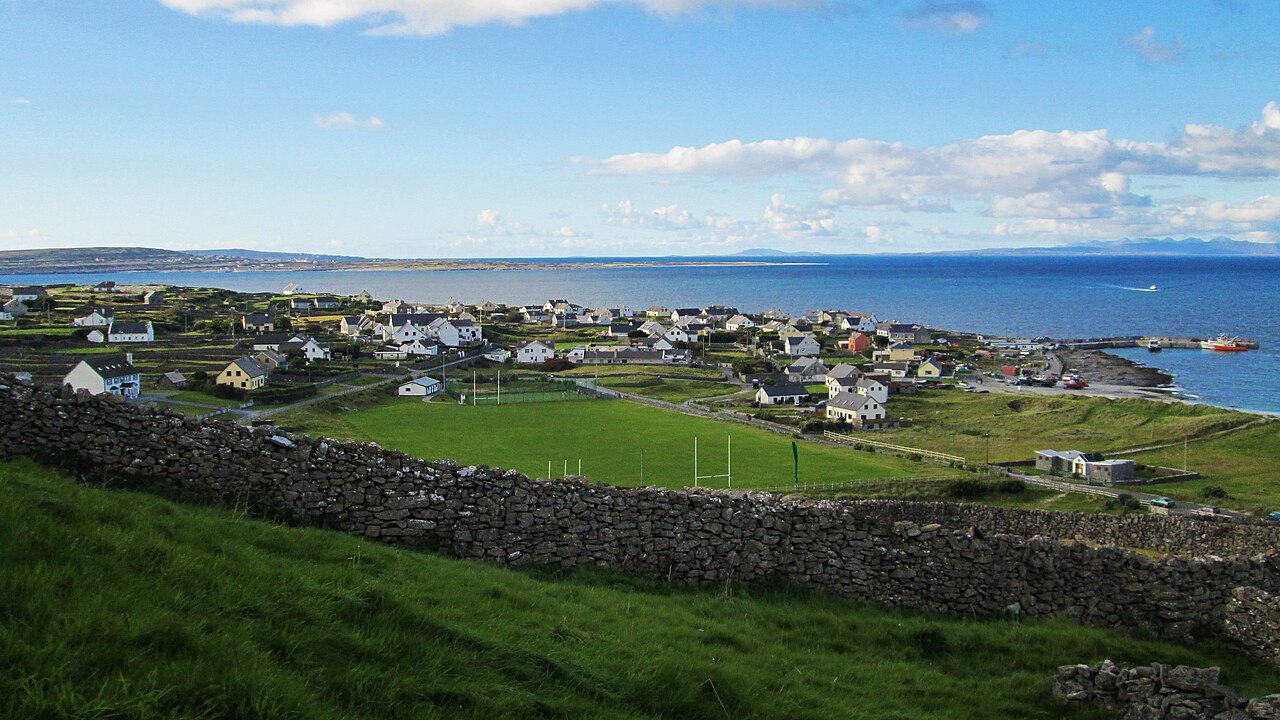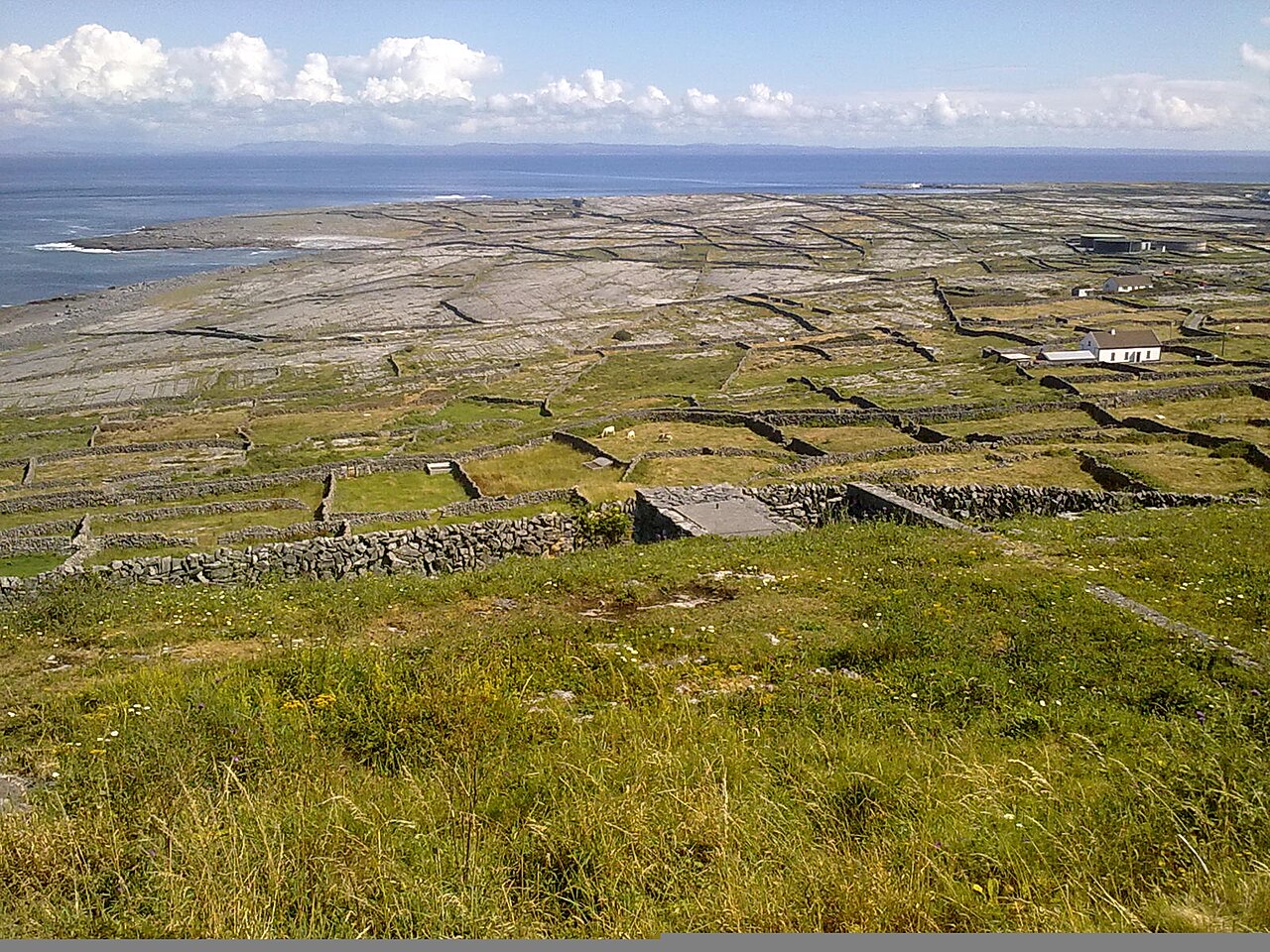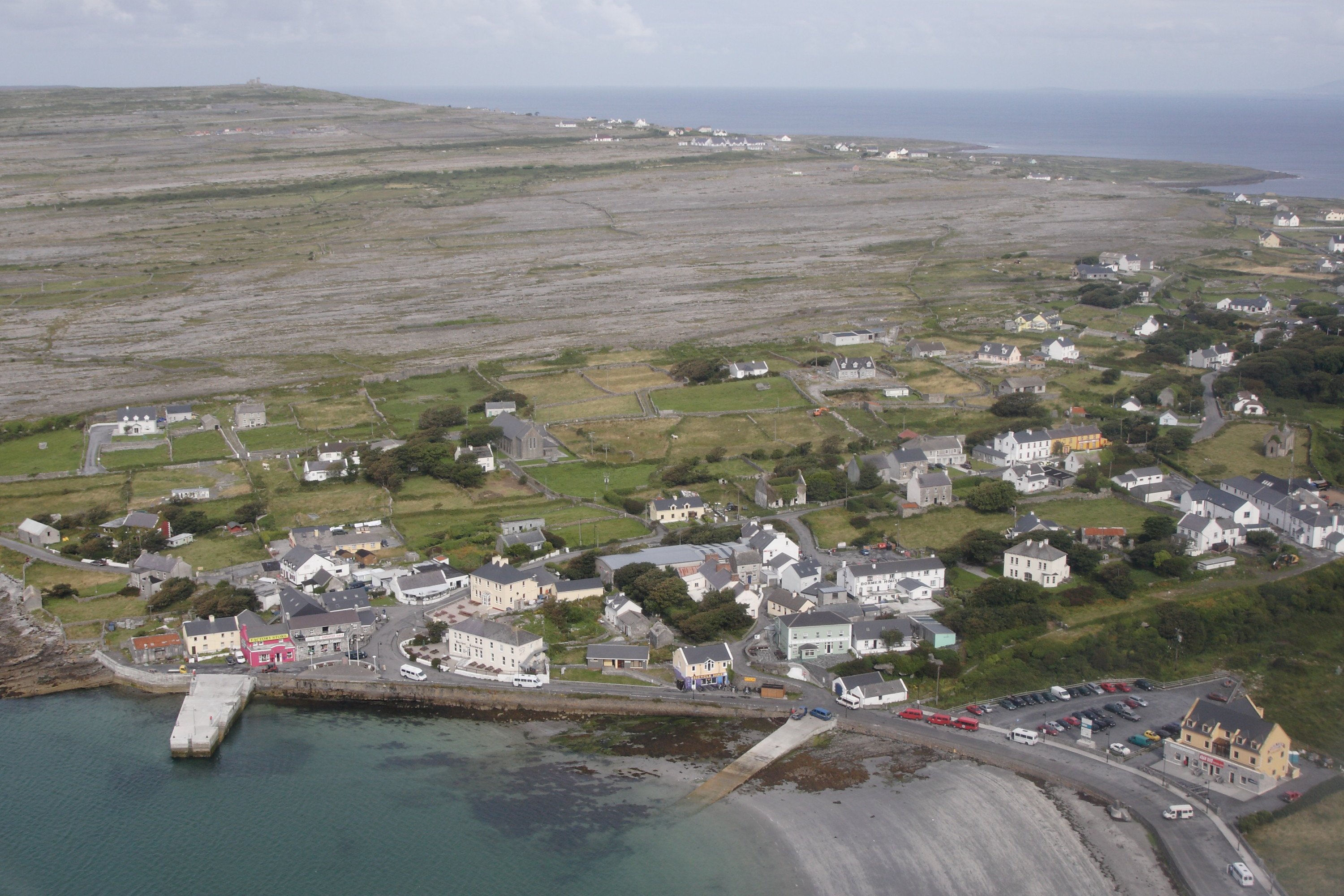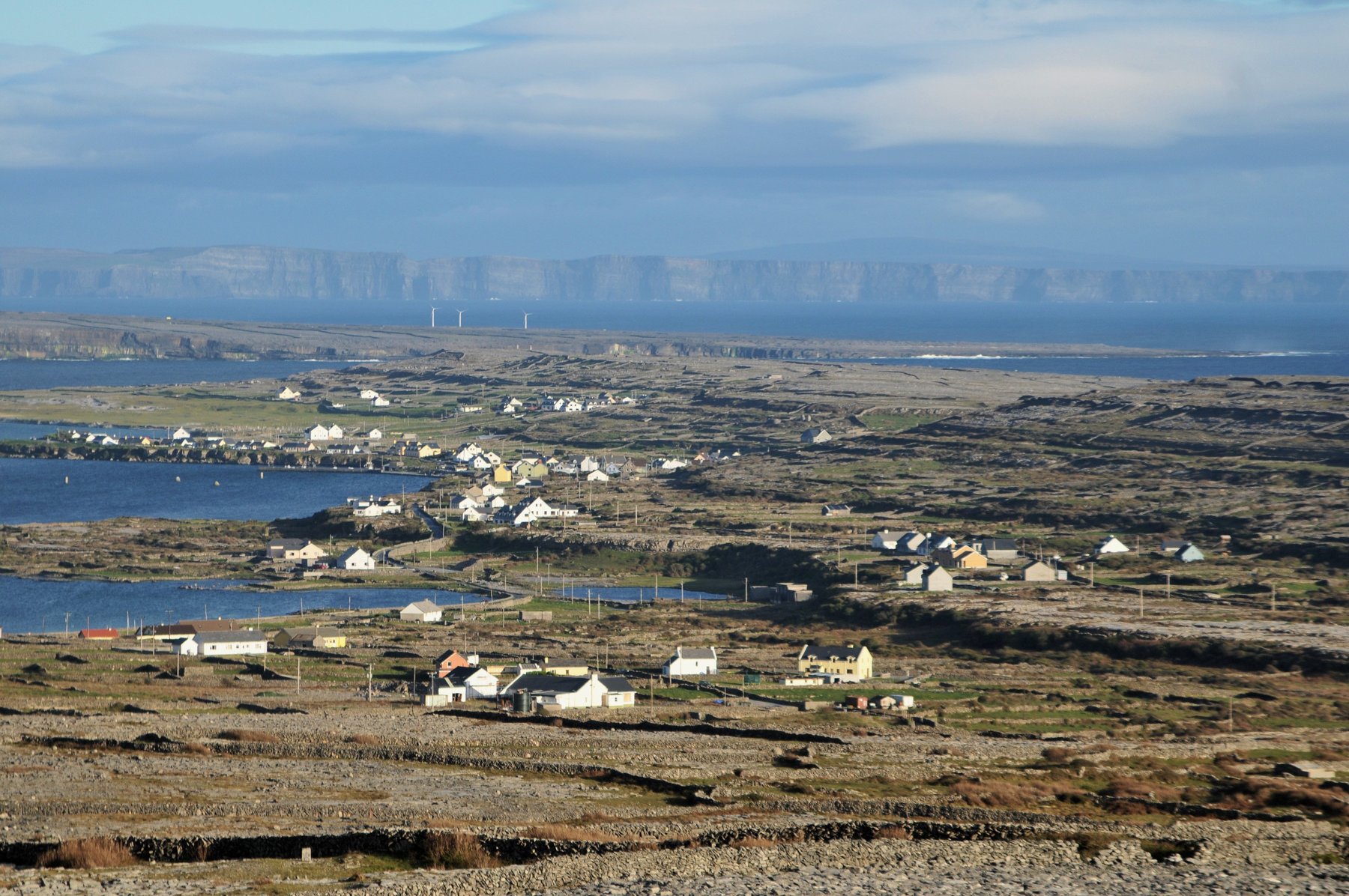
The Aran Islands — Oileáin Árann — are three low, grey, windswept islands sitting in the mouth of Galway Bay, thirty kilometres out from the Connemara coast. They are famous for three things: the Iron Age cliff fort of Dún Aonghasa, the traditional hand-knitted Aran sweaters, and for being one of the last strongholds of the Irish language. All three are worth the crossing.
Inis Mór (Inishmore), the largest island, takes most of the visitors and has most of the sights — Dún Aonghasa, the "worm-hole" tidal pool at Poll na bPéist, the seven churches of the Seacht dTeampaill. Most people base in the village of Kilronan and hire a bike for the day.
Inis Meáin (Inishmaan), in the middle, is the quietest and most traditional — 150 inhabitants, two pubs, still mostly Irish-speaking. This is where J.M. Synge spent his summers and heard the stories that became Riders to the Sea and The Playboy of the Western World. Stay a night.
Inis Oírr (Inisheer), the smallest, has the rusting hulk of the Plassey shipwreck beached on its eastern shore — recognisable from the opening sequence of Father Ted — and a 14th-century tower house at the top of the island.
Ferries run year-round from Rossaveal in Connemara (40 minutes) and from Doolin in County Clare in summer (30 minutes to Inis Oírr). Aer Arann operates flights from Inverin to all three islands in eight minutes.