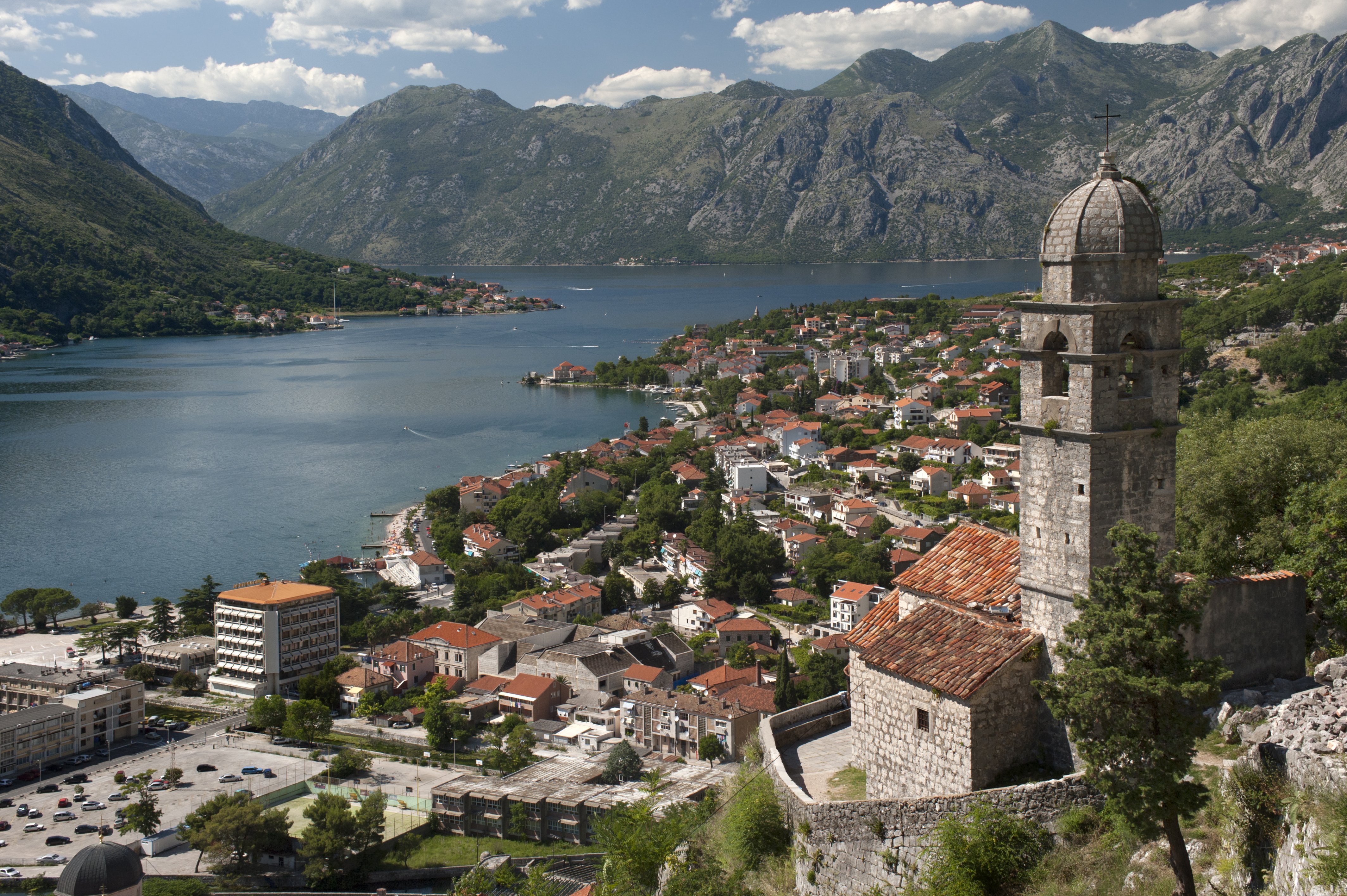
The Bay of Kotor — Boka Kotorska in Montenegrin — is one of the most dramatic stretches of coastline in the Mediterranean. The bay cuts deep into the mountains, forming a series of connected inlets that look from above like a fjord misplaced from Norway. The water is still and dark, the limestone peaks rise sharply above the shoreline, and the old Venetian towns along the edge are some of the best-preserved in the Adriatic.
For most of its history the bay was a contested frontier — between Venetian and Ottoman power, between Catholic and Orthodox Christianity, between sea traders and mountain clans. The walls, churches, monasteries, and fortified towns that line the shore are the physical residue of all that. Today the bay belongs to Montenegro, but the architecture tells a more complicated story.
The main towns are Herceg Novi at the entrance to the bay, Perast midway along with its two small islands, and Kotor at the innermost point, where the old city walls climb a steep hillside and the UNESCO listing is thoroughly deserved. Tivat sits at the southern inner bay and has changed considerably since the old Yugoslav naval base became Porto Montenegro, a glossy marina full of large yachts.
The bay is compact enough to explore in a few days from a single base. Kotor makes the best base — it has the most to see, good accommodation, and a lively old town. From there you can reach Perast in 20 minutes and Herceg Novi in under an hour. The road around the inner bay is scenic and the drive itself is worth doing.