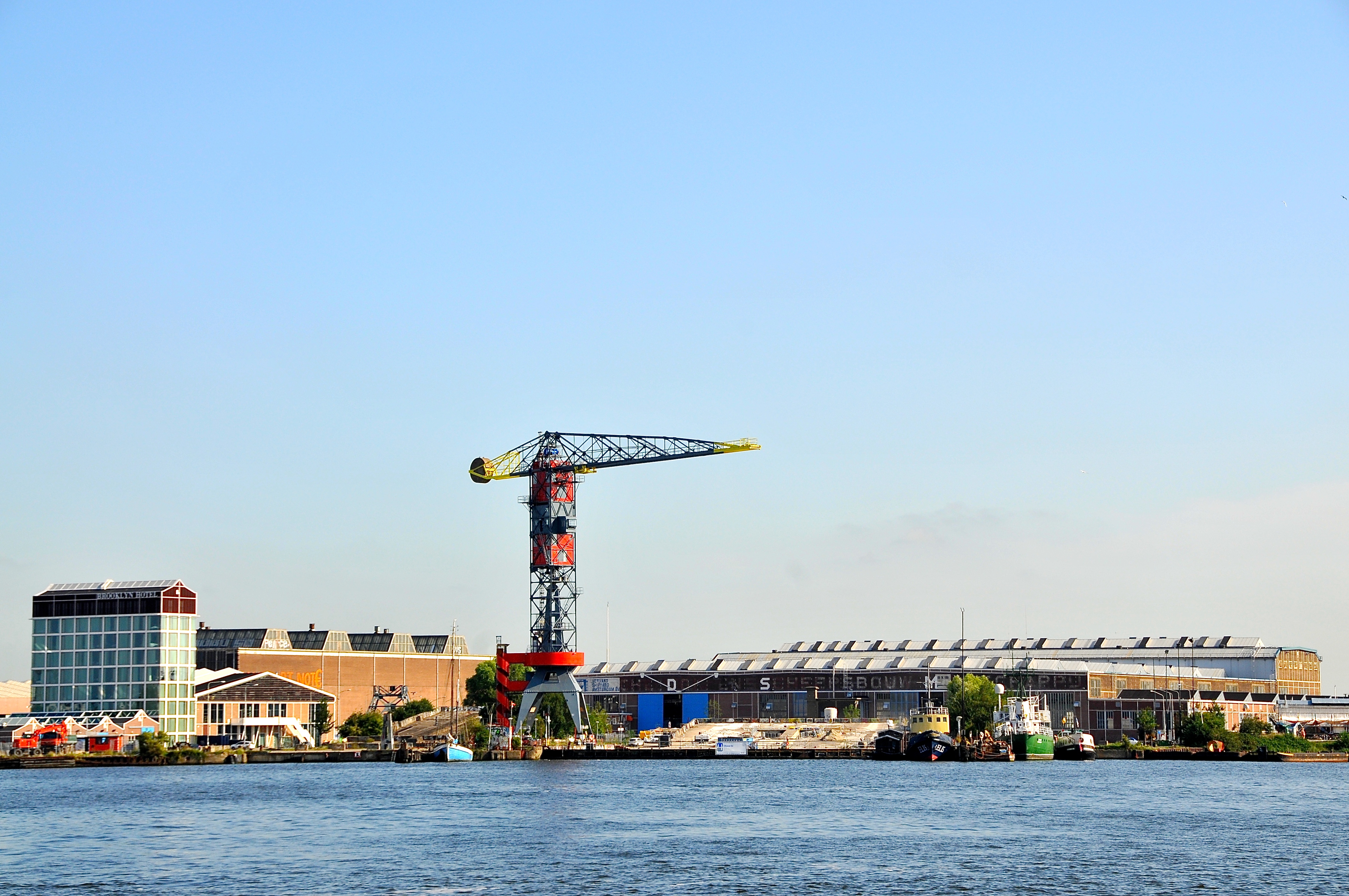
NDSM takes its name from the Nederlandsche Dok en Scheepsbouw Maatschappij — the shipbuilding company that operated this vast dry dock on Amsterdam's north bank until the 1980s. When the shipyard closed, the site sat derelict for years before artists and squatters moved in. The city eventually formalised the occupation, and what emerged is one of Europe's most convincing examples of industrial regeneration: a creative quarter that has retained the scale and roughness of the original without being sanitised into a theme park.
The centrepiece is the NDSM Werf — the main former shipbuilding hall, now subdivided among artists' studios, creative offices, and festival spaces. The hall is enormous: tall enough to have once contained ocean-going ships, and still used that way atmospherically for major events. STRAAT, which opened here in 2020, is the world's largest street art museum — over 150 large-scale works by international artists in a former sub-hall, with the industrial bones of the building left intact. It is one of the best reasons to cross the IJ.
NDSM Plein, the central square of the complex, fills with food markets, festival stages, and outdoor events through the summer months. Pllek, the shipping-container restaurant and bar at the water's edge, is one of Amsterdam's best outdoor venues when the weather is right. The NDSM Flea Market, held monthly on weekends, is one of the city's largest and most eclectic — vintage clothing, records, furniture, and design objects from across the Netherlands.
The ferry from behind Central Station takes about 15 minutes and runs free, day and night. The crossing is worth taking for its own sake — the view of the Amsterdam skyline from the water is better from this distance than from any canal. The NDSM stop is a separate ferry line from the main Noord crossing; check which boat before boarding.