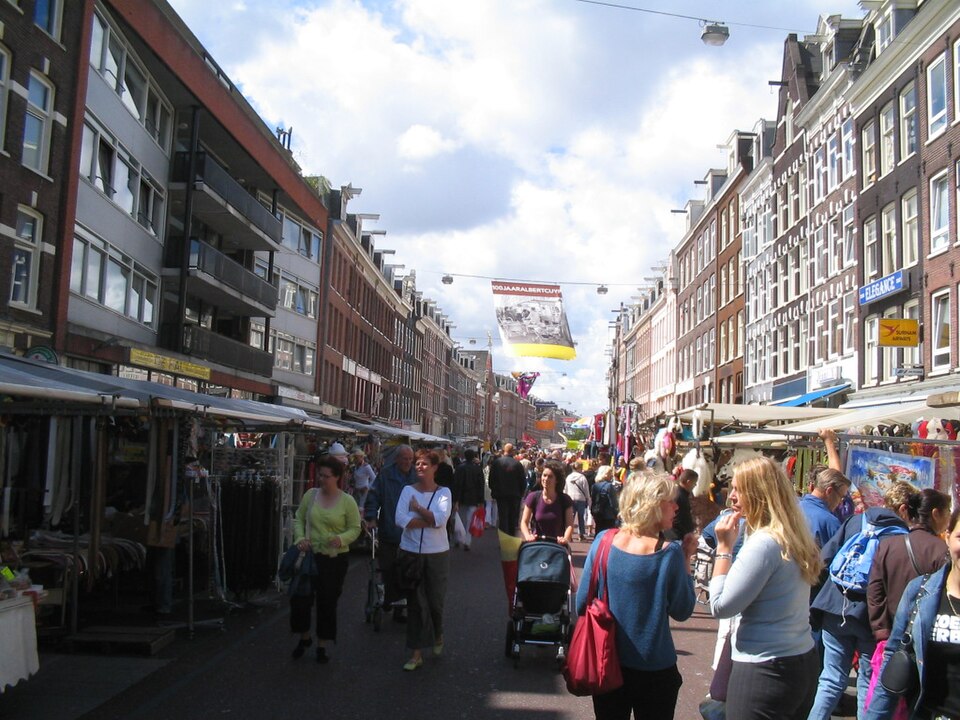
De Pijp — "the Pipe," named for the long, narrow streets that run between the ring canals and the Amstel — is where Amsterdam actually eats. The Albert Cuypmarkt, running almost 300 metres down the main street, is Europe's largest open-air market and operates six days a week. It sells food, clothing, household goods, and almost everything else at prices considerably below what you'd find in the shops. The food stalls are the point: raw herring, stroopwafels, Indonesian snacks, Turkish breads, and every variety of Amsterdam's multicultural eating.
The streets around the market — Ceintuurbaan, Ferdinand Bolstraat, Van Woustraat — are lined with restaurants that serve the neighbourhood's residents rather than tourists. Surinamese roti shops, Moroccan bakeries, Indonesian rice tables, and a growing number of natural wine bars and small plates restaurants have all established themselves in the last decade. Gerard Doustraat is particularly dense with places worth stopping.
De Pijp was originally built in the late 19th century for Amsterdam's working class — the city's rapid industrial expansion needed housing, and this was it. The buildings are uniform four-story brick blocks with almost no decoration. The neighbourhood's character comes entirely from the street life, not the architecture. It is one of the most ethnically and socioeconomically mixed neighbourhoods in Amsterdam, and it has largely remained so despite rising rents and the arrival of international professionals.
The Heineken Experience, in the old Heineken brewery on Stadhouderskade, draws significant tourist traffic but is optional at best. The Sara Snoek bookshop and the Brouwerij 't IJ annexe in the neighbourhood are more worth knowing about. Sarphatipark, a small oval park at the heart of De Pijp, is the neighbourhood's breathing space and is genuinely used — picnics, football, families on summer evenings.