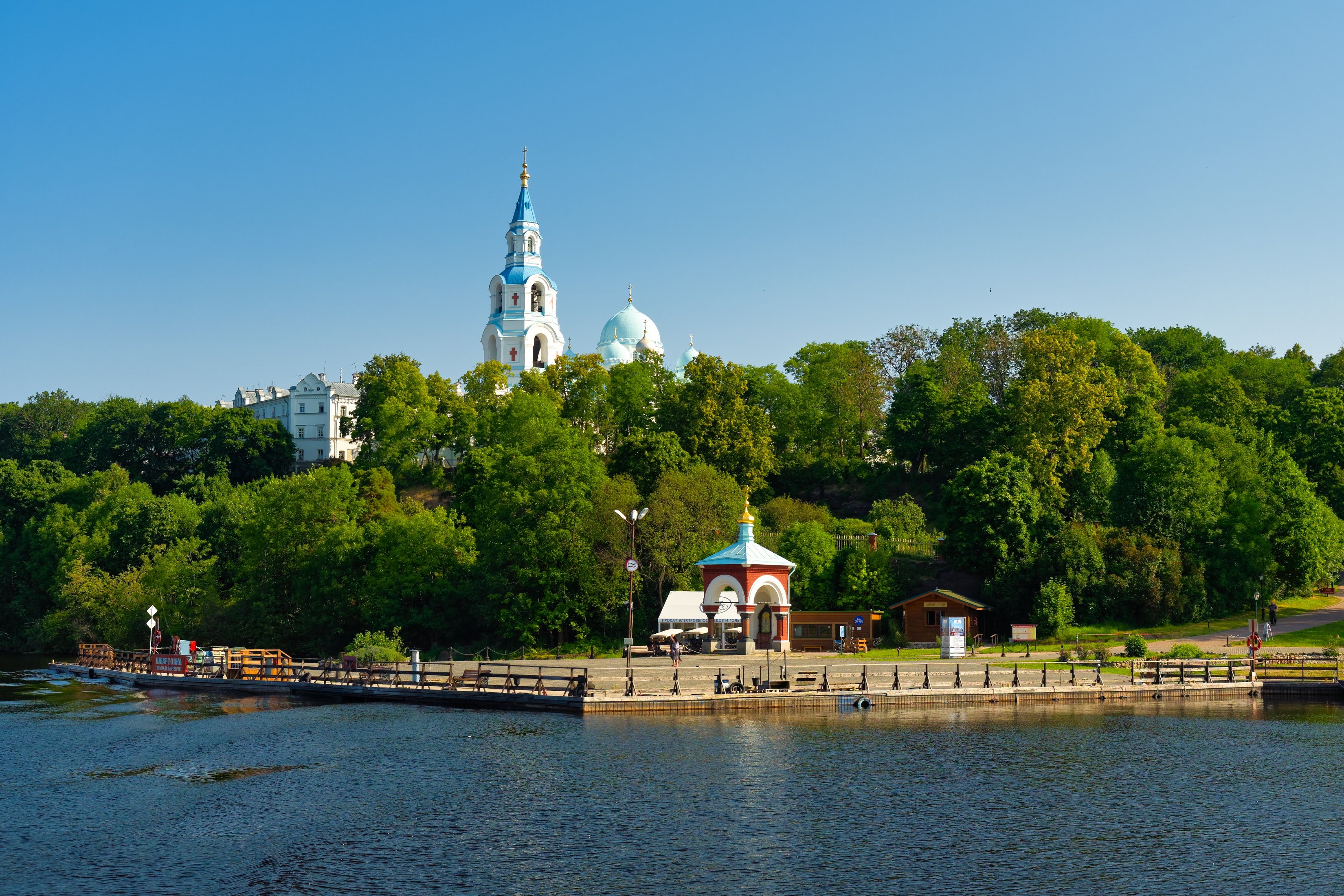
Valaam
©
Valaam

Valaam

Lake Ladoga archipelago in Karelia, centred on the historic Valaam Monastery and wooded islands.

Valaam is an archipelago of rocky wooded islands in the northern part of Lake Ladoga, Europe's largest lake, in the Russian Republic of Karelia. The main island gives its name to a famous Orthodox monastery founded in the 14th century — one of the most important in the Russian church.

The island has a remote, otherworldly quality. The monks transformed this wild northern landscape into gardens and farmland without felling the standing forest; they only used trees blown down by the wind. As a result, Valaam retains its original boreal taiga, and the views from the island's heights across the grey waters of Ladoga are striking. The monastery complex — with its cathedral, hermitages, and stone churches scattered across the island — forms a unified architectural and spiritual ensemble.

Valaam is accessible by boat from Sortavala and Priozersk. Day trips run in summer; staying overnight on the island gives a very different atmosphere once the day visitors have gone.

Guide

Getting There

Valaam is accessible by boat only. In summer, regular hydrofoil and ferry services run from Sortavala (about 40 km by water, roughly an hour by hydrofoil) and from Priozersk (approximately 60 km, two hours). Both towns are on the Russian mainland in Karelia. Day trip boats depart in the morning and return in the afternoon; staying overnight requires booking a room in the monastery's guesthouse or in the small pilgrim accommodation. Bring enough cash for the island — there are no ATMs.

Guide

When to Go

Valaam is only accessible in summer, roughly May to October, when the lake is ice-free and boats can run. July and August bring the best weather — long days, warm enough to swim from the rocks, and the full flowering of the monastic gardens. June has the white nights that make the island feel genuinely otherworldly. September is quieter and the forests turn golden, but the hydrofoil schedule thins out. In winter the lake freezes solid and access is effectively impossible; the monks remain year-round.