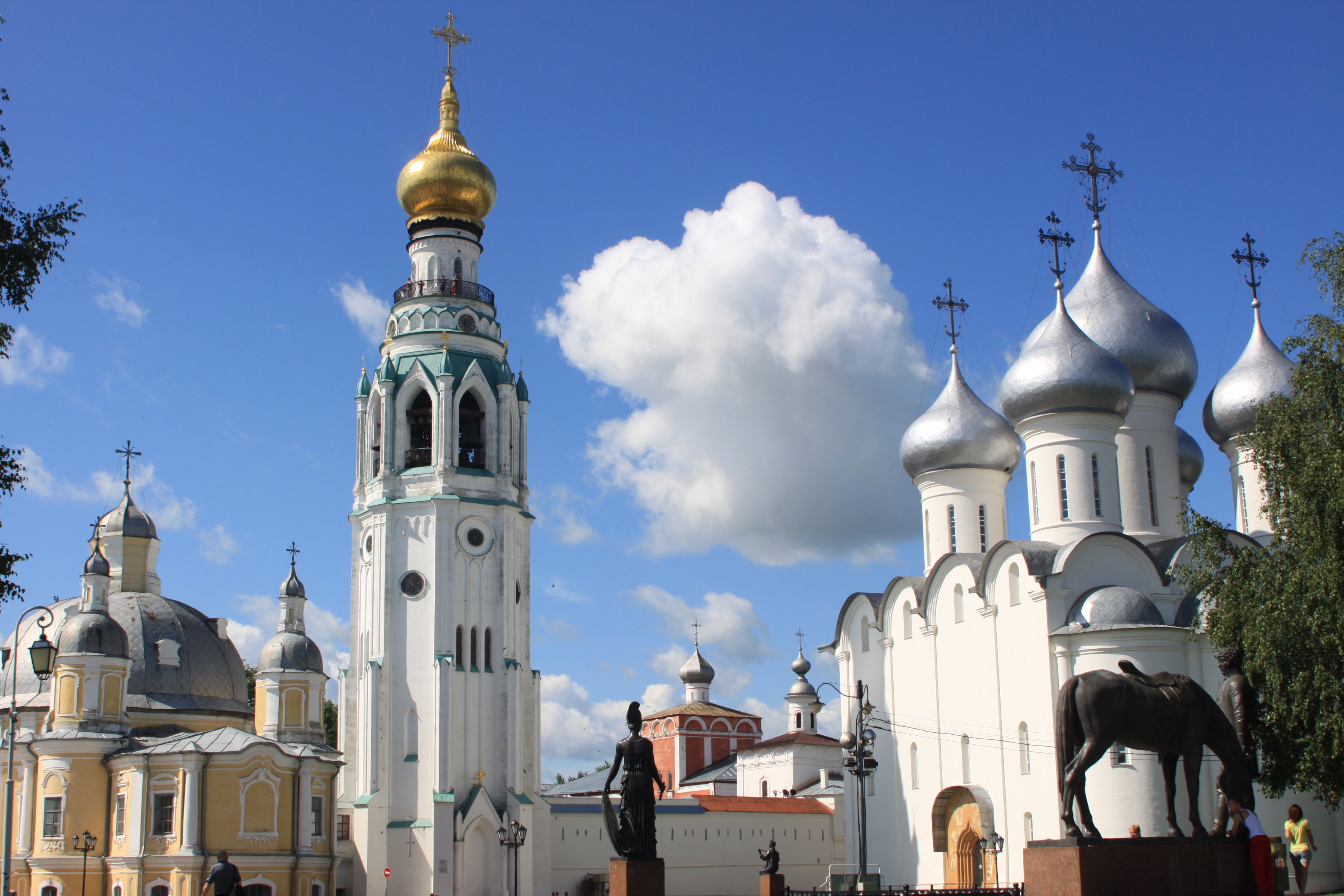
The Vologda Region (Vologodskaya Oblast) occupies a large swath of Russia's European north, a landscape of birch and spruce forests, river systems, and the chain of lakes that includes Beloye Ozero and Kubenskoye — some of the largest in European Russia. It is not a place most international travellers know, but it holds some extraordinary things: medieval monasteries, a city of extraordinary wooden architecture, and a kind of deep Russian north that feels genuinely remote even though Vologda city is only eight hours by train from Moscow.
Vologda, the regional capital, was founded in the 12th century and served as a northern trading centre for centuries. Its historic centre preserves an unusual number of carved wooden merchant houses alongside stone churches and the walls of the 16th-century kremlin that Ivan the Terrible ordered built when he briefly considered making Vologda his alternative capital. Vologda lace and Vologda butter — both with genuine traditions behind them — are still produced and sold here.
The region's most remarkable monument is the Kirillo-Belozersky Monastery, founded in 1397 on the shore of Siverskoye Lake near the town of Kirillov. At its height this was the largest and wealthiest monastery in Russia — a fortified city of stone towers and churches covering several hectares. The walls, towers, and churches are preserved in extraordinary condition. Nearby, the smaller Goritsky Nunnery has a poignant history as a place of imprisonment for disgraced Tsarist noblewomen.
The region is best visited in summer, when the long days and river-and-lake landscape come into their own. Roads outside the main towns are variable.