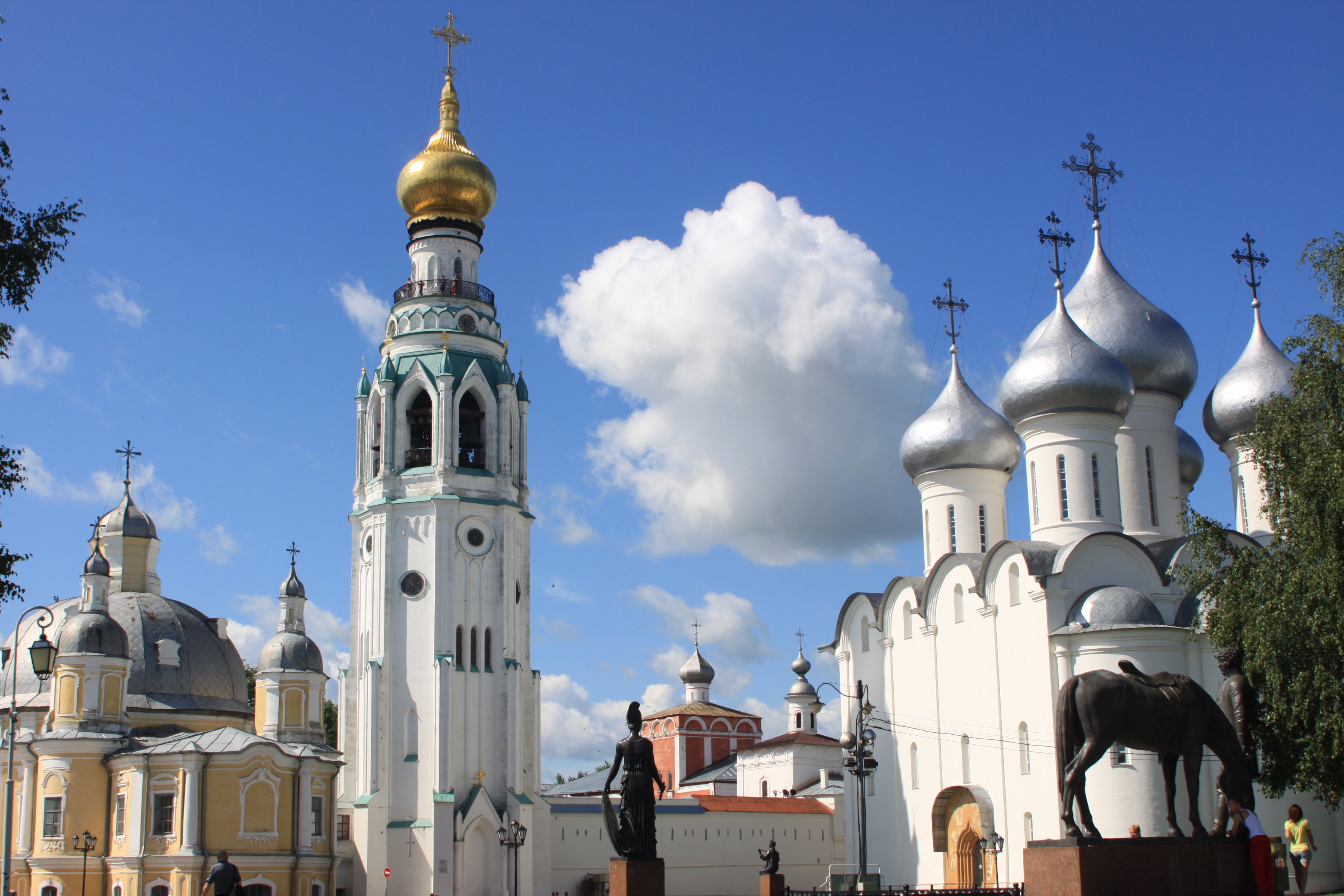
Vologda is one of the oldest Russian cities, founded in 1147 on the banks of the small, quiet river of the same name. Historically it was the "gate to the North" — a major trade and handicraft centre, and an outpost of Moscow in its struggles with rival principalities. Ivan the Terrible chose it as a would-be second capital in the 1560s, building the great Cathedral of Saint Sophia before a piece of falling plaster persuaded him to abandon the project.
The city is known for its architectural monuments. The Vologda Kremlin (Bishop's Court) complex beside Saint Sophia houses the main regional museum; the Spaso-Prilutsky Monastery five kilometres north is a fortified 14th-century complex in a beautiful riverside setting. Vologda also preserves an unusual number of wooden houses with elaborate carved window frames — a style of decoration for which the city is distinctly famous. The embankment along the south bank of the river, lined with 18th and 19th-century merchant mansions, is the city's finest public space.
Lace weaving has been practised here since the 18th century, and Vologda lace remains one of Russia's most recognisable crafts. The Museum of Vologda Lace in the city centre has the definitive collection. Vologda butter — distinguished by a distinctive nutty flavour from the heating process used in its production, developed by the landowner Nikolai Vereshchagin in the 1870s — is another local speciality known throughout Russia and worth seeking out at source.