Santillana del Mar is arguably the best-preserved medieval town in Cantabria, and possibly in all of northern Spain. The streets are cobbled and car-free in the historic centre, the mansions and arcaded buildings are built from golden sandstone, and the whole place feels genuinely intact rather than restored. The name is famously a triple lie: it is neither holy (santa), nor flat (llana), nor by the sea (del mar) — the coast is a few kilometres away.
The town exists in the shadow of the Cave of Altamira, the most celebrated prehistoric art site in Spain and one of the most important in the world. The cave itself is now closed to all but a handful of researchers per year, but the Altamira Museum has built a full-scale replica of the polychrome ceiling that gives you a genuine sense of what the Magdalenian painters achieved some 15,000 years ago. It is worth visiting even knowing you are looking at a copy.
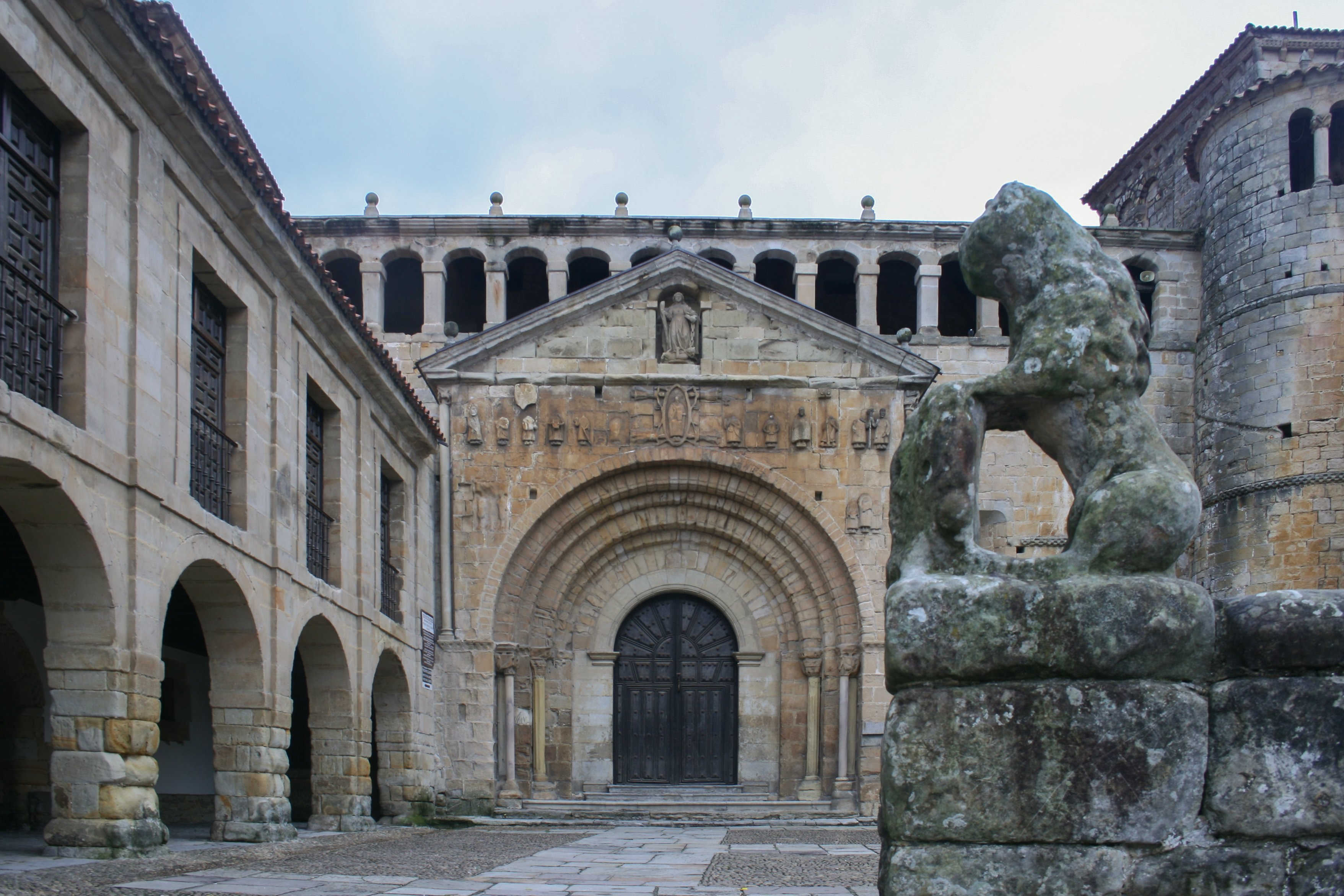
The Collegiate Church of Santa Juliana anchors the old town. Built in the 12th century, it is one of the finest Romanesque churches in Cantabria, with a cloister of carved capitals that rewards slow looking. The town's main street, the Calle del Cantón and the surrounding lanes, are lined with noble houses bearing heraldic shields — the Palacio de los Velarde, the Torre de Don Borja, and the Parador, which occupies a former 15th-century palace.
Santillana del Mar is very much on the tourist circuit, particularly in summer, which means souvenir shops and tour buses. Come in spring or autumn and you will find the place considerably more peaceful. It makes a practical base for exploring the whole eastern Cantabrian coast: Comillas is 15 kilometres west with its Gaudí capricho, and Santander is 30 kilometres east.