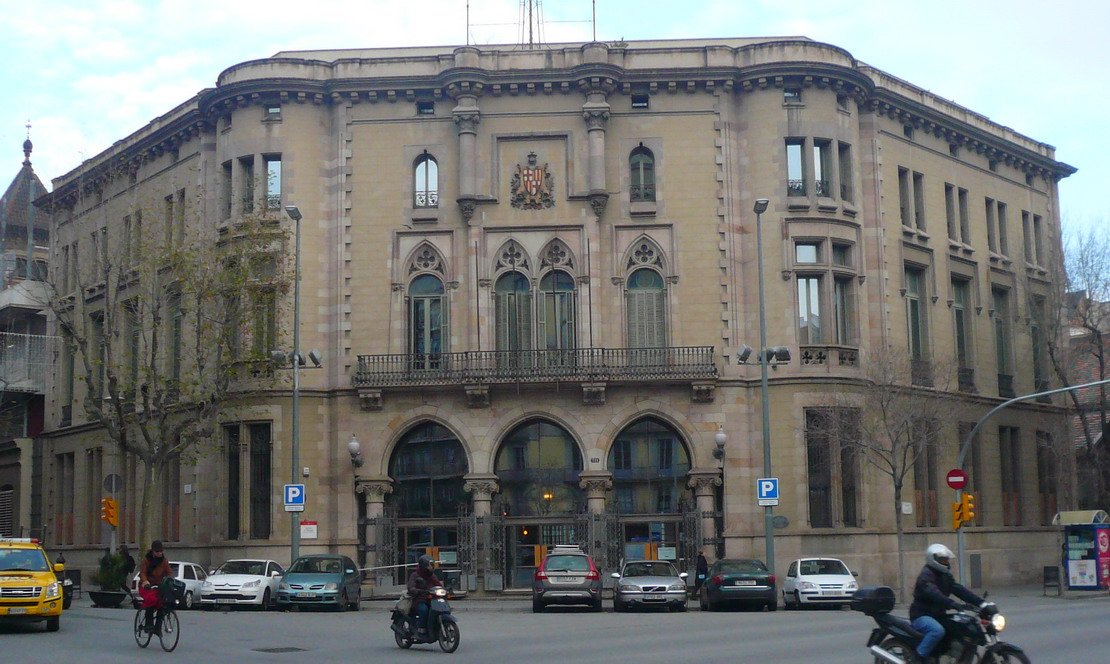
When Barcelona finally tore down its medieval walls in the 1850s, the engineer Ildefons Cerdà drew up one of the most ambitious urban plans in Europe: a vast rectilinear grid of identical octagonal blocks, their corners chamfered to ease the flow of traffic and let light into the streets. The "Extension" — l'Eixample in Catalan — became the address of choice for the industrial bourgeoisie, who competed to commission the most extravagant houses from the modernista architects of the day.
The result is an open-air museum of Catalan Art Nouveau. The Passeig de Gràcia, the district's grand central avenue, holds the so-called Illa de la Discòrdia, where Gaudí's Casa Batlló rubs shoulders with rival masterpieces by Puig i Cadafalch and Domènech i Montaner. A few blocks up stands Gaudí's rippling Casa Milà, and to the east rises the Sagrada Família, the unfinished basilica that has come to define the whole city. The neighbourhood splits in two: the polished Dreta (right) around Passeig de Gràcia, and the more residential, increasingly hip Esquerra (left).
This is the city's smartest dining and shopping ground — flagship fashion stores along Passeig de Gràcia, classic tapas at Cervecería Catalana, and the gay nightlife of the "Gaixample" around Carrer d'Aribau. The straight, shaded streets reward unhurried walking, with a wrought-iron balcony or carved stone doorway on almost every corner.