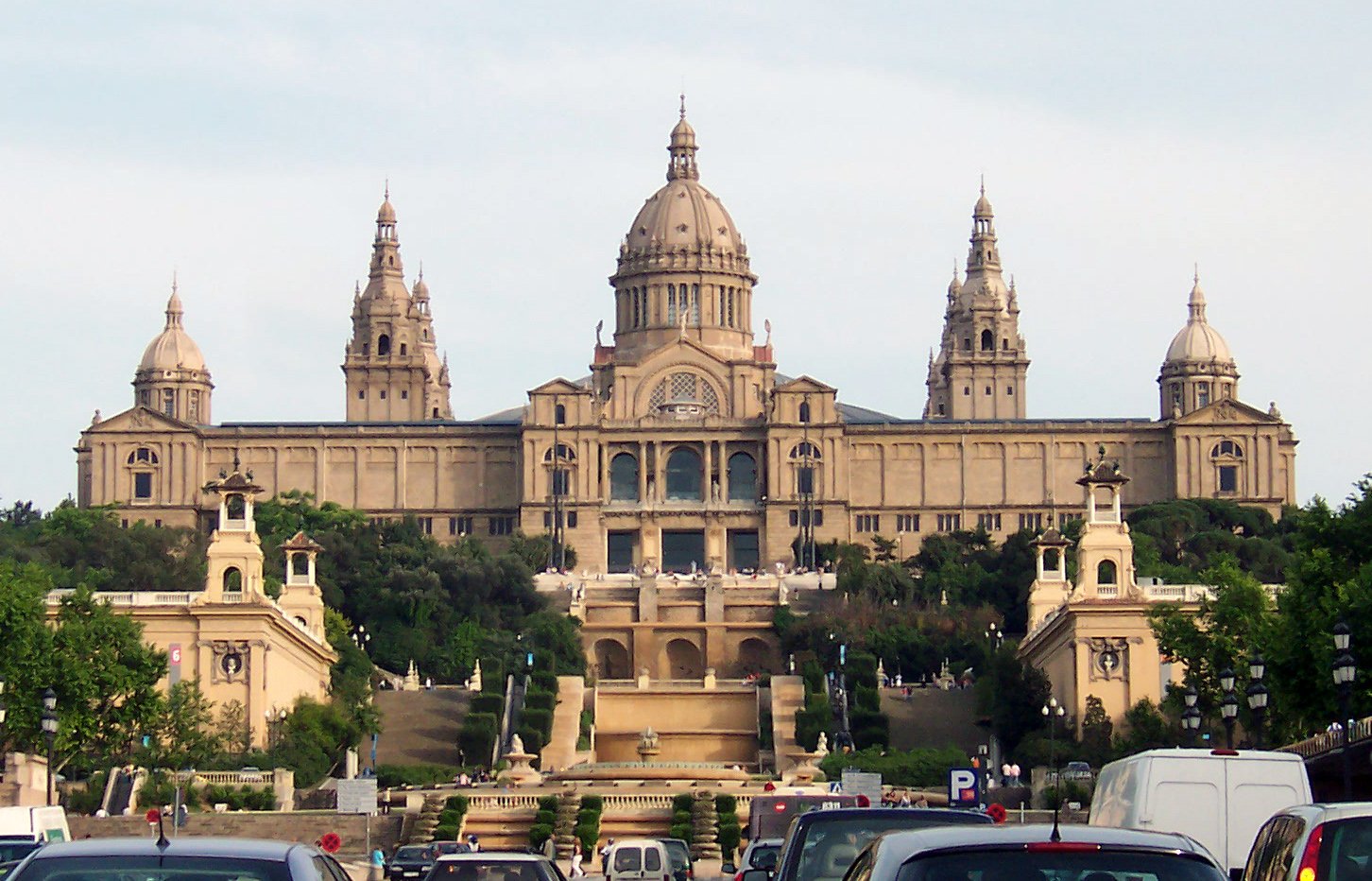
Montjuïc is the broad hill that rises south of the old town, between the city and the sea. For centuries it was a place of quarries, Jewish cemeteries and a hilltop castle whose guns pointed inward at a rebellious Barcelona as often as outward at invaders. Two great events transformed it: the 1929 International Exhibition, which laid out grand fountains and pavilions on its lower slopes, and the 1992 Olympics, which built the stadium and sporting venues that crown its summit.
The hill is now the city's cultural reservoir. The monumental Palau Nacional houses the National Art Museum of Catalonia and its unrivalled collection of Romanesque frescoes; below it the Magic Fountain still performs its evening light shows. Nearby stand the Joan Miró Foundation, the rebuilt Mies van der Rohe Pavilion — an icon of modern architecture — and the open-air Poble Espanyol, a village of replica Spanish buildings. Gardens terrace the slopes, and a cable car carries visitors over them to the castle at the top, with its sweeping view over the port.
There are few restaurants and little nightlife up here — Montjuïc is for daytime wandering, for museums and viewpoints and green space. Allow most of a day, wear comfortable shoes, and use the funicular or cable car to spare your legs the climb.