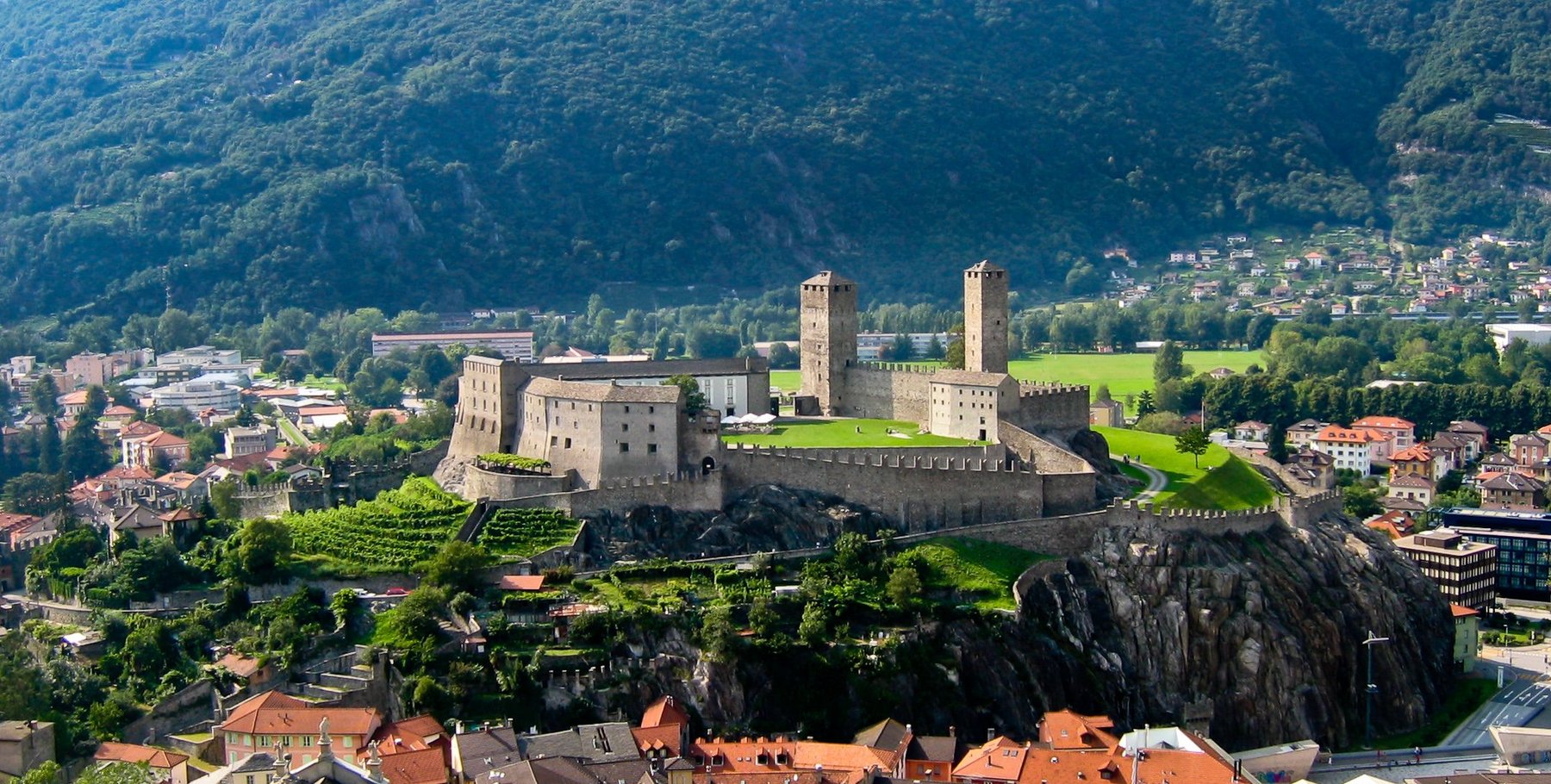
Italian-speaking Swiss canton south of the Gotthard Pass, with lakeside palms and Alpine valleys.
Ticino is the Italian-speaking corner of Switzerland, and it feels like a different country. South of the Gotthard Pass, the climate turns Mediterranean, the architecture turns Italianate, and the food improves dramatically. Palm trees line the lakefronts, the piazzas fill with espresso drinkers, and the light has a warmth you do not find north of the Alps.
The canton divides into four regions: Bellinzona and its three UNESCO-listed castles guard the entrance to the Gotthard valleys; Lake Maggiore draws visitors to Locarno and Ascona; Lake Lugano is the setting for the elegant city of Lugano; and the Mendrisiotto in the south blends into the Italian border country.
The Romans brought vineyards and roads, and the region was fought over by the bishops of Como and Milan for centuries before joining the Swiss Confederation in 1803. The Italian influence never faded — this is where you come for risotto, polenta, and Merlot from small local producers. The traditional grotto restaurant — a stone-built room with communal tables, cold cuts, and local wine — is one of the most congenial eating experiences in Switzerland.
Ticino is also known for its contemporary architecture. Mario Botta and Aurelio Galfetti are the most famous names, and striking modern buildings turn up in the most unexpected villages. The Academy of Architecture in Mendrisio, part of Ticino's university, continues that tradition. The Fiore di Pietra on Monte Generoso is the most recent landmark: a crystalline concrete summit building that rises from the rock like a petrified flower.
The great outdoor attractions are the Verzasca Valley — emerald river, polished granite, and the Ponte dei Salti bridge at Lavertezzo — and the lakeside villages, above all Morcote on Lake Lugano. The Madonna del Sasso above Locarno gives the best view of Lake Maggiore; Monte San Salvatore gives the best view of Lake Lugano.
Guide
Eating Out
Ticino's food is the happy meeting point of Swiss quality and Italian flavour. Risotto, polenta, and pasta dominate the menus; the local cheeses — formagella, zincarlin — are worth seeking out. The most traditional eating option is the grotto, a casual stone-built restaurant tucked into a hillside, often with long communal tables outdoors. Grottos serve simple, honest food: cold cuts, local cheese, polenta with various accompaniments, and the house wine.
The Ticinese Merlot is a serious wine, underrated outside Switzerland. The canton produces red, white, and rosé from the Merlot grape; the better producers are concentrated in the Mendrisiotto and the Malcantone hills west of Lugano. Wine shops in Lugano stock the full range.
In Lugano, the restaurants on the covered Piazza della Riforma are good for people-watching over a coffee or aperitivo. In Locarno, the old town around Piazza Grande has a good range of casual restaurants. For the full grotto experience, drive into any of the side valleys — the Verzasca, the Maggia, the Leventina — and look for the hand-painted sign.
Guide
Getting There
The Gotthard route is the main axis. The Gotthard Base Tunnel, opened in 2016, is the longest railway tunnel in the world at 57 kilometres; it has cut the train journey from Zurich to Bellinzona to about ninety minutes and Zurich to Lugano to under two hours. Trains run frequently throughout the day on the SBB rail network.
By car, the Gotthard road tunnel (about 17 km) provides the main route from central Switzerland; in summer, long queues can build on the Swiss side. The San Bernardino Pass and tunnel offer an alternative from eastern Switzerland into Bellinzona.
Lugano Airport handles flights from London City, Zurich, Geneva, and a handful of Italian cities. For more options, Milan Malpensa is just under an hour from Lugano by road or rail connection, and serves as the main international gateway for southern Ticino. Milan Linate and Bergamo airports are also feasible options for travellers coming from within Europe.
Guide
When to Go
Ticino has the best climate in Switzerland. The canton averages 2,300 hours of sunshine a year — more than anywhere else in the country — and the summers are warm enough for reliable lake swimming from June to September.
Spring (April–May) is the most beautiful season, when the camellias and rhododendrons are in bloom around the lakes and the mountain snow has mostly retreated above 1,500 metres. The crowds have not yet arrived and prices are lower. Autumn (September–October) is equally good: the light is golden, the wine harvest is underway, and the chestnut forests on the lower slopes turn russet.
July and August are peak season — the lakeside resorts fill with Swiss and German families, prices rise sharply, and parking at Ponte dei Salti in Lavertezzo becomes a competitive sport. The weather is reliably hot. Winter is mild at lake level but quiet; many smaller restaurants and boat services close from November to March. The higher mountains have ski areas, but Ticino is not primarily a ski destination — head north for that.
The Locarno Film Festival runs for ten days in August, taking over the main piazza for open-air screenings in front of 8,000 people. It is the largest open-air cinema event in Europe and worth timing a trip around.