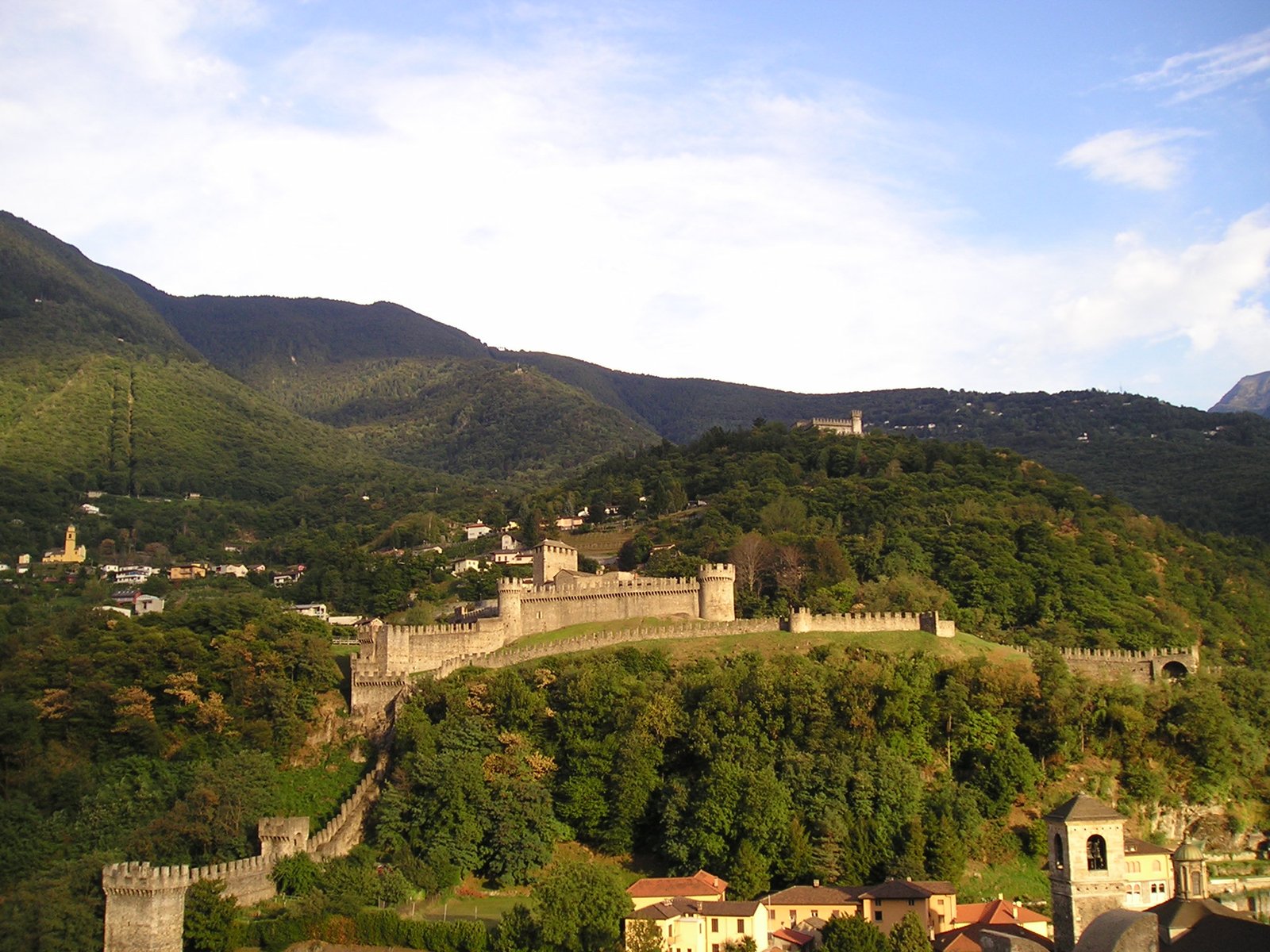
Bellinzona is the capital of Ticino, Switzerland's Italian-speaking canton, and its most strategically significant city. It sits in the narrow valley where the Ticino river funnels between the Alps before opening out toward Lake Maggiore, and this geography explains why it has been fortified since Roman times. The city's three medieval castles — Castelgrande, Castello di Montebello, and Castello di Sasso Corbaro — together with their connecting walls, were jointly declared a UNESCO World Heritage Site in 2000. They are the reason most people visit.
The castles were built and expanded by the Visconti dukes of Milan in the 14th and 15th centuries to control the Gotthard pass route from the south. When the Swiss Confederation took control of the valleys in 1503, the castles remained but their military function faded. Today they are connected by a walkway along the old murata — the fortification walls that once ran across the valley floor — and make for an extraordinary afternoon's walk.
The old town between and below the castles is quieter and less visited than the rest of Italian-speaking Switzerland. The Collegiata dei Santi Pietro e Stefano is one of the finest Lombard Renaissance churches north of the Italian border. The Saturday market on the Piazza Indipendenza brings in producers from across the canton. The pace of life is unhurried and distinctly Italian in character — aperitivo hour is taken seriously here.
Bellinzona is less glamorous than Lugano or Locarno, and that is part of its appeal. It is a working cantonal capital that happens to have three UNESCO castles and good restaurants, not a lakeside resort polished for tourists.