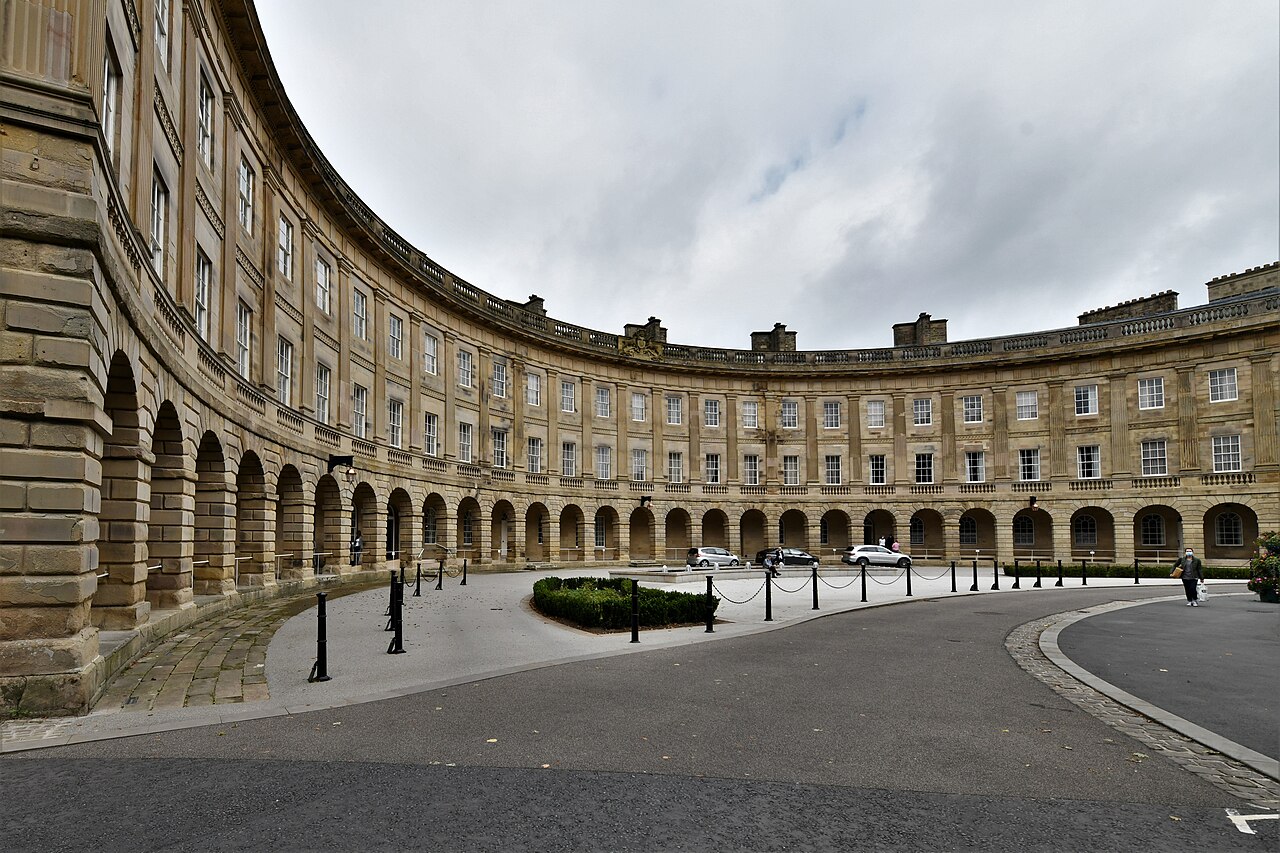
Buxton is a handsome spa town perched at over 300 metres in the Derbyshire Peak District, making it one of the highest market towns in England. The Romans knew about the thermal springs here, and the town's Georgian and Victorian architecture reflects centuries of visitors coming to take the waters. The Crescent, a sweeping curve of Georgian townhouses modelled after the Royal Crescent in Bath, has been magnificently restored as a luxury spa hotel, finally completing a renovation that took decades.
Buxton Opera House, designed by Frank Matcham and opened in 1903, is a jewel. Its ornate Edwardian interior hosts the annual Buxton International Festival in July, which draws serious opera and literary programming to this small town. Even if you are not catching a performance, the building is worth admiring from the outside.
The Pavilion Gardens, a lovely Victorian park with a conservatory and lake, provide a pleasant place to stroll, and St Ann's Well still dispenses the warm mineral water that made Buxton famous. You can fill a bottle for free directly opposite the Crescent and taste the same slightly warm, mineral-rich water that has drawn people here for two thousand years. The Devonshire Dome on the hill above is another architectural wonder — once the largest unsupported dome in the world, originally built to shelter the Duke of Devonshire's horses.
But the real reason to come to Buxton is access to the Peak District. The town sits right on the edge of the national park, and some of the finest walking in England is within easy reach. Poole's Cavern, a natural limestone cave just a short walk from the town centre, is an excellent introduction to the geology that makes this landscape so dramatic. Solomon's Temple, the folly at the top of the hill above the cavern, rewards the climb with panoramic views across the peaks.