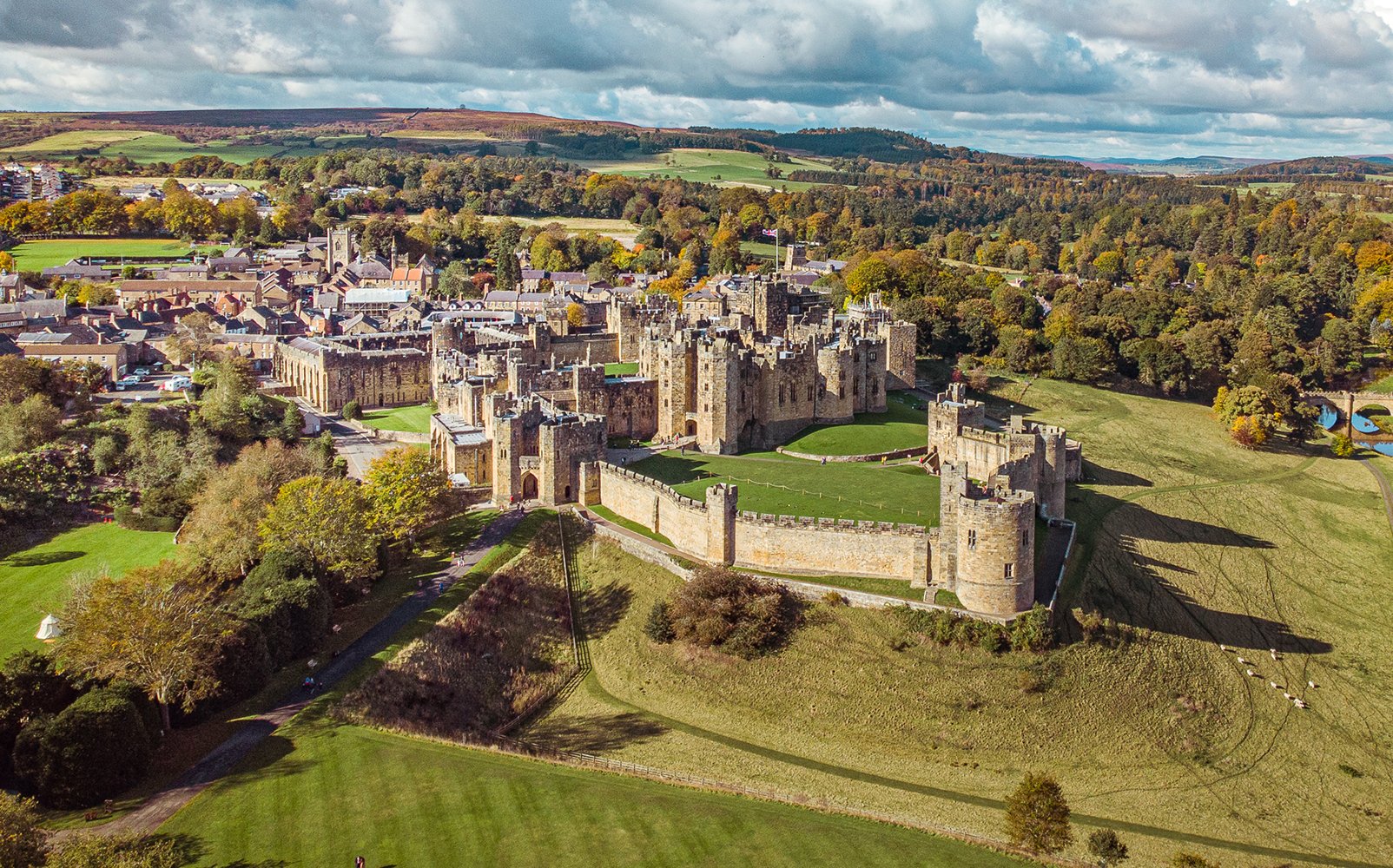
Northumberland is England's most northerly county — and also one of its most dramatic. Stretching from the Scottish border down to the edges of Tyneside, it covers open moorland, the wild Cheviot Hills, and a coastline lined with dune-backed beaches and medieval castles that is often called the finest in England.
The county divides naturally into three zones. In the north, a cluster of extraordinary historic sites crowd together near the coast: the tidal island of Lindisfarne (Holy Island), the mighty fortress at Alnwick, and the Farne Islands just offshore, home to vast seabird colonies and grey seals. The remote villages of Ford, Etal and Millfield nestle in this corner too, further north than most visitors imagine England extends.
Across the middle of the county runs Hadrian's Wall, built by the Romans in the 2nd century AD to mark the empire's northern frontier. Much of the most dramatic surviving section lies within Northumberland, where the wall follows the crest of the Whin Sill escarpment through open countryside. Walking the full length from coast to coast is a popular long-distance route.
The interior is dominated by the Cheviots and Northumberland National Park — one of the least-visited and least-populated national parks in England, which is exactly its appeal. The park contains vast tracts of upland moorland, dark skies good enough to earn it International Dark Sky Park status, and the extraordinary fortified village of Chillingham with its herd of ancient wild white cattle.
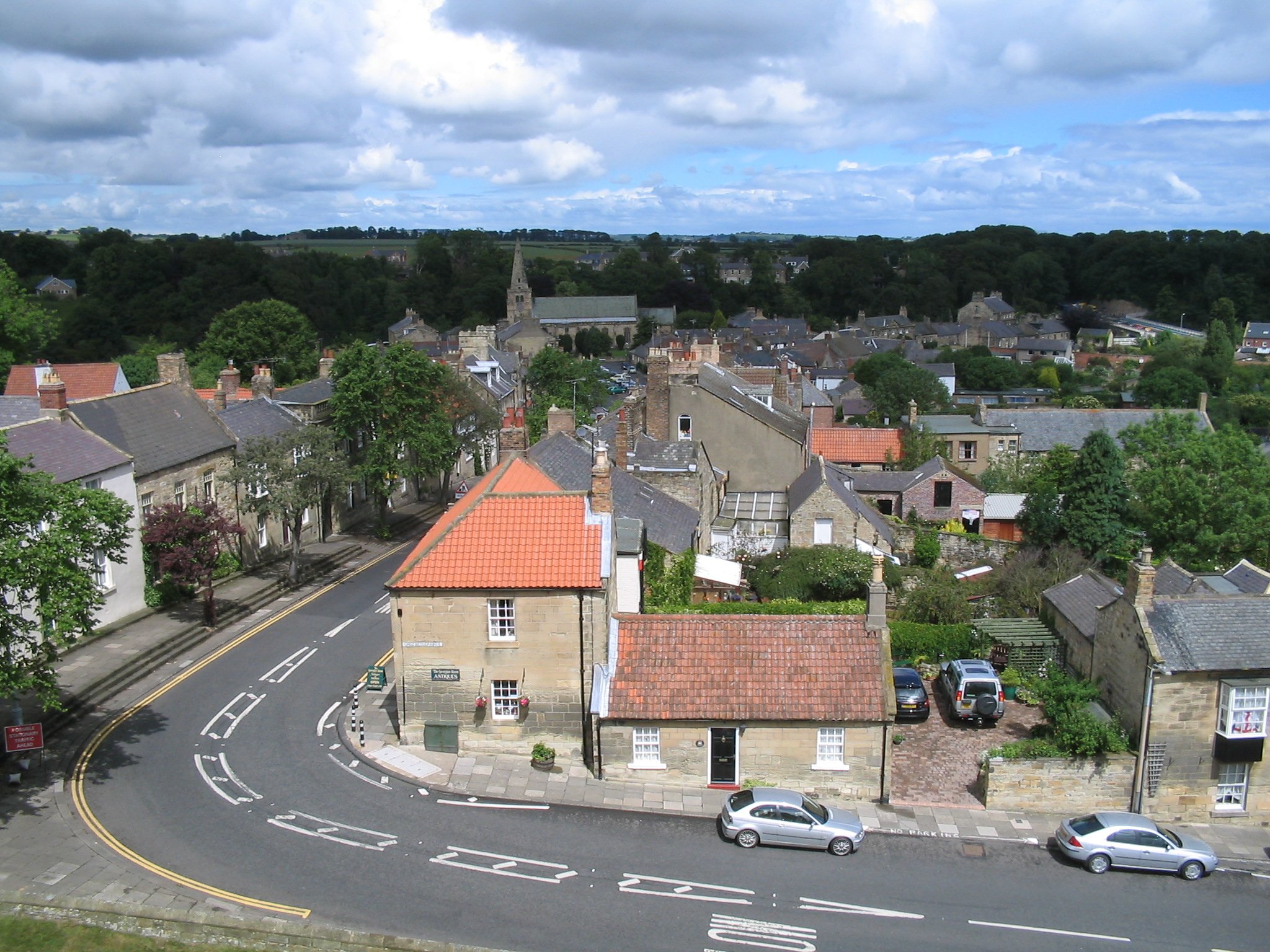
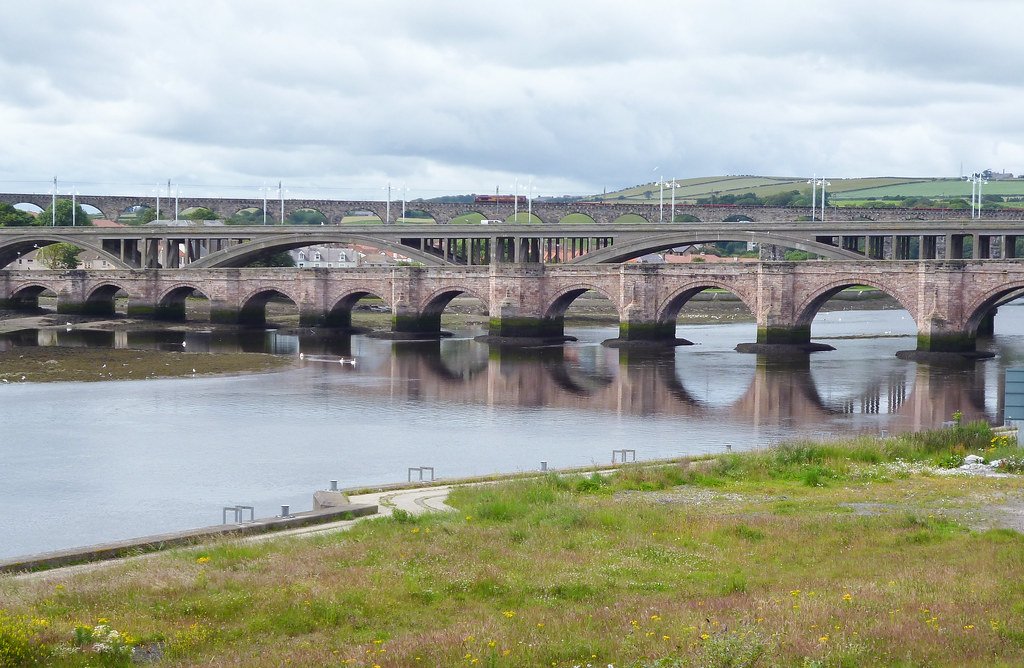
Berwick-upon-Tweed, England's northernmost town, sits right on the Scottish border and retains a circuit of remarkably complete Elizabethan town walls. The market town of Warkworth, with its riverside castle and preserved medieval street plan, is worth a stop on the way up the coast.