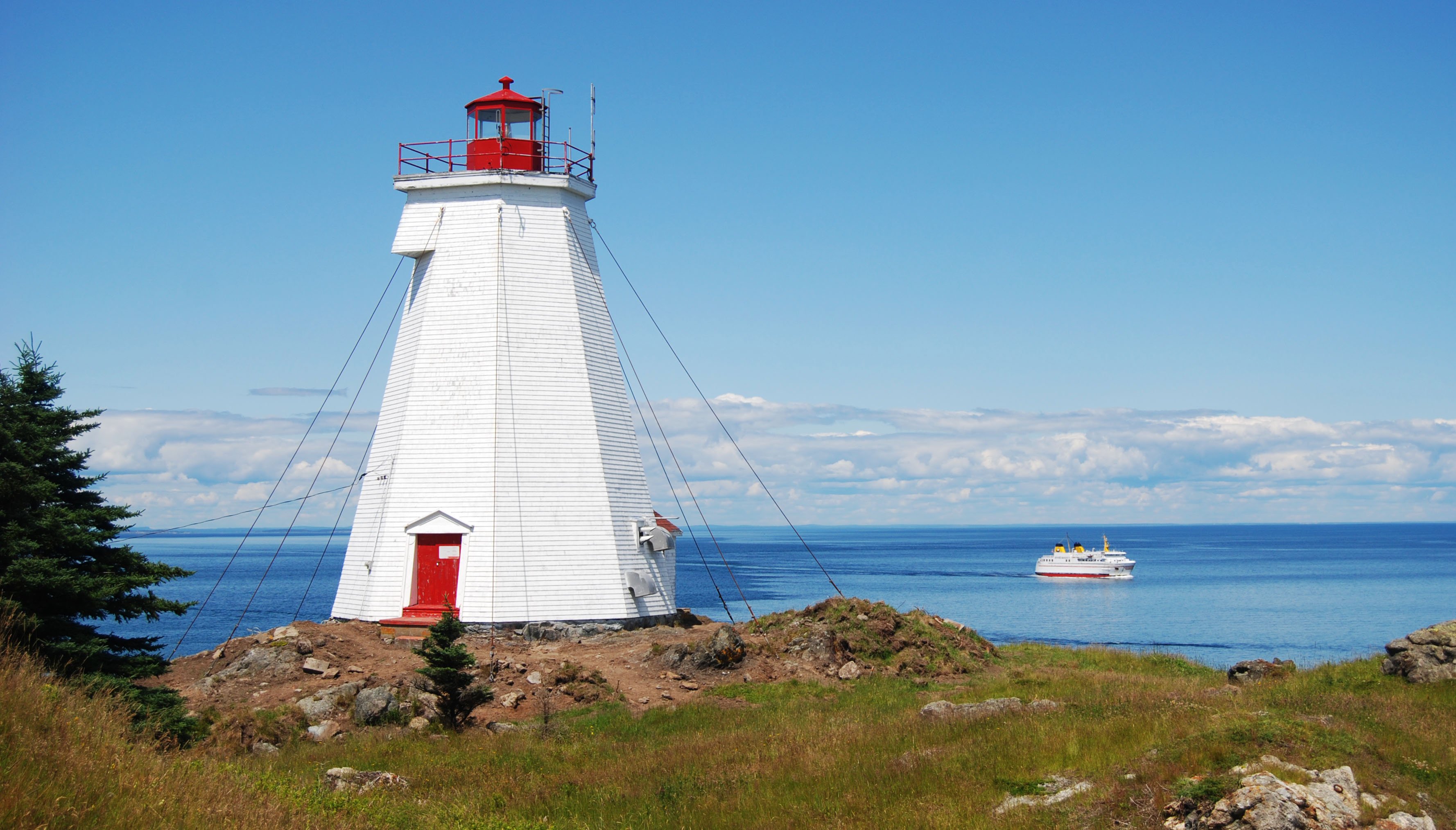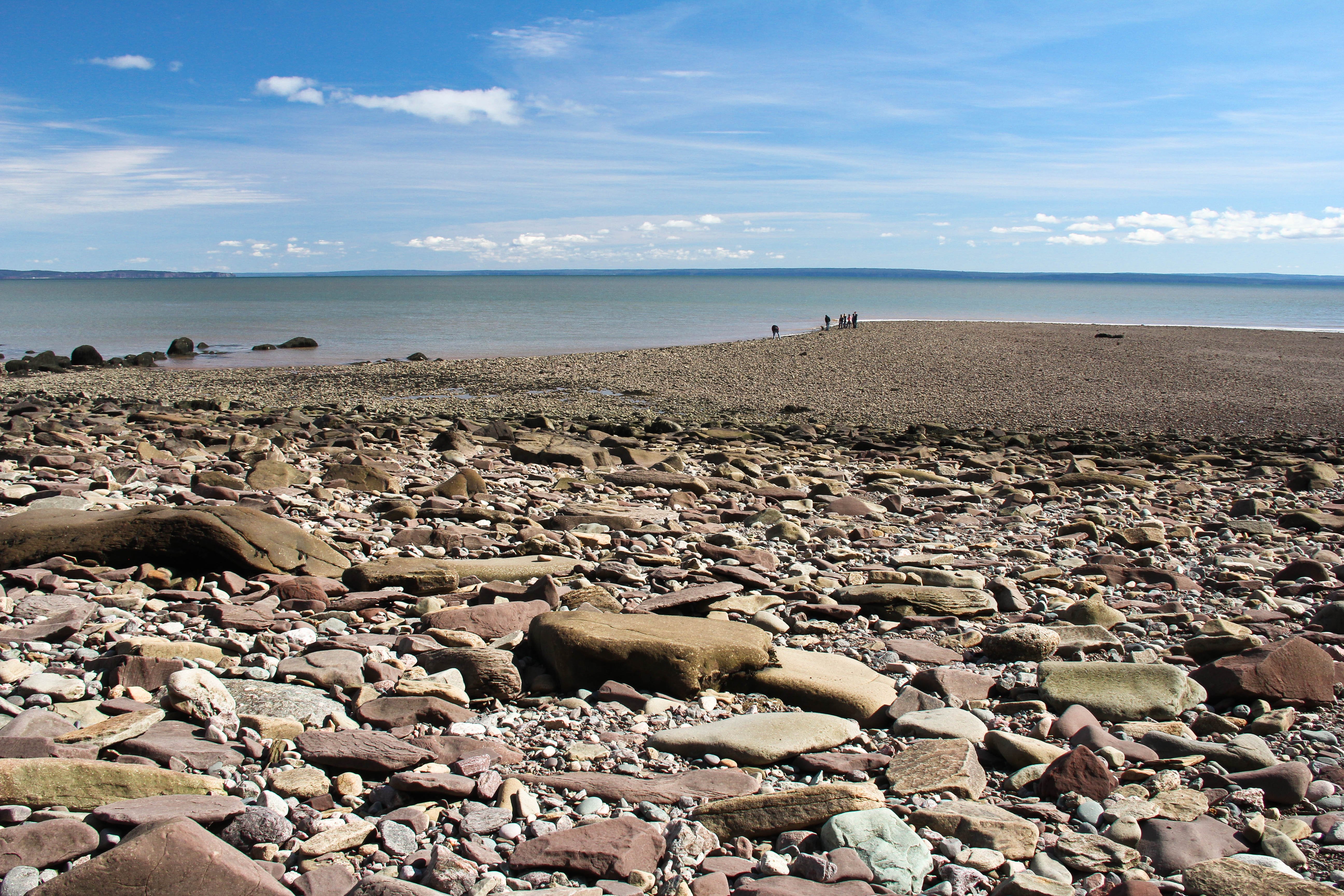
The Bay of Fundy has the highest tidal range in the world. Twice a day, more water flows into and out of the bay than all the freshwater rivers on earth combined — the water rises and falls up to 16 metres between low and high tide, and the spectacle this creates is one of the great natural phenomena of North America. At low tide, vast mudflats exposed by the retreating sea become temporary geography: you can walk on the ocean floor between sea stacks that stand in open water at high tide, and return six hours later to find them submerged to the neck.
The Hopewell Rocks on the eastern shore of New Brunswick are the most famous illustration of this tidal power. The sea stacks — flowerpot-shaped pillars carved by wave and tidal erosion from the red sandstone cliffs — stand on a broad beach at low tide and are completely surrounded by water at high. You can kayak around their tops at high tide and walk at their bases six hours later. Timing your visit to see both states is worth the planning.
Fundy National Park, near the village of Alma on the inner New Brunswick shore, protects 206 square kilometres of Acadian forest and dramatic Fundy coastline. The park has over 100 kilometres of hiking trails, waterfalls, and the coastal pools at low tide where the retreating sea leaves rich marine habitat exposed. The difference between high and low tide at Alma is consistently among the most extreme on the bay.
Saint Andrews in Charlotte County, where the Bay of Fundy meets Passamaquoddy Bay at the Maine border, is the most historically interesting town on the New Brunswick shore. Whale watching is excellent throughout the bay from June to October — the combination of cold upwelling water and tidal mixing supports enormous concentrations of plankton, which in turn supports some of the most productive whale feeding grounds on the Atlantic coast.