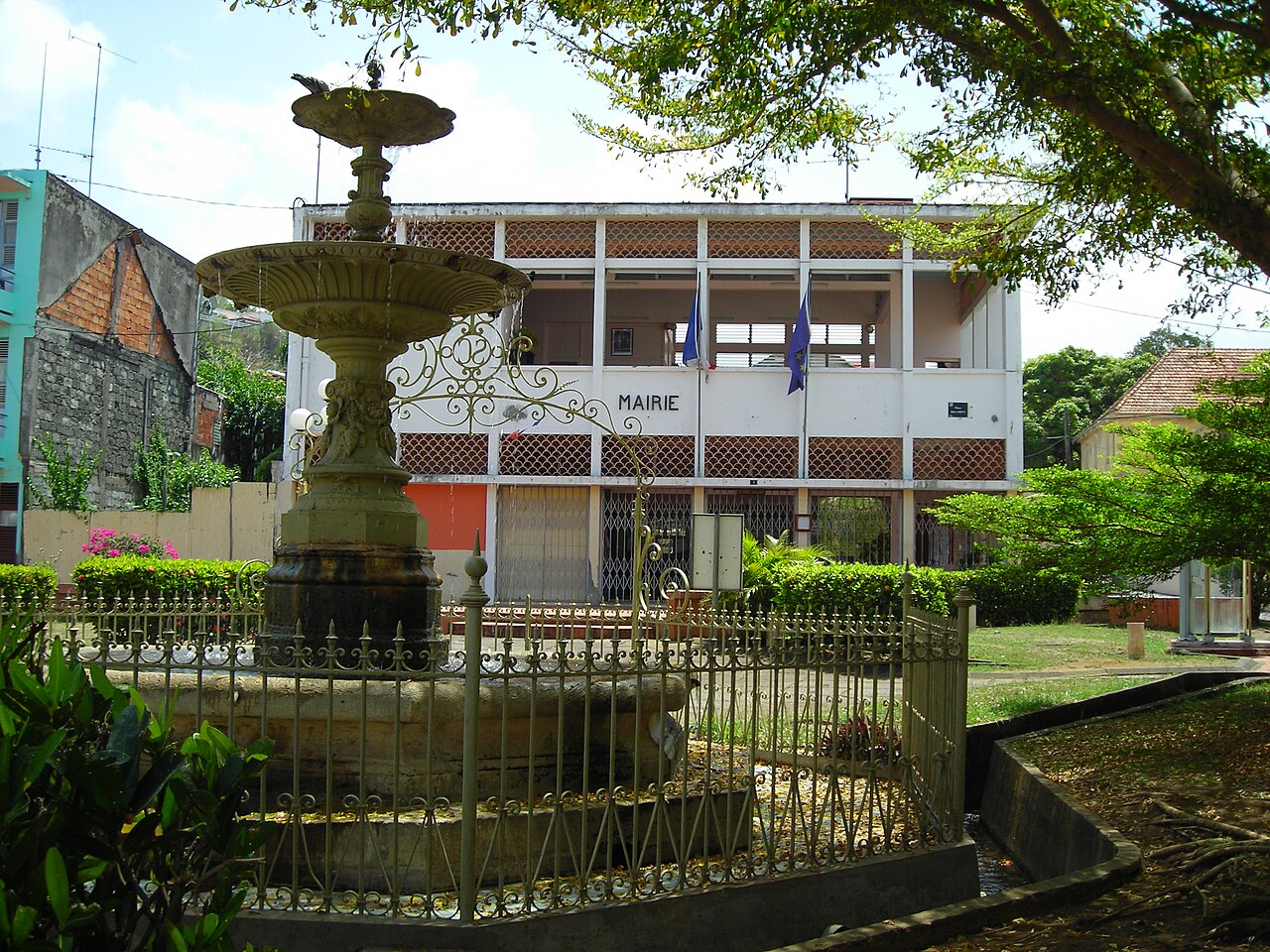
Le Carbet
©
Le Carbet

Le Carbet

Small Martinique coastal town below Mont Pelée, with dark-sand beaches and early colonial landmarks.

Le Carbet is a small coastal town on the Caribbean side of Martinique, tucked between the sea and the green slopes of Mont Pelée. A marker on the pier commemorates Columbus's landing here in 1502 — though the Carib people who were already there might have had a different view of the occasion.

The town has real character: narrow streets, the Église Saint-Jacques dating to 1645, and a string of local restaurants along the dark-sand beach where fishermen still pull in their boats. Just north of town, the Botanical Gardens at Anse Latouche occupy the ruins of a 17th-century sugar plantation, with an impressive collection of tropical plants set against the jungle-covered hillside. The painter Paul Gauguin lived briefly in Le Carbet in 1887, and the Musée Gauguin marks his stay. Above the town, the Carbet Falls — three cascades dropping through rainforest from the Carbet Mountains — are a worthwhile half-day excursion.

Guide

Eating Out

Le Carbet has a string of local restaurants along the dark-sand beach, mostly open for lunch and serving Creole cuisine: grilled fish, accras (salt cod fritters), boudin antillais (blood sausage), and colombo (a curry made with meat or fish and local spices). Prices are reasonable by Martinique standards and the setting — plastic tables under palm trees, fishing boats pulled up on the sand — is as good as the food.

For something more serious, the road north toward Saint-Pierre has a few established restaurants with proper kitchens and wine lists. But the beach restaurants are the soul of eating in Le Carbet, and a long lunch here with a Ti' Punch and grilled fish is one of the better ways to spend a Martinique afternoon.

Guide

Getting There

Le Carbet is about 25 kilometres north of Fort-de-France by the coastal road (N2). By car from the capital it is a straightforward 30-minute drive. A local bus service (the collective taxis known as taxis collectifs) runs from Fort-de-France's Pointe Simon terminal along the west coast road toward Saint-Pierre, stopping in Le Carbet. The service runs during daylight hours and is inexpensive but irregular — useful for one-way trips, less reliable for a tight schedule.

There is no direct bus from the airport at Lamentin to Le Carbet; most visitors hire a car or take a taxi from Fort-de-France.

Guide

Things to Do

Le Carbet's main draws are concentrated along the waterfront and just north of town. The Musée Gauguin marks the painter's brief but significant stay in 1887. Just north of town, the Botanical Gardens at Anse Latouche occupy the ruins of a 17th-century sugar plantation with an impressive collection of tropical plants.

The Columbus Landing Marker on the pier commemorates the Spanish explorer's 1502 landing — the first European contact with Martinique. The Église Saint-Jacques, dating to 1645, is one of the oldest churches in the Caribbean. For more active visitors, the Carbet Waterfalls — three tiers of falls in the Carbet Mountains above the town — are accessible on foot.