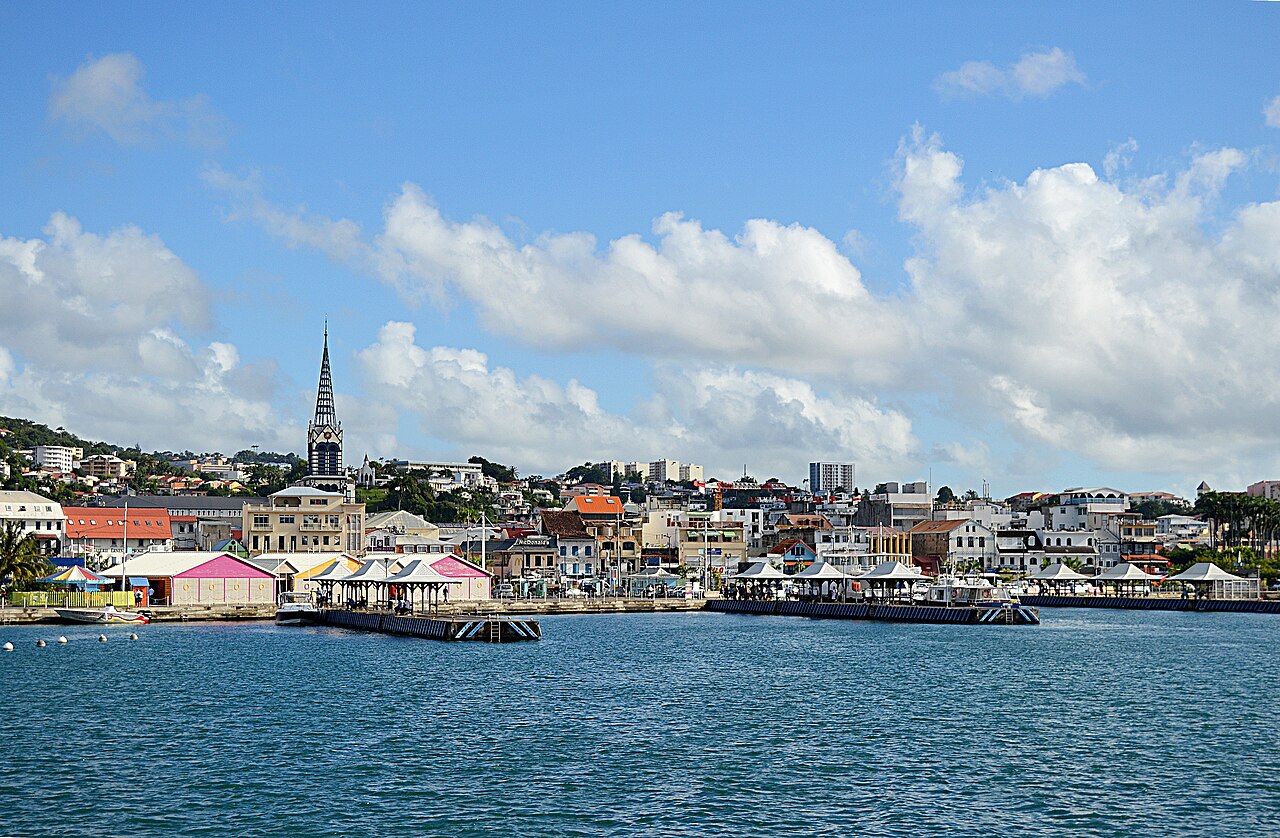
French Caribbean capital with Creole markets, balconied streets, and ferries from La Savane waterfront.
Fort-de-France is the capital of Martinique — a thoroughly French city in the Caribbean, balancing colonial architecture with the rhythms of Creole life. Narrow streets lined with balconied buildings wind through a compact downtown where the smells of spiced cooking drift from market stalls.
The heart of the city is La Savane, a shaded central park that offers relief from the traffic — which can rival Paris for density. Vendors sell cold drinks and fresh coconuts along the edges, and ferries leave from the adjacent waterfront to Pointe du Bout, where the island's best beaches are a short crossing away. The park's headless statue of Empress Josephine — decapitated by locals in 1991 as a protest against her role in maintaining slavery — is one of the most striking monuments in the Caribbean.
Along the east side of La Savane stands Fort Saint-Louis, built by the French in the 17th century and still active as a naval base. The ornate Schoelcher Library nearby — named after Victor Schoelcher, who championed the abolition of slavery — is one of the architectural gems of the Caribbean: a prefabricated iron building designed in Paris and shipped piece by piece. The Musée Départemental de Martinique holds a decent collection of pre-Columbian artifacts, and the Cathedral of Saint-Louis towers over the surrounding streets. The Grand Marché, a covered market in a 19th-century iron pavilion, is the place to find Creole spices, rhum agricole from small distilleries, and hot food from market stalls.
North of the city, the fishing village of Case Pilote houses the island's oldest church, and Carbet is traditionally the spot where Columbus first came ashore in 1502.
Guide
Eating Out
Fort-de-France's best food is Creole: the island's cooking synthesises African, Indian, French, and Amerindian traditions into something distinct. Look for colombo (curried goat or chicken), accras de morue (salt cod fritters), and boudin antillais (spiced blood sausage) as starting points. The Grand Marché is the best place to eat cheaply and well; the restaurants around La Savane cater heavily to tourists.
Le Petibonum — Outside the city proper, north along the coast, but worth the detour for Creole cooking in a memorable setting. Chef Harry Louisin serves the island's finest versions of the standards. Worth the taxi.
La Cave à Vins — A reliable option near the waterfront for straightforward French and Creole cooking with a decent wine list by Fort-de-France standards.
Snack Bar Ti Plage — The simplest and often best approach: a beach snack bar near Anse Mitan, across the bay from the city, serving accras and grilled fish to a local crowd.
Guide
Getting Around
Fort-de-France's city centre is walkable — La Savane, the cathedral, the Schoelcher Library, the Grand Marché, and Fort Saint-Louis are all within fifteen minutes of each other on foot. Traffic can be severe; the city was built for far fewer cars than it now carries, and driving during rush hours is stressful.
The most useful way to reach the beaches on the western shore of the bay is by ferry from the dock adjacent to La Savane to Pointe du Bout and Anse Mitan. The crossing takes about 20 minutes and runs regularly throughout the day; it is far faster than driving around the bay. Taxis collectifs — shared minibuses that operate on fixed routes — connect Fort-de-France with other parts of the island cheaply, departing from the central bus terminal near the waterfront.
Guide
Getting There
Fort-de-France is served by Martinique Aimé Césaire International Airport, about 10 kilometres from the city centre. Air France, Corsair, and several Caribbean airlines fly in from Paris, Pointe-à-Pitre (Guadeloupe), and other regional destinations. The airport handles transatlantic flights from Paris in around 8 hours.
From the airport, taxis take about 20 minutes to the city centre. Shared taxis (taxis collectifs) run on fixed routes and are much cheaper. There are no direct flights from North America outside of occasional charter services; most travellers connect through Paris or through San Juan.
Cruise ships dock at the pier adjacent to La Savane, making Fort-de-France one of the more walkable Caribbean port calls.