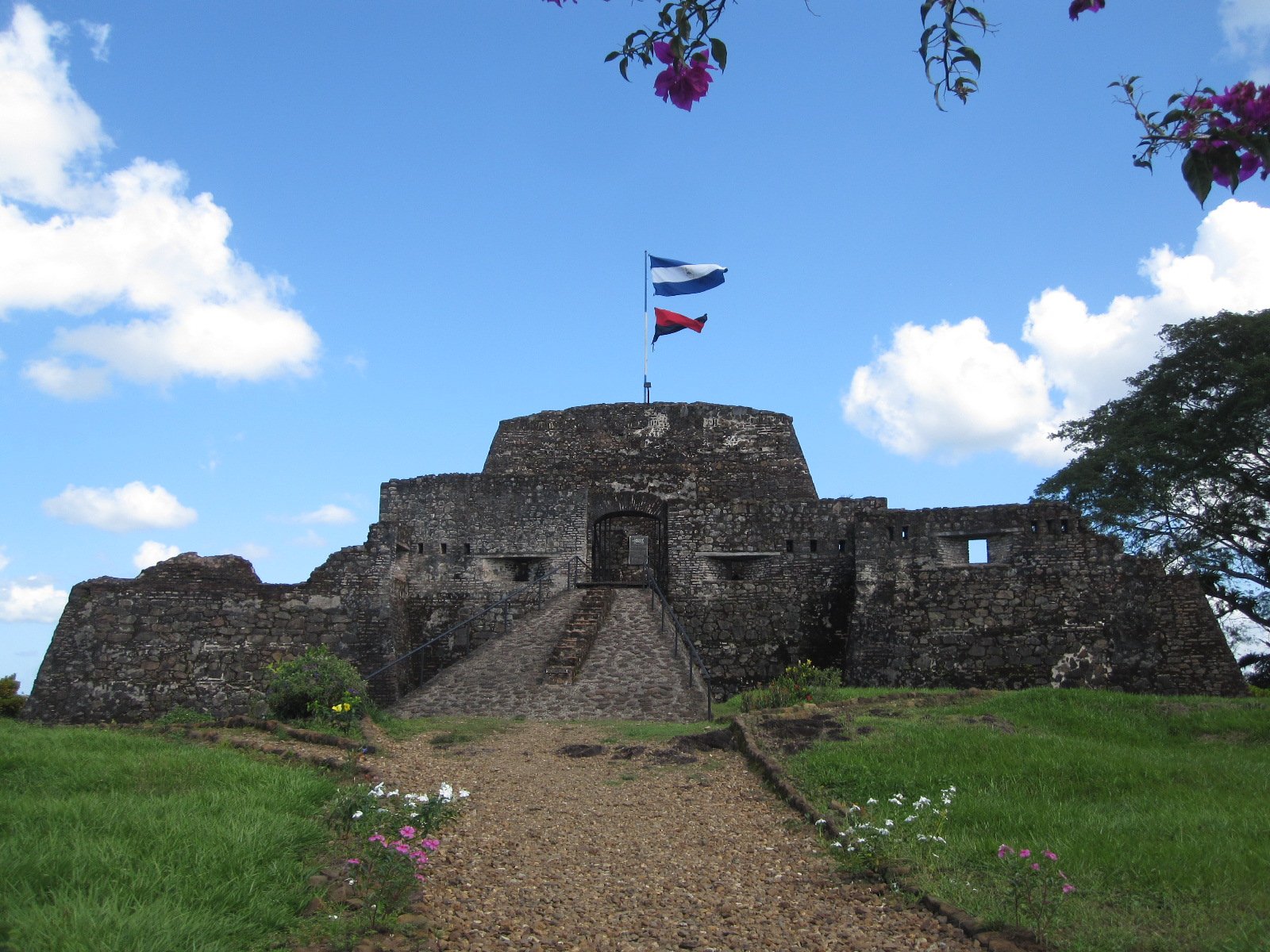
Boat-accessible Río San Juan village named for a 17th-century Spanish fortress above the rapids.
El Castillo is a tiny riverside village on the Río San Juan in southeastern Nicaragua, accessible only by boat. The journey itself is half the appeal — you take a panga from San Carlos at the eastern end of Lake Nicaragua and travel several hours downstream through dense tropical forest, past caiman-studded banks and howler monkey territory. There are no roads here, and the isolation is part of the charm.
The village is named for the Fortaleza de la Inmaculada Concepción, a 17th-century Spanish fortress built on a bluff above the river to stop pirates from reaching Granada via the waterway. The restored fort houses a small museum and offers sweeping views of the river and jungle. It is one of the most atmospheric colonial ruins in Central America, and the setting — surrounded by nothing but green — makes it feel genuinely remote.
There is not much to El Castillo beyond the fort, a handful of simple guesthouses, and a couple of riverside restaurants serving fresh fish. But that is exactly the point. You can arrange guided hikes into the Indio Maíz Biological Reserve across the river, one of the largest tracts of primary rainforest in Central America, home to jaguars, tapirs, and hundreds of bird species. The boat journey down from San Carlos is itself an experience worth having. Bring insect repellent, rain gear, and a good book for the hammock.
Guide
Getting There
El Castillo is accessible only by boat. The standard route is to fly or take a bus to San Carlos, at the southeastern end of Lake Nicaragua, and then board a panga downriver. Pangas to El Castillo depart from the San Carlos dock and take three to four hours, depending on river conditions and whether the boat stops at intermediate villages.
San Carlos can be reached by daily flights from Managua (around 45 minutes) or by a long bus journey from Granada or Managua followed by a ferry across Lake Nicaragua (up to 14 hours by this route). Flying is strongly recommended. From El Castillo, boats continue downstream to San Juan del Norte on the Caribbean coast — a further several hours of river travel for those continuing that way.
Guide
When to Go
The Río San Juan region is wet year-round, but the driest months are February to April. From May to November rainfall is heavy and the river can rise significantly, sometimes making travel more difficult and hiking conditions in the reserve demanding. December and January offer a reasonable compromise — some rain but manageable.
The upside of visiting in wet season is that the forest is at its most intense and wildlife-spotting can be exceptional: the animals are more active and less concentrated around drying water sources. Mosquitoes are present throughout the year — bring repellent, wear long sleeves at dawn and dusk, and check whether malaria prophylaxis is recommended for your itinerary.