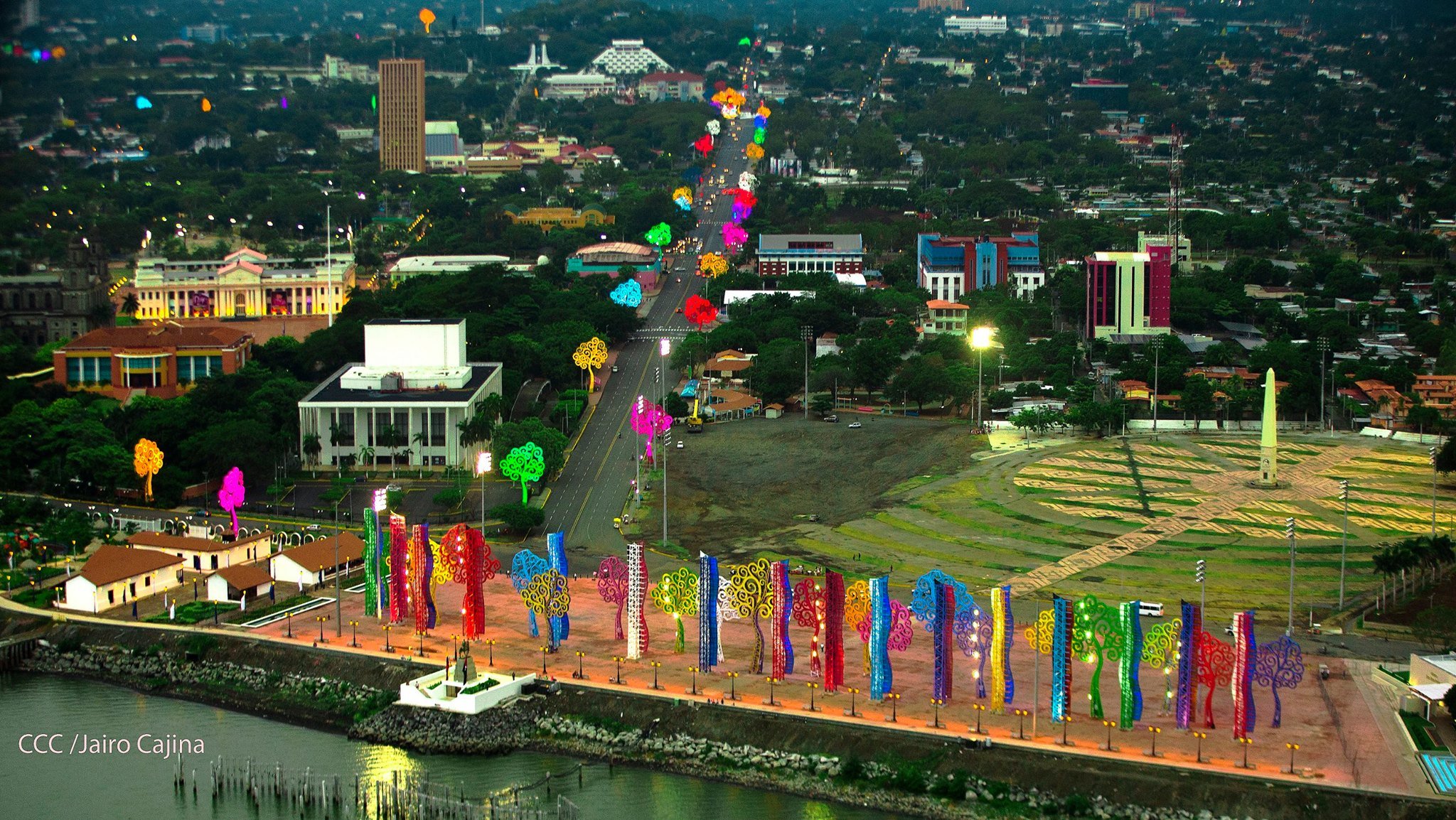
Managua is the capital of Nicaragua, a sprawling, low-rise city of about a million people on the shores of Lake Managua. The devastating earthquake of 1972 destroyed much of the old centre, and the reconstruction that followed never quite brought it back — the city lacks the colonial charm of Granada or Leon. But Managua has its own rough energy, and most travellers pass through at least briefly.
The new cathedral, with its distinctive pink and purple dome, is one of the more successful rebuilds. The old cathedral, still in ruins, is dramatically lit at night. The National Palace of Culture on the lakefront has been refurbished and hosts cultural events. The Roberto Huembes market is worth a visit for handicrafts and a glimpse of daily Managuan life.
Managua works best as a base for day trips. Granada, Leon, Masaya Volcano (where you can peer into a glowing lava lake), and Lake Nicaragua are all within a couple of hours. The Tiscapa Lagoon, in a volcanic crater in the centre of the city, offers canopy tours and good views of the skyline.