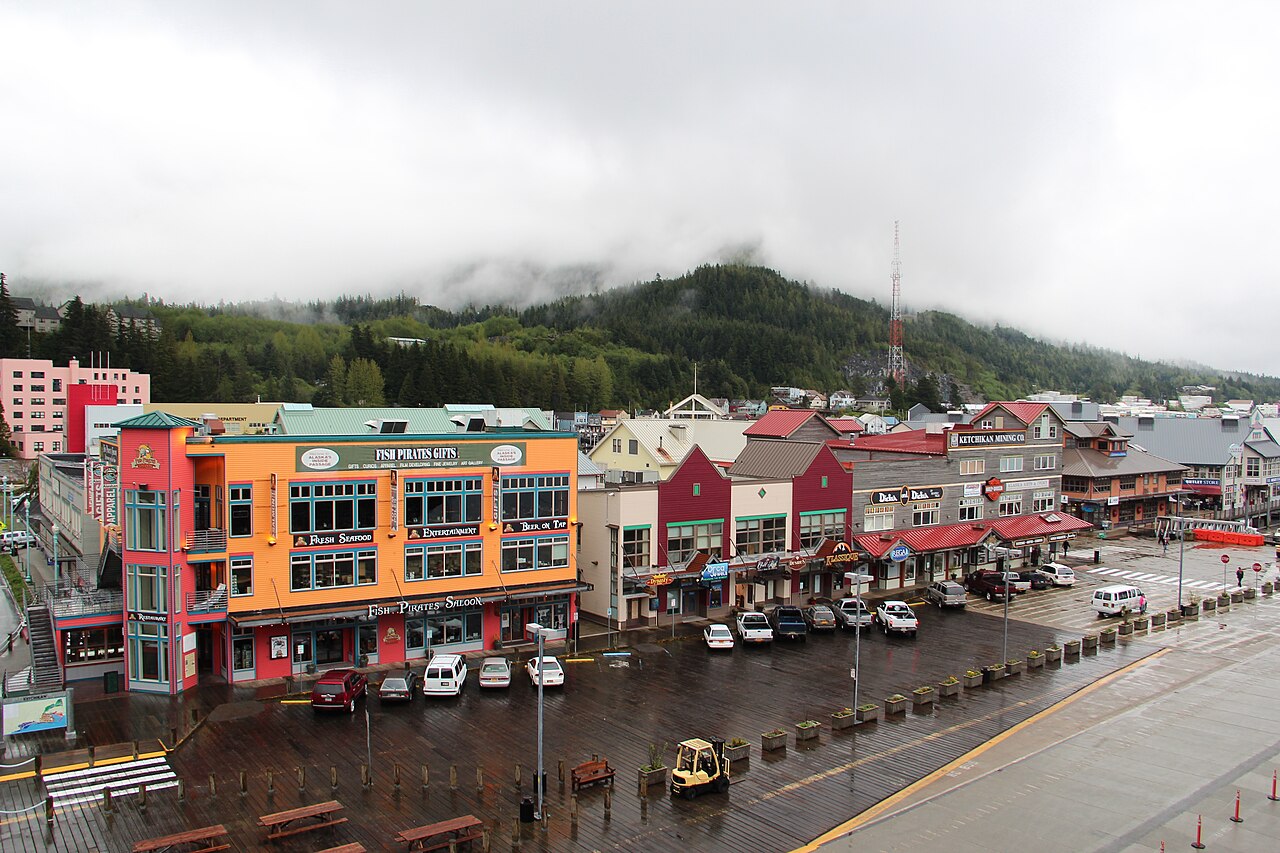
Ketchikan is Alaska's southernmost city and usually the first port of call on the Alaska Marine Highway coming north from Bellingham, Washington. It sits on the western shore of Revillagigedo Island, clinging to the mountainside above the Tongass Narrows, and receives more rain than almost anywhere else in North America — around 160 inches a year. Embrace it: the mist softens the mountains and the forest feels primeval. The city is compact and walkable, with Creek Street, a boardwalk built over Ketchikan Creek, forming the most characterful stretch of town. Once the red-light district where fishermen went to spend their money, it is now lined with galleries, boutiques, and small cafes that creak pleasantly underfoot.
Ketchikan holds the world's largest collection of standing totem poles, and indigenous Tlingit, Haida, and Tsimshian culture runs through everything here. Totem Bight State Historical Park to the north and Saxman Native Village to the south both have outstanding examples; the Totem Heritage Center in town preserves some of the oldest and most fragile poles anywhere. The surrounding Tongass National Forest — at seventeen million acres, the largest national forest in the United States — provides the backdrop for superb kayaking, salmon fishing, whale watching, and bear-viewing. Misty Fjords National Monument, accessible by floatplane or boat, is one of the most dramatic and least-visited wilderness areas in North America.
In summer the town is briefly overwhelmed by cruise ship passengers — four ships at once is not unusual, adding ten thousand people to a city of eight thousand. Come by state ferry instead, spend a night or two, and the place reveals itself as a working fishing town with real character. The salmon run in July and August draws sport fishers from across the continent; catching a king salmon in these waters is, for many visitors, the whole point of Alaska.