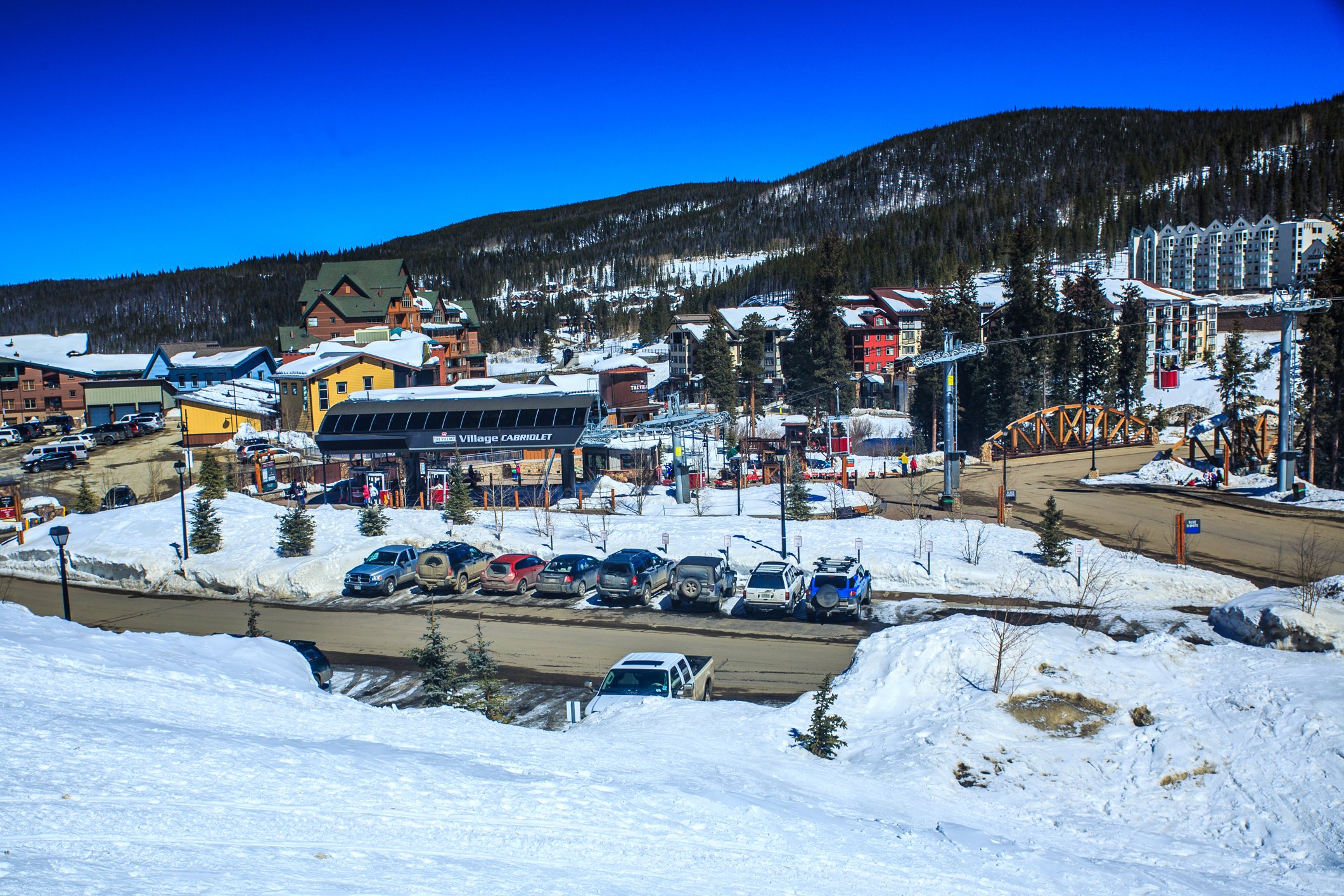
Rocky Mountain ski town linked to Denver by the Winter Park Express and Mary Jane's mogul terrain.
Winter Park is a ski town tucked into the Rocky Mountains about 70 miles northwest of Denver, sitting at an elevation of nearly 9,000 feet. It is one of Colorado's most accessible mountain resorts — the drive from Denver takes under two hours, and the Winter Park Express ski train runs seasonally from Union Station directly to the base of the slopes via the Moffat Tunnel through the Continental Divide.
Winter Park Resort is the main draw, with over 3,000 acres of skiable terrain spread across seven territories. Mary Jane, the resort's backside mountain, is famous for its mogul runs and expert-level bump fields — locals consider it some of the best mogul skiing in the state. For beginners and families, the front side offers wide, groomed cruisers with views across the Fraser Valley. In summer, the resort converts to a mountain bike park with lift-served downhill trails that attract riders from across the region.
The town itself is a compact strip along US Highway 40, with a cluster of restaurants, gear shops, and bars. It does not have the upscale polish of Vail or the party-town energy of Breckenridge — Winter Park feels more like a working ski town, and that is part of its appeal. Nearby Granby and the Fraser Valley offer additional lodging options and a quieter pace if the base village feels too busy.
Winter Park sits at the western end of Berthoud Pass, one of Colorado's classic mountain drives, reaching 3,452 metres on the Continental Divide. In winter, the pass can be treacherous but beautiful; in summer, it is a scenic route worth taking slowly. The surrounding Arapaho National Forest offers hiking, fishing, and camping once the snow melts.
Guide
Getting There
Winter Park is about 110 kilometres northwest of Denver, making it one of the most accessible ski resorts from a major US city.
By car: Highway 40 over Berthoud Pass is the direct route — about 1.5 to 2 hours from central Denver depending on traffic and road conditions. The pass can be closed or require chains in heavy snow; check conditions before you go. US-6 through Loveland Pass is an alternative but also at high altitude. The Eisenhower Tunnel on I-70 (the route to other Front Range ski towns) does not serve Winter Park directly.
By train: The Winter Park Express ski train runs from Denver's Union Station on weekends and selected holidays in winter (January–March), taking about 2 hours and arriving directly at the resort base. This is genuinely the most enjoyable way to get there and eliminates the parking problem. Book well in advance.
By bus: Ski bus services run from Denver's Union Station and various Front Range locations during the ski season — cheaper than the train and more flexible in terms of timing, though less scenic. The town itself has a free local shuttle connecting lodging, the resort, and the main strip during winter.
Guide
When to Go
Winter Park has two distinct seasons and the choice of when to go depends entirely on what you're there for.
Winter (December–March): The ski season runs from mid-November to mid-April in most years. January and February are the best months for skiing — the snowpack is usually at its deepest and the crowds, while significant, are manageable compared to the Christmas–New Year peak. Weekdays are dramatically quieter than weekends; if you can ski Tuesday through Thursday, you will have the mountain largely to yourself.
Summer (June–September): The shoulder months of May and June can still see snow at altitude but the lower valleys clear by late May. July and August are warm, sunny, and excellent for mountain biking, hiking, and fishing. The resort's bike park operates from June through October, weather permitting.
Spring and autumn: April through May sees reduced ski operations and closed mountain bike trails. October and November are quiet and cold — not unpleasant if you want the town without the crowds, but limited in terms of activities.