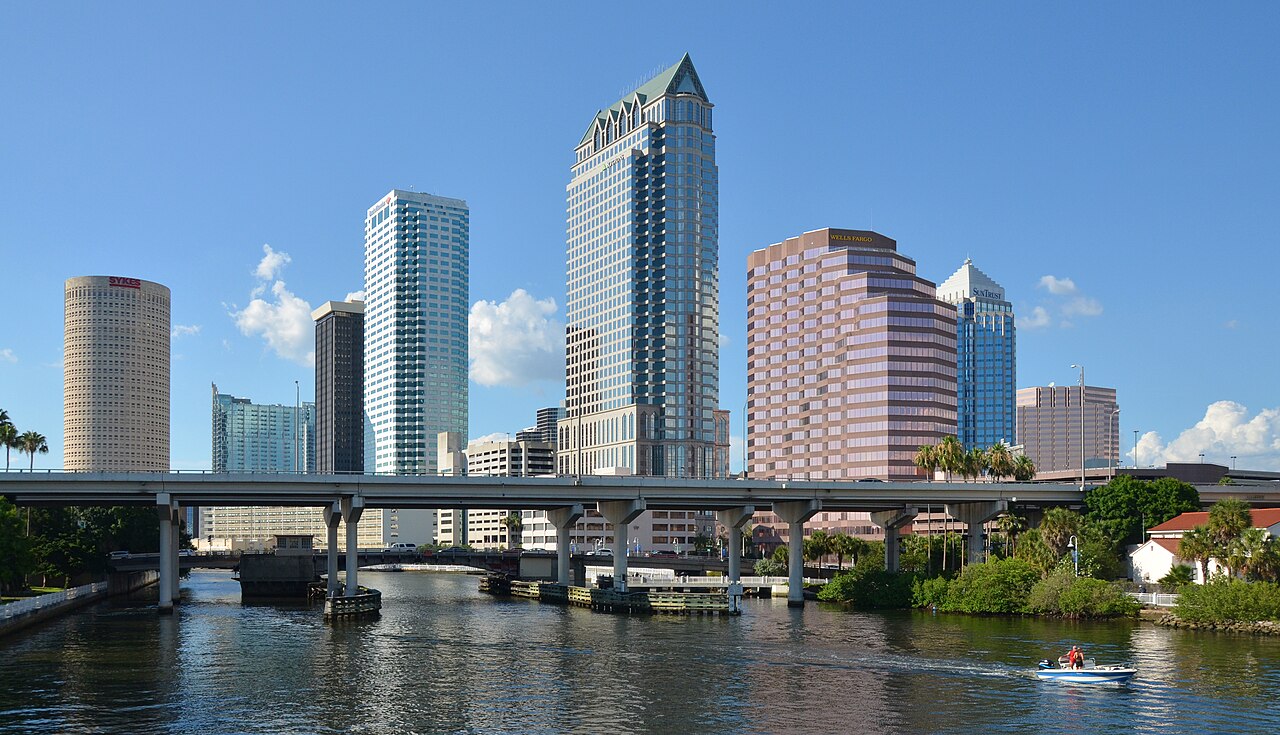
Tampa is a city of around 400,000 on Florida's Gulf Coast, the third-largest in the state and the commercial heart of the Tampa Bay metropolitan area. It is a less obvious destination than Miami or Orlando, which is part of the appeal: Tampa is a working city with a deep-water port, a historic cigar-making district, a big university, and a genuine sense of itself. Visitors who come tend to be drawn by the beaches of the bay, by Busch Gardens theme park, or by the Cuban and Spanish heritage of Ybor City, the old cigar-factory neighbourhood that is now the centre of Tampa's nightlife.
Ybor City, a few blocks from downtown, is the single most distinctive thing about Tampa. In the 1880s the cigar magnate Vicente Martinez-Ybor moved his business here from Key West, importing thousands of Cuban, Spanish, and Italian workers who rolled cigars by hand in the big brick factories that still line 7th Avenue. For a few decades at the turn of the 20th century, Tampa was the cigar capital of the world. The industry is mostly gone, but the red-brick factories, the social clubs (the Centro Español, the Círculo Cubano, L'Unione Italiana), the smell of Cuban coffee, and the Spanish street signs remain. The Columbia Restaurant — founded in 1905, still run by the founding family, and the oldest Spanish restaurant in the United States — is worth a meal on its own. The J.C. Newman Cigar Factory still hand-rolls cigars and offers tours. A tiny Cuban-owned park, Parque Amigos de José Martí, is technically sovereign Cuban territory — the only such spot in the continental US.
The rest of Tampa has a few strong attractions. Busch Gardens, a theme park with world-class roller coasters and a genuine African wildlife safari, is the city's biggest draw for families. The Florida Aquarium on the downtown waterfront is one of the best in the country, with a massive coral reef tank and weekend shark-dive programmes. The Tampa Bay History Center tells the story of the region with unusual honesty about its Spanish, Seminole, cigar-rolling, and pirate-trading past. The Henry B. Plant Museum, in a Moorish-domed Victorian palace, captures the gilded age of Florida's early tourism industry. The Tampa Theatre, a 1926 movie palace decorated like a Spanish courtyard under a Mediterranean night sky, is one of the finest surviving atmospheric cinemas in America. The Riverwalk along the Hillsborough River connects all of this on foot. If you are here in January, the Gasparilla Pirate Festival — a beer-soaked Mardi-Gras-style parade celebrating an invented 18th-century pirate invasion since 1904 — is Tampa at its most fun.
The beaches are not actually in Tampa — they are on the other side of Tampa Bay, on the barrier islands of St. Pete Beach, Treasure Island, and Clearwater, about 30–45 minutes' drive. These are some of the best white-sand beaches in Florida, regularly ranked in the national top ten. Stay in Tampa for the city, drive over for the sand.