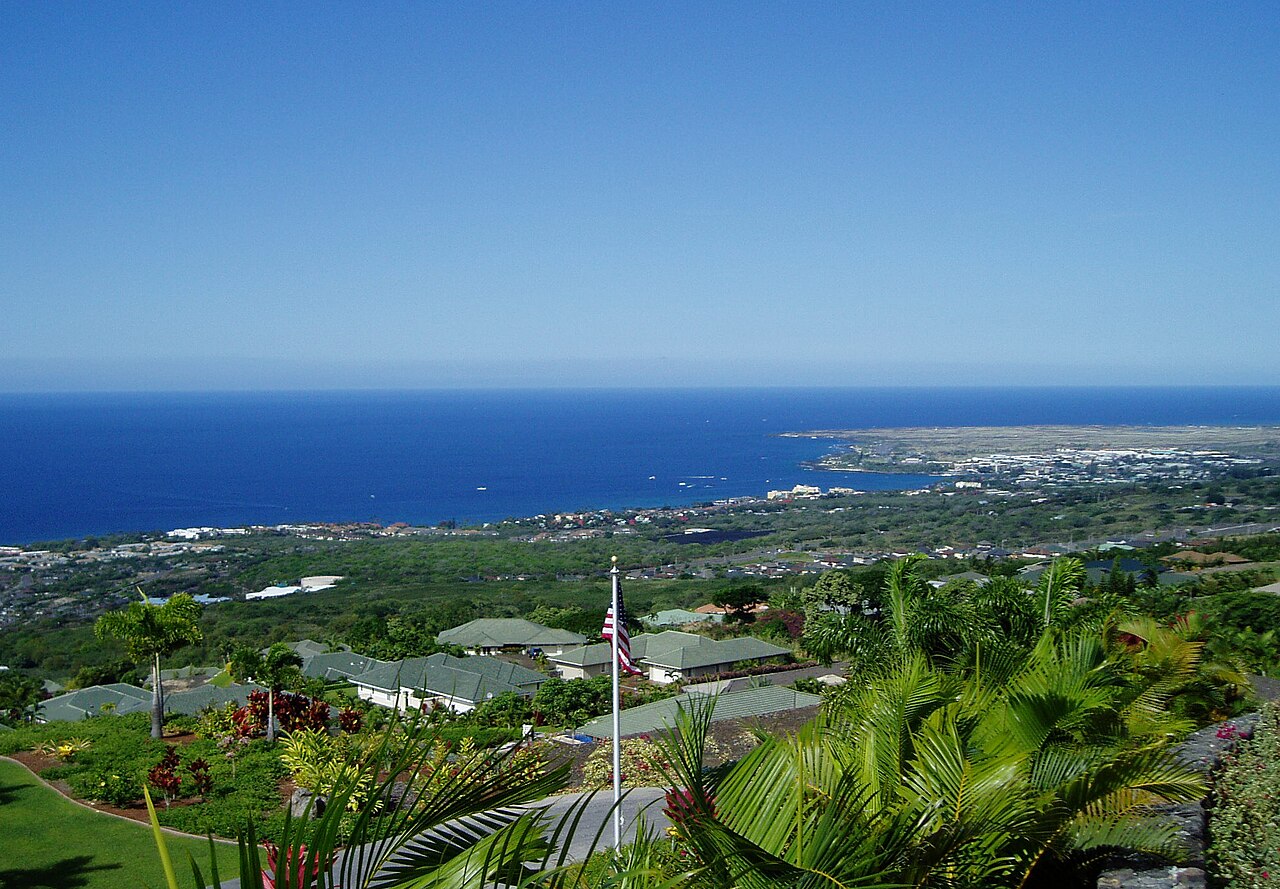
Kailua-Kona sits on the dry, leeward side of the Big Island — the side that doesn't get the rain. While the rest of Hawaii can be lush and overcast, Kona is reliably sunny, which is exactly why it became the island's tourist hub. The town stretches along Alii Drive, a seaside road lined with shops, restaurants, and lava-rock shores where the Pacific crashes in hard. Two of the oldest buildings in the islands, Hulihee Palace and Mokuaikaua Church, stand within a few hundred metres of Kamakahonu, the site of King Kamehameha's final residence.
This is a working town as much as a resort one. Kona coffee grows on the slopes above the coast in the Kona Coffee Belt, where the elevation and morning clouds create near-perfect conditions. The coffee farms are worth a visit — the contrast between the beachside town and the cooler, greener highlands a few miles up the mountain is striking. The artists' village of Holualoa sits in the middle of the coffee country.
The underwater life here is exceptional. The calm, clear waters on the leeward side draw divers and snorkelers year-round — Kahaluu Bay is the best place in West Hawaii to see green sea turtles from the shore — and the manta ray night dives off the coast are genuinely unforgettable. Whale watching runs through the winter months when humpbacks arrive from Alaska. The protected coast just north of town at Kaloko-Honokohau preserves one of the largest precontact Hawaiian settlements still readable in the landscape.
Kona is also the finish line for the Ironman World Championship, held every October. If you're here for it, the town buzzes with an energy unlike anything else. If you're not, you'll still notice the unusual number of lean people in spandex jogging along Alii Drive at all hours.