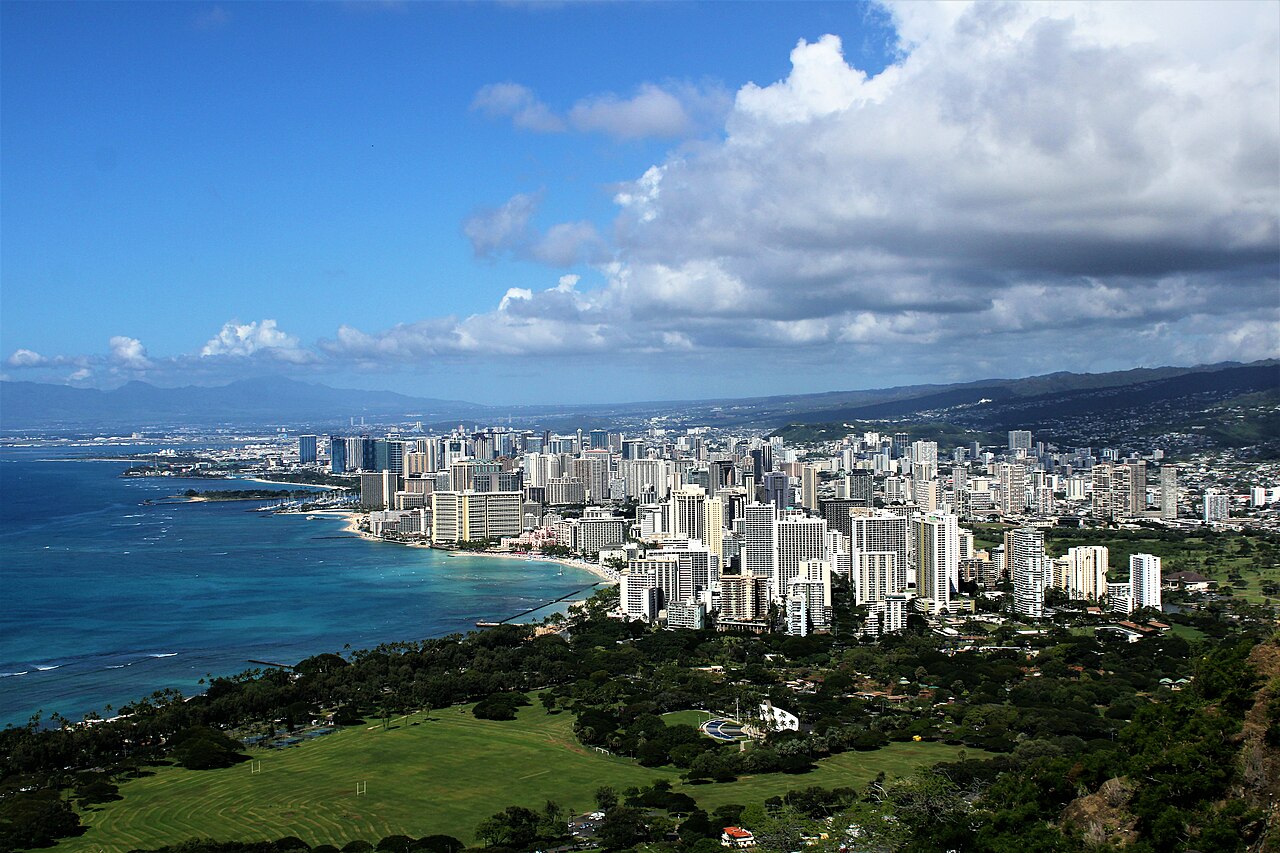
Honolulu is the capital of Hawaii and the only major city in the state, spread along the southern shore of Oahu between the Ko'olau mountains and the Pacific. For most visitors it will be the first place they arrive, and first impressions can be misleading — the high-rise sprawl along Waikiki looks like any resort strip, but the city has real depth and character once you get past the tourist corridor.
Waikiki Beach is where most visitors stay, a narrow crescent of sand backed by hotels and restaurants. It is crowded but the water is warm, the waves are gentle enough for beginners to learn to surf, and Diamond Head crater rises dramatically at the eastern end. The hike up Diamond Head is short and steep, and the views from the summit across the city and ocean are worth the sweat. Beyond Waikiki, Honolulu opens up considerably. Chinatown is one of the oldest in the country, gritty and authentic, with dim sum restaurants, lei sellers, herbal medicine shops, and a growing arts scene. The Honolulu Museum of Art has an excellent collection of Asian and Pacific art in a beautiful courtyard building, while the Bishop Museum holds the finest Hawaiian and Pacific cultural collection in existence.
Pearl Harbor and the USS Arizona Memorial are essential stops — the memorial sits directly above the sunken battleship, and oil still rises to the surface from the wreck more than 80 years later. Reservations are free but you should book well in advance. Also at Pearl Harbor: the Battleship Missouri, where Japan formally surrendered in 1945, and the Pacific Aviation Museum in two hangars that were bombed during the attack. For a different side of the island, drive up to Manoa Valley, where the Lyon Arboretum and Manoa Falls trail take you into lush rainforest just minutes from downtown. The North Shore, about an hour's drive, offers legendary surf breaks at Pipeline and the welcoming surf town of Haleiwa, and the shrimp trucks in Kahuku are a must.
Honolulu is expensive — expect to pay mainland big-city prices for food and considerably more for anything imported. The bus system (TheBus) is extensive and cheap, and covers most of the island. The best local food is often found at plate lunch spots and food trucks rather than sit-down restaurants — try a plate lunch with two scoops of rice and macaroni salad for an authentic taste of everyday Hawaii. Poke is the other essential: raw fish marinated and served over rice, available at every supermarket and far better here than in any mainland imitation.