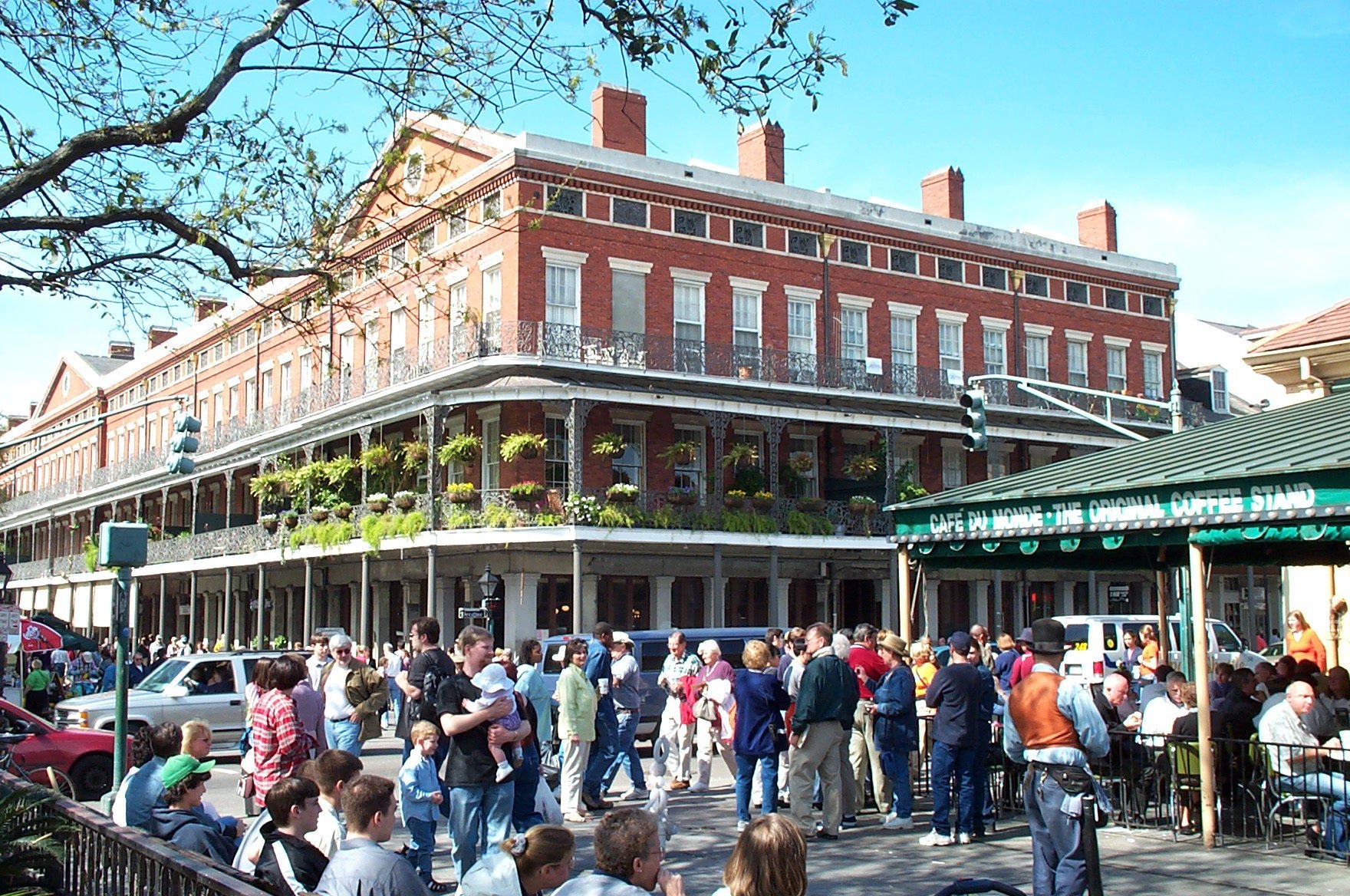
New Orleans is unlike any other city in the United States: part French, part Spanish, part African, part Caribbean, and entirely itself. It is a city of above-ground cemeteries, brass bands, voodoo, Mardi Gras, and Creole cuisine — a place where the past is not preserved behind glass but still operating in the streets. Jackson Square and St. Louis Cathedral define the heart of the French Quarter; Frenchmen Street in the Faubourg Marigny is where the music actually lives.
The food is Creole — a serious fusion of French technique, African ingredients, and Spanish spicing. Antoine's, founded in 1840, is the oldest family-run restaurant in the country; Commander's Palace in the Garden District is where the city's great chefs have trained for fifty years. Café du Monde serves beignets and chicory coffee twenty-four hours a day beside the river. The cocktail was invented here — the Sazerac at the Sazerac Bar in the Roosevelt Hotel claims the title.
Jazz was born in Tremé, the oldest African American neighbourhood in the country, specifically at Congo Square where enslaved people were permitted to keep African musical traditions alive. Preservation Hall continues that tradition in a small, unair-conditioned room off Bourbon Street that has been full every night since 1961. The National World War II Museum is one of the finest history museums in America and easy to miss if you come only for the jazz. Don't.
The St. Charles streetcar — the oldest continuously operating street railway in the world — is the best way to see the Garden District mansions and Audubon Park. St. Louis Cemetery No. 1 is the most famous of the city's "Cities of the Dead," its whitewashed vaults containing three hundred years of New Orleans history. Hurricane Katrina in 2005 flooded 80 percent of the city; the recovery has been remarkable but uneven, and the city that exists today is in some ways different from the one that existed before. It remains, without question, one of the most extraordinary places in North America.