Warren Dunes
©
Warren Dunes

Warren Dunes

Lake Michigan state park with steep sand dunes, broad beaches, and beech-maple forest trails.

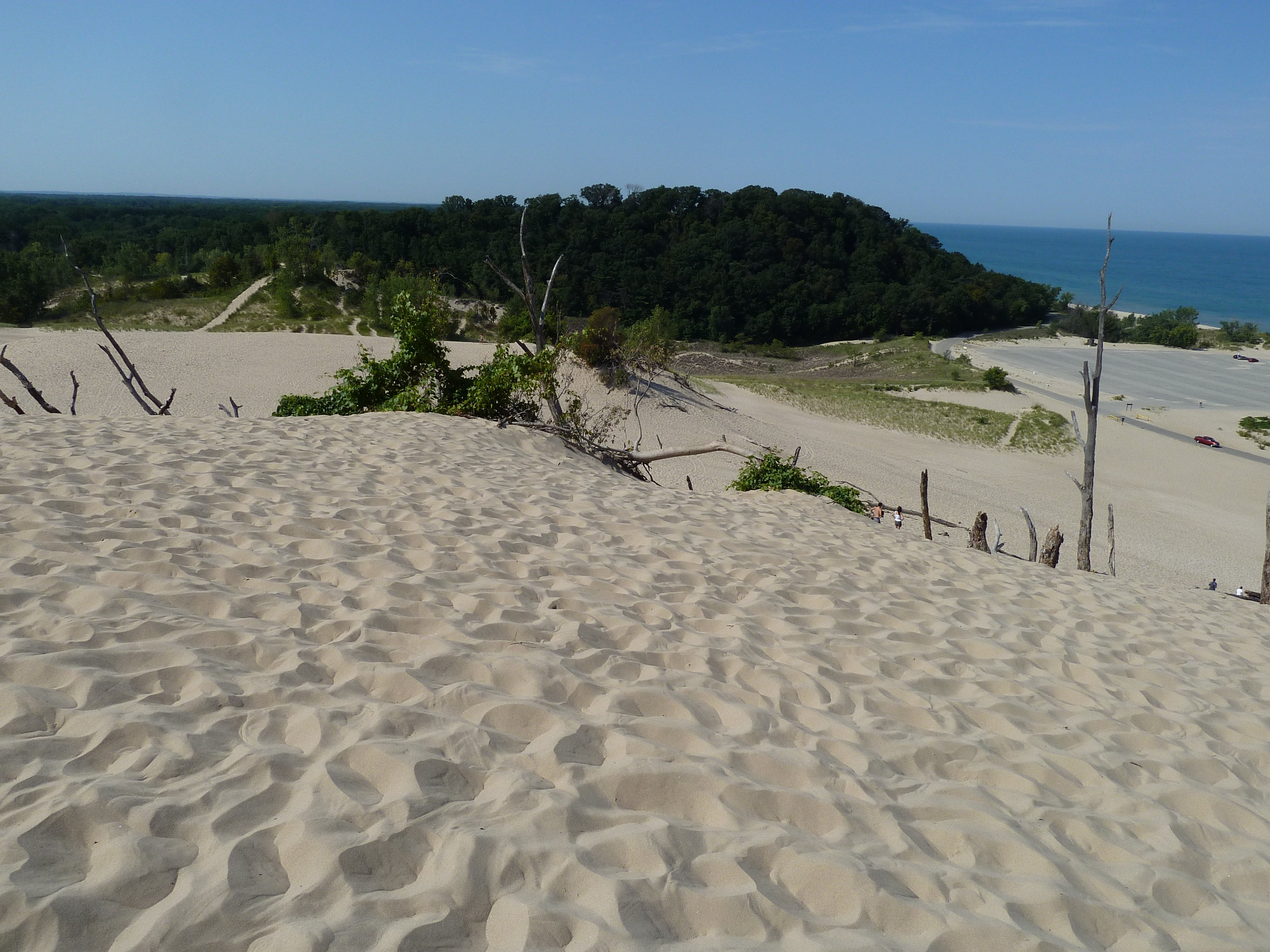
Warren Dunes State Park, on the Lake Michigan shore in the southwest corner of the state, has some of the finest sand beaches in Michigan. The dunes rise steeply from the water — Tower Hill reaches about 80 metres — and the views from the top stretch across the lake. It is a popular summer destination for beachgoers from Chicago, about 90 minutes away.

The park also has hiking trails through beech-maple forest behind the dunes. Note that alcohol is not allowed anywhere in the park, and dogs are not permitted on the beach.

Guide

Getting There

Warren Dunes is about 90 minutes from Chicago by car, which is why it draws so many day-trippers from the city. Take I-94 east into Michigan and exit at Sawyer (Exit 12), then follow Red Arrow Highway south to the park entrance on Floral Road. The drive is straightforward and the last stretch runs through farmland and small towns before the dunes come into view. There is no practical public transit option — a car is essentially required.

The nearest major airports are Chicago O'Hare (ORD) and Chicago Midway (MDW), both roughly two hours from the park by car depending on traffic. If you are flying in specifically for the park, Midway is marginally closer and tends to have less airport congestion. South Bend Regional Airport (SBN) in Indiana is about 45 minutes away and serves several carriers if you prefer a smaller airport. All visitors pay a Michigan State Park entry fee of $13 per vehicle; an annual Recreation Passport is available for $17 and covers all Michigan state parks for the calendar year, which makes it worthwhile if you plan to visit more than once.

Guide

Things to Do

Warren Dunes is built around two things: the dunes themselves and the forest behind them. You can spend a morning sliding down Tower Hill, an afternoon swimming in Lake Michigan, and an evening walking through beech-maple woods without ever getting in a car. That combination — open sand and dense forest within a short walk of each other — is what makes this park worth the trip.

The beach draws the crowds, and for good reason. The Lake Michigan shoreline here is wide, clean, and backed by towering dunes rather than the usual flat parkland. But the trails behind the dunes reward anyone willing to leave the sand behind. The forest is quiet and genuinely different from the beach, and in autumn the foliage is a reason to come in its own right.

A few practical things to know before you arrive: alcohol is not allowed anywhere in the park, and dogs are not permitted on the beach (though they can join you on the trails on a leash). Bring your own food and water, especially on busy summer weekends when the parking lots fill fast.

Guide

When to Go

Summer is the obvious season, and for the beach it is the right call. The lake water warms up by late June and stays swimmable through September. July and August are the busiest months — the parking lots genuinely fill on hot weekends, and arriving after 10am means a long walk from an overflow area. If you have flexibility, weekdays in late June or early September give you the same weather with a fraction of the crowd.

Fall is underrated. The beech-maple forest behind the dunes puts on a proper show in October, and the beach itself is beautiful in cooler weather — wide and empty, with the lake turning grey-green and the waves picking up. You cannot swim comfortably in October, but the hiking trails are at their best and you can usually have Tower Hill to yourself on a weekday. The park stays open year-round, and a winter visit after a snowfall is genuinely striking — sand dunes under snow is an unusual combination.

Camping is available in the park and is popular from late May through early October. The campground fills quickly on summer weekends, so reservations well in advance are essential if you want to stay overnight in peak season.