Bemidji
©
Bemidji

Bemidji

Bemidji is a northern Minnesota lake town known for Paul Bunyan statues and surrounding pine forests.

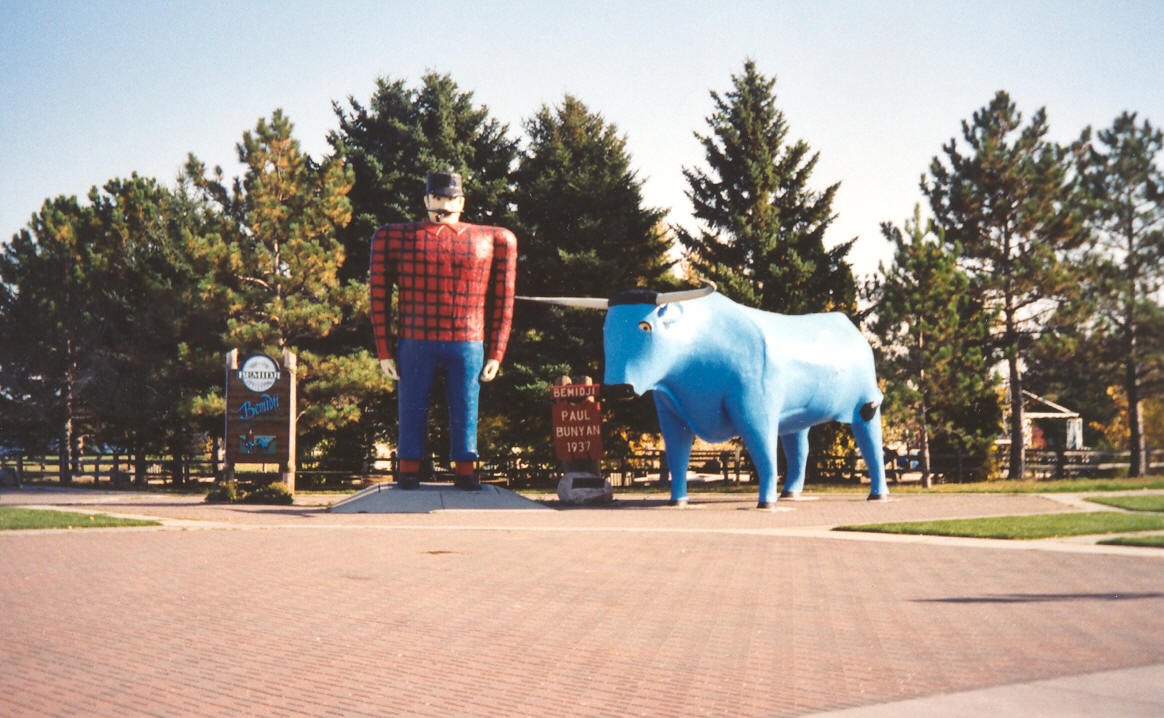
Bemidji sits on the southwest shore of Lake Bemidji in northern Minnesota, a small college town surrounded by pine forests and more than 400 lakes. It is best known for the giant statues of Paul Bunyan and Babe the Blue Ox on the lakeshore — one of the great American roadside attractions, standing here since 1937.

The town is a gateway to Minnesota's north woods. In summer the lakes offer fishing, canoeing, and swimming, and the Paul Bunyan State Trail runs 120 miles south through forests and small towns. In winter, Bemidji embraces the cold with cross-country skiing, snowmobiling, and ice fishing — the kind of deep-freeze outdoor culture that defines this part of the state.

Bemidji also sits near the headwaters of the Mississippi River at Lake Itasca State Park, about 30 miles to the southwest. You can walk across the Mississippi here where it is barely ankle-deep — a strange and satisfying thing to do, knowing where this trickle of water ends up.

Guide

Getting There

By car is the most common way. Bemidji is 3.5 hours northwest of Minneapolis on US-2 — a straightforward drive through increasingly rural terrain. There is no fast route; US-2 is a two-lane highway for much of the journey.

Amtrak's Empire Builder stops at Bemidji on its daily run between Chicago and Seattle. The station is right downtown, within walking distance of the lakeshore. The train arrives and departs once daily in each direction, which limits flexibility but makes for a pleasant alternative to driving — the route through northern Minnesota passes through good scenery.

Bemidji Regional Airport has small propeller flights from Minneapolis, operated by SkyWest or similar regional carriers. The flights take about an hour, but the tickets are expensive relative to the drive time saved, and schedules are limited. It makes sense if you are time-constrained or if someone else is paying.

Guide

Things to Do

Bemidji's draws are mostly outdoors. The lake is the centre of town life in every season, and the surrounding north woods offer trails, water, and the kind of quiet that is hard to find closer to the Twin Cities. The Paul Bunyan statues are a genuine landmark — free, photogenic, and worth five minutes of anyone's time.

Guide

When to Go

July is the best month. The weather is warm without being oppressive, the lake is fully swimmable, and the north woods are at their greenest. Long weekends in summer bring day-trippers up from Minneapolis, so the town gets busier than you might expect; if you want the lake to yourself, go mid-week.

Winter runs from December through March and is genuinely cold — temperatures of -20°C are not unusual, and some winters are worse. This is not a deterrent for locals, who embrace the season with ice fishing, snowmobiling, and cross-country skiing. The Polar Daze festival in late January is a deliberate celebration of the cold, featuring ice carvings, human bowling, and other events designed to get people outside when every instinct says to stay in.

Spring, from April through May, is unpredictable. Late snowfalls are common, the mud is considerable, and the lakes are only beginning to warm. Fall, from September through October, offers the best foliage in the north woods and notably smaller crowds. The colours peak in late September. Evenings get cold quickly; pack accordingly.