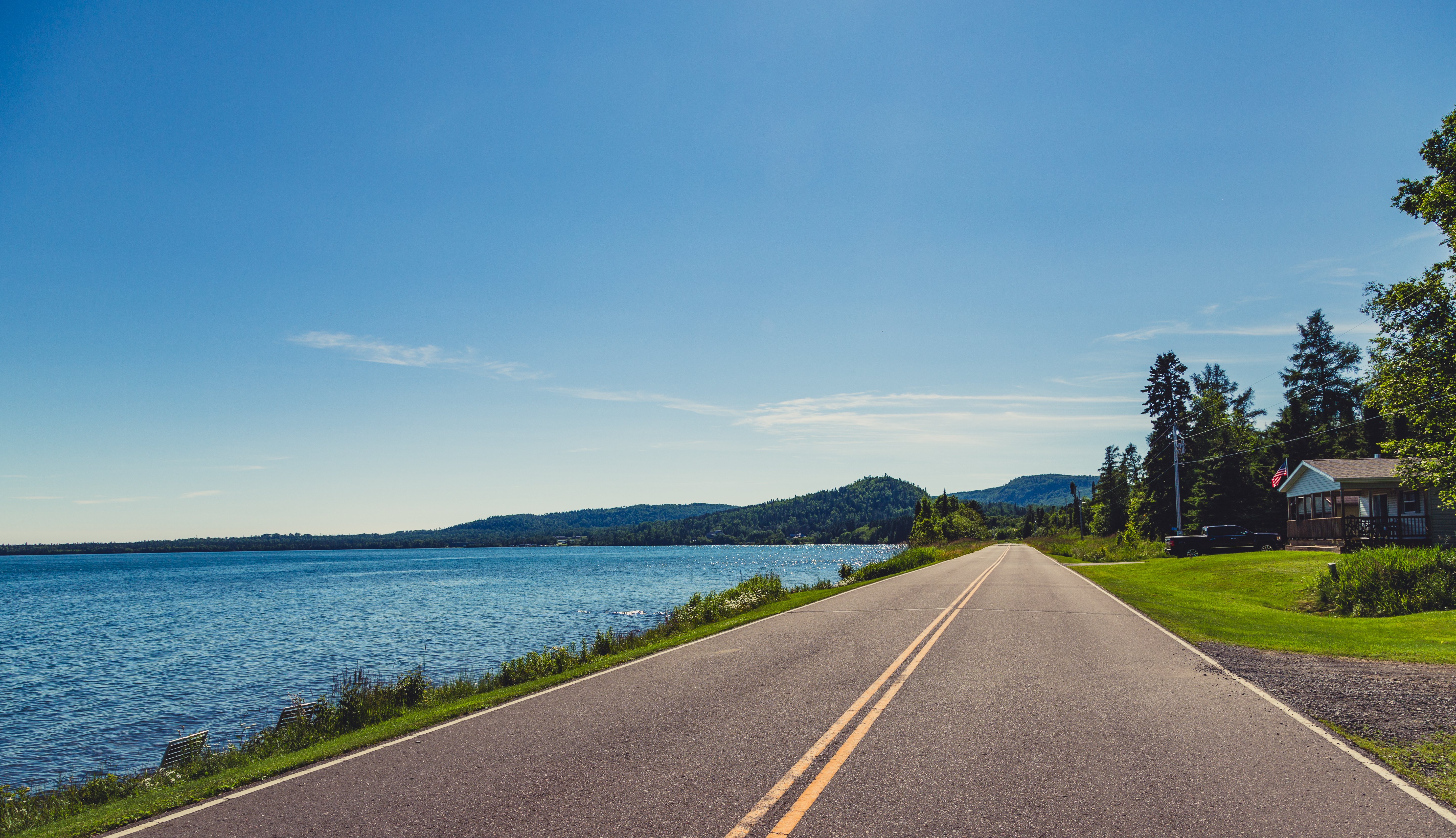
Lake Superior settlement at Minnesota's northeastern tip, known for its fur-trade national monument.
Grand Portage sits on the shore of Lake Superior in the far northeastern corner of Minnesota, about as close to Canada as you can get without crossing the border. The main draw is Grand Portage National Monument, which preserves the site of an 18th-century fur trade headquarters where voyageurs, Ojibwe families, and North West Company agents gathered each summer for a grand rendezvous of trade and negotiation.
The reconstructed palisade, great hall, and kitchen have been rebuilt on their original archaeological sites. A canoe warehouse holds birch-bark vessels of the kind that once carried furs and trade goods along the waterways connecting Lake Superior to the continent's interior. The 8.5-mile Grand Portage trail — the "Great Carrying Place" — links the compound to Fort Charlotte on the Pigeon River, and can be hiked in a long day.
The surrounding landscape is striking: boreal forest, cold Superior waters, and the kind of quiet that makes the rest of the state feel far away. Grand Portage is on the Grand Portage Band of Lake Superior Chippewa reservation, and the community's heritage is woven throughout the site.
Guide
Getting There
Grand Portage is the last community on Minnesota Highway 61, 36 miles northeast of Grand Marais and about 150 miles from Duluth. The Pigeon River border crossing into Ontario is 6 miles further on, with onward connections to Thunder Bay (45 miles) and the Trans-Canada Highway.
There is no public transport into Grand Portage; you need a car. The closest airports are Thunder Bay (CYQT) in Ontario and Duluth International (DLH) in Minnesota.
The Voyageur Marina at the end of Stevens Road is the departure point for the Isle Royale Queen IV and the smaller Voyageur II, the only passenger ferries to Isle Royale National Park. Crossings run mid-May through late September; book months ahead in season. Grand Portage is also a base for floatplane service to the island through Isle Royale Seaplanes.
Guide
When to Go
The summer visitor season is short — late May to mid-October — and tightly tied to the National Monument's interpretive program, the Isle Royale ferry schedule, and the weather. August is the warmest and busiest month and the time of the annual Rendezvous Days and Powwow (second weekend of August), when reenactors, traders, and Ojibwe dancers fill the depot grounds.
September brings clearing weather, fewer bugs, and the start of fall colour along the Highway 61 corridor; this is the connoisseur's month. Winter is long and serious: the Monument's grounds are open year-round but most buildings close, the ferries don't run, and temperatures regularly drop below -20°F (-29°C). Snowshoeing and cross-country skiing are possible on the Grand Portage Trail with proper gear.