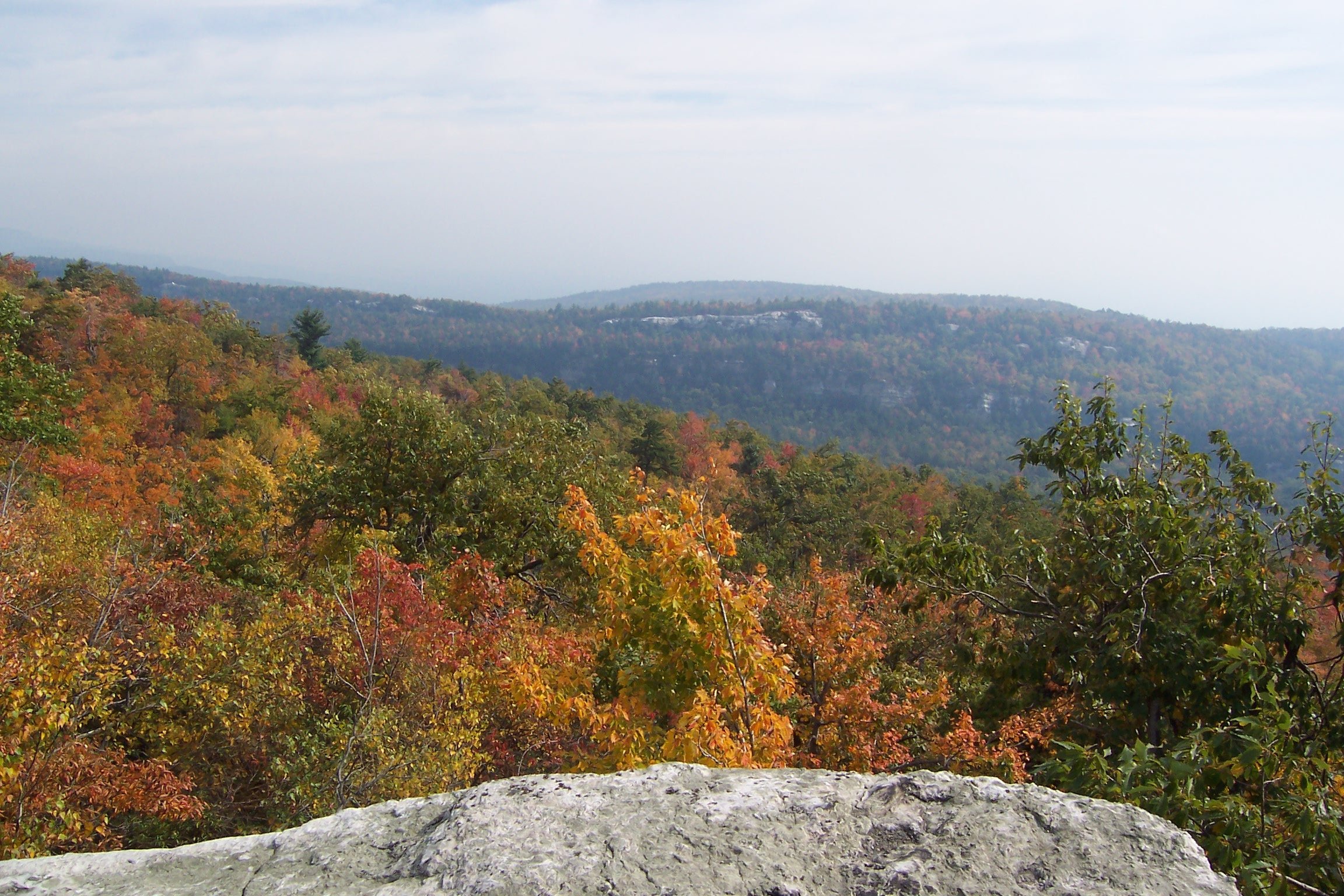
New Paltz is a small college town in the Mid-Hudson Valley, about 90 miles north of New York City, with an outsized reputation as an outdoor destination. The Shawangunk Ridge sits directly to the west, offering some of the finest crack climbing in the eastern United States and a network of hiking trails and carriage roads through protected wilderness. Minnewaska State Park Preserve and Mohonk Preserve together protect tens of thousands of acres of ridge and valley — the kind of landscape that makes people move here and then stay for decades.
The history runs deeper than most visitors expect. Huguenot Street preserves a cluster of stone houses built by French Protestant refugees in the late 17th and early 18th centuries, making it one of the oldest continuously inhabited streets in North America. The families who built them — Hasbrouck, DuBois, Bevier, Deyo — are still names you see on buildings and road signs throughout the valley. The whole story, including the enslaved people who lived and worked alongside the settlers, is interpreted at the Jean Hasbrouck House and the other properties on the street.
SUNY New Paltz has shaped the village's character over generations. The student population of roughly 8,000 sustains a food and bar scene more varied than the town's size would suggest, and the Samuel Dorsky Museum of Art on campus is free and genuinely worth an hour. The New Paltz Downtown Historic District is compact and walkable: bookshops, cafes, the weekend farmers market on the village green, and a steady mix of locals and city arrivals who have discovered that 90 minutes on the Thruway is a reasonable price for clean air and good climbing.
Fall is the peak season, when the ridge turns gold and amber and the light on the valley has the quality that drew the Hudson River School painters here in the 19th century. Come midweek if you can — the weekend crowds in October are significant.