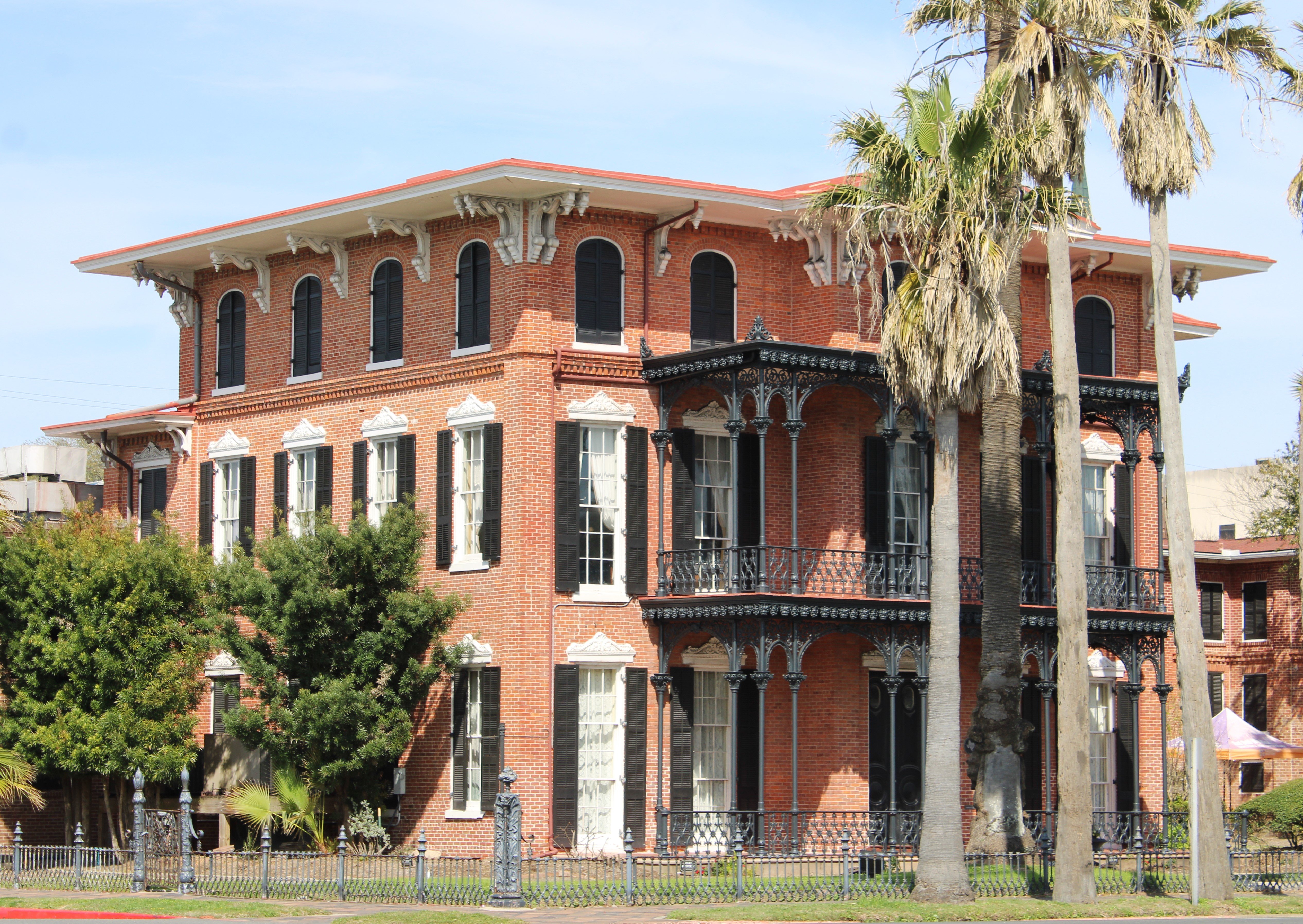
Galveston sits on a barrier island in the Gulf of Mexico, 50 miles southeast of Houston, and it wears its complicated history openly. In 1900, a hurricane — still the deadliest natural disaster in American history, killing an estimated 6,000 to 12,000 people — flattened much of the city. What was rebuilt on top of a raised seawall became a remarkably intact Victorian townscape, and today Galveston has one of the finest concentrations of 19th-century architecture in the American South.
The island has three distinct personalities. The Strand Historic District, running along the northern waterfront, is Galveston's commercial history frozen in brick and cast iron — the "Wall Street of the Southwest" before the hurricane changed everything. It now holds galleries, restaurants, boutiques, and a genuine working wharf where the tall ship Elissa and other vessels are berthed. Broadway, running east to west, is the mansion boulevard: Bishop's Palace, Ashton Villa, and Moody Mansion stand on or near it, each representing a different moment in the city's gilded past. The third Galveston is the beach: 32 miles of Gulf Coast shoreline backed by the famous seawall, drawing Houston families every summer weekend.
Galveston was also the point of entry for a significant wave of European immigration in the early 20th century — the "Galveston Plan" deliberately routed Jewish immigrants from Eastern Europe through the port to spread them across the interior of the country rather than concentrating them in the Northeast. The city's historic synagogues and the Rosenberg Library document this less-known chapter. It is not a typical Texas destination but a more layered and interesting one than most visitors expect.