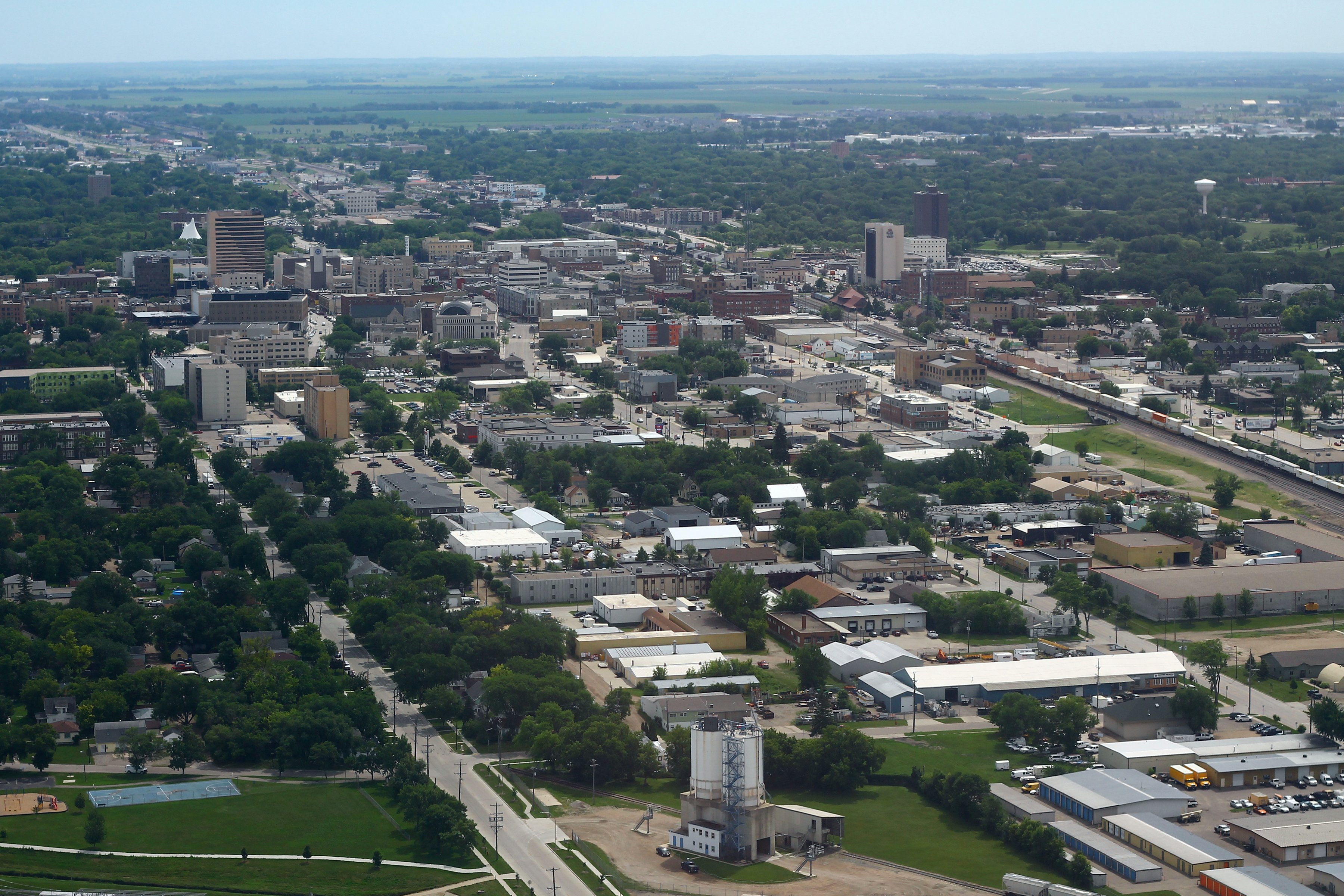
Fargo is far more interesting than its reputation suggests. The largest city in North Dakota sits on the Red River across from Moorhead, Minnesota, and has grown into a genuinely lively mid-sized city — one that punches well above its weight in dining, nightlife, and arts for a place this far from anywhere.
The downtown core is worth exploring on foot. Broadway is lined with handsome early 20th-century brick buildings, and the Fargo Theatre — a beautifully preserved Art Moderne landmark from 1926 — still screens indie and classic films. The historic architecture here ranges from ornate Victorian to streamlined Deco, a reminder that Fargo was a real boomtown when the Northern Pacific Railway came through. The Plains Art Museum, housed in a converted 1904 warehouse, is the largest fine art museum between Minneapolis and Seattle.
For history, Bonanzaville USA in neighboring West Fargo is a sprawling outdoor museum with dozens of original 19th-century buildings — a one-room schoolhouse, a general store, an old hotel — transplanted from across the plains to form a re-created frontier village. It's better than it sounds. And for film fans, the Fargo wood chipper at the Visitors Center is one of the city's more self-aware tourist attractions — a nod to the Coen Brothers' 1996 film that gave Fargo its most enduring international identity.
Three universities (North Dakota State, Minnesota State Moorhead, and Concordia) give the city a younger energy and keep the bar scene busy. The 19,000-seat FargoDome brings in major concerts and events. Winters here are brutal — this is one of the coldest cities in the continental United States — but the locals take it in stride, and there is no shortage of things to do indoors.