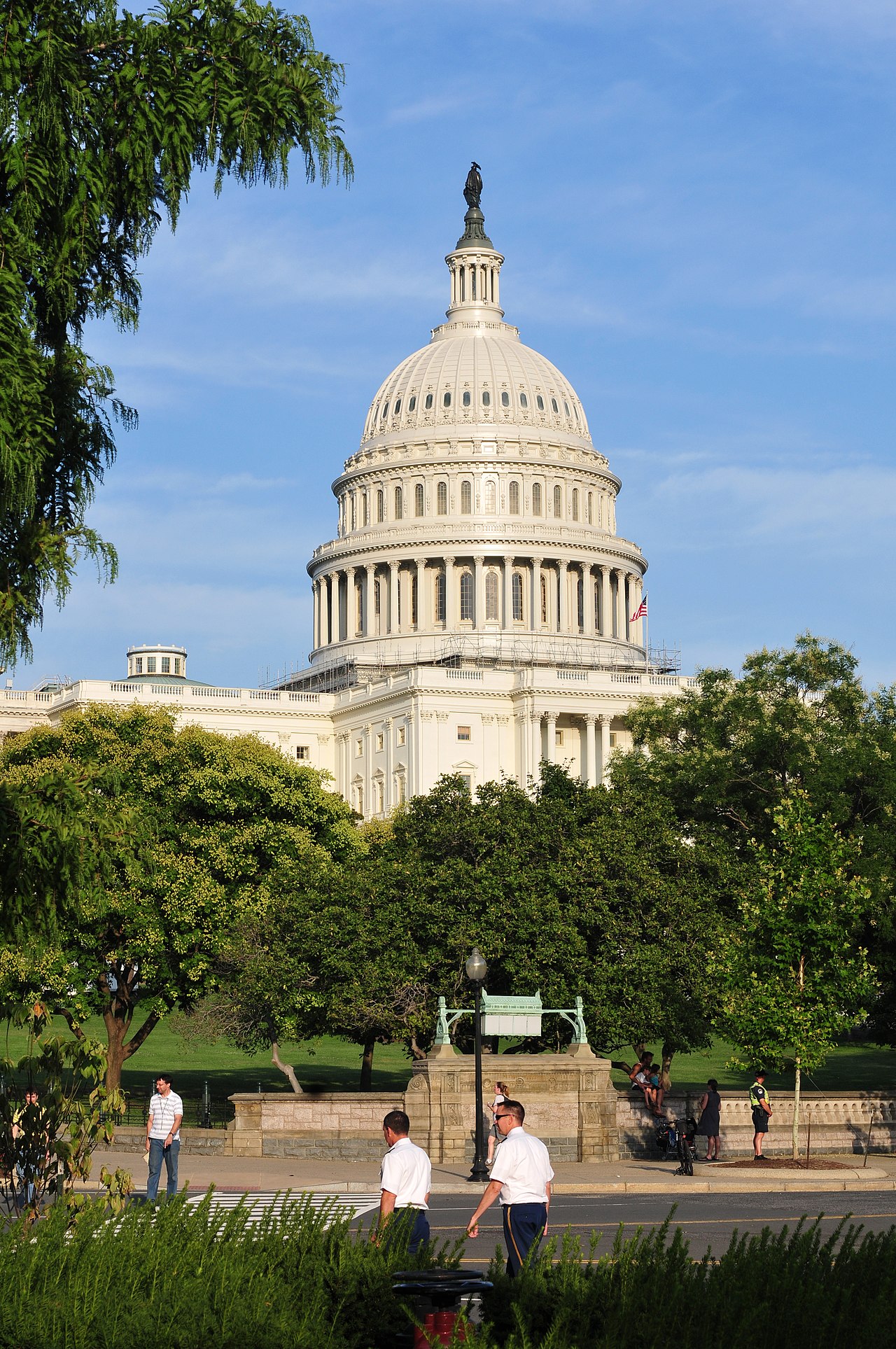
The capital of the United States is a city purpose-built for government and now one of the most visited destinations in the country. Washington DC sits on the Potomac River where Maryland and Virginia meet — an artificial district carved from both states in 1790 so the new republic's capital would belong to no single state. The plan was Pierre Charles L'Enfant's: a grid overlaid with diagonal avenues radiating from the Capitol and the White House, designed to be imposing.
What makes Washington remarkable for visitors is the concentration of free national institutions. The Smithsonian museums — a dozen of them stretching along the National Mall — charge no admission. The National Gallery of Art, one of the finest in the country, is free. The monuments and memorials — the Lincoln Memorial, Vietnam Veterans Memorial, Washington Monument — are open day and night. A city that could easily charge its visitors instead lets them in without cost, which gives the whole place a strange civic generosity.
Beyond the monuments, Washington has neighbourhoods worth exploring for their own sake. Georgetown, the oldest part of the city, has Federal and Victorian row houses, good restaurants, and the C&O Canal. Dupont Circle has long been a centre of intellectual and bohemian life, with bookshops, cafes, and the Phillips Collection. Adams Morgan is the most ethnically mixed neighbourhood, with Ethiopian restaurants, Latin American food, and genuine vitality. Capitol Hill — the residential neighbourhood around the Capitol — is one of the finest Victorian townhouse districts in America, and Eastern Market at its centre has been trading since 1873.
The city has a troubled side easy to miss on a monument tour. Washington has one of the highest income inequalities of any American city; prosperous neighbourhoods north and west of the Capitol share a city with poorer communities east of the Anacostia River that see few tourists. The politics are permanently dramatic — this is where decisions are made — and proximity to power gives the place an intensity found nowhere else in the country.