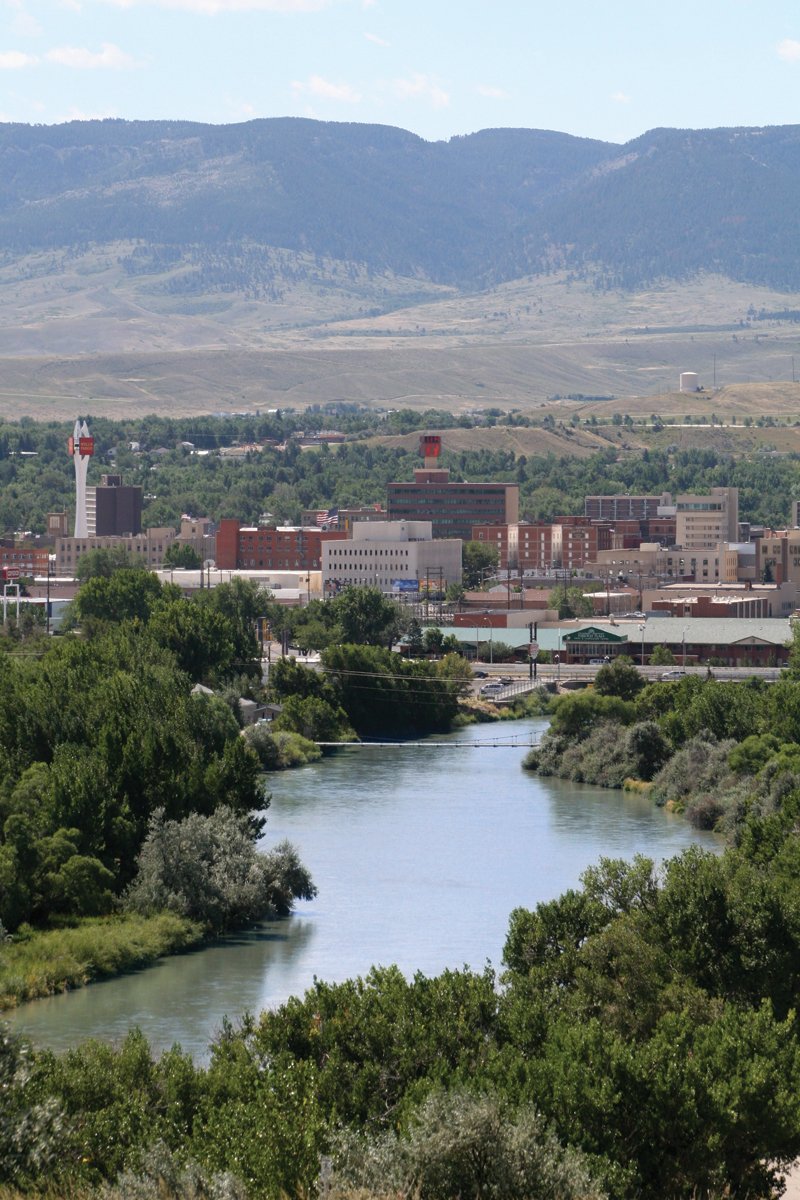
Casper is Wyoming's second-largest city, spread across the high plains where the North Platte River bends beneath Casper Mountain. It is an oil town at heart — the industry built it, and the boom-and-bust cycle still shapes the mood — but it has more going on than most people expect from a mid-Wyoming stop.
The river running through town is the main attraction for visitors. The North Platte is one of the best trout fisheries in the state, and fly fishing guides operate out of Casper year-round. In summer, the river trail system is good for walking and cycling, and Casper Mountain to the south offers hiking trails, cross-country skiing, and views that stretch endlessly across the plains.
Casper also sits on the old Oregon Trail, and the National Historic Trails Interpretive Center does an excellent job of telling that story — it is one of the better small museums in the region. The town played a role in every westward migration, from fur trappers to Mormon pioneers to gold rushers, and the landscape around it has barely changed since. Fort Caspar on the west edge of town reconstructs the 1860s army post that gave the city its name, and an hour southwest, Independence Rock still carries the painted signatures of thousands of emigrants who passed in the 1840s and 1850s.