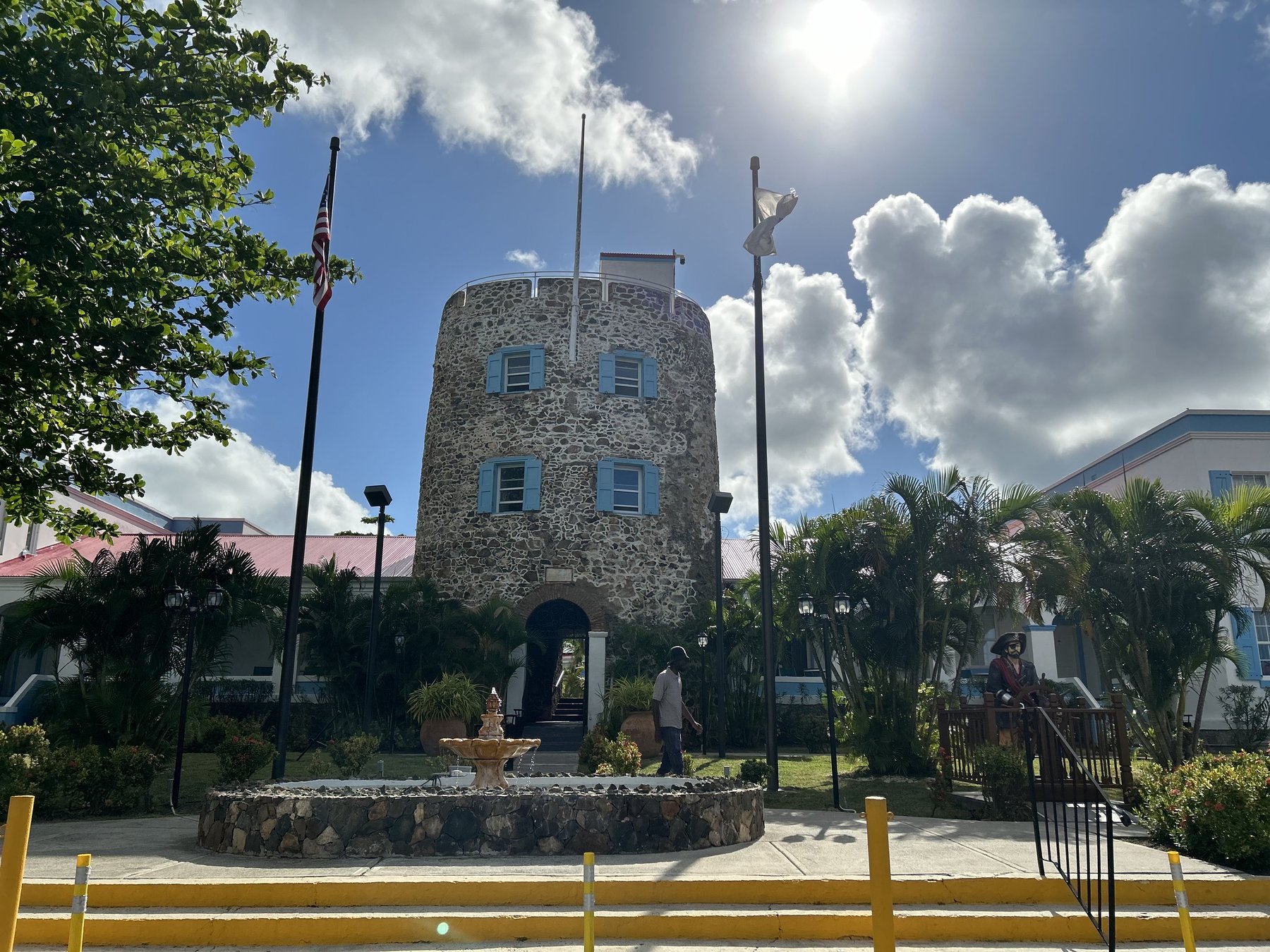
Hilly US Virgin Island with Danish-era Charlotte Amalie, a busy harbour, and historic red-roofed streets.
St. Thomas is the busiest of the US Virgin Islands — a lush, hilly island of 32 square miles that was Danish for 250 years before the United States bought the territory in 1917 for $25 million in gold. The Danish legacy is everywhere: red-roofed buildings climbing the hills of Charlotte Amalie, Danish street names (Dronningens Gade, Kongens Gade), and the second-oldest synagogue in the western hemisphere, built in 1833 with a sand floor to muffle the footsteps of its Sephardic founders.
Charlotte Amalie, the capital, is one of the busiest cruise ports in the Caribbean, and on days when four or five ships are in port the old town can feel overrun. But the crowds thin after 4pm when the ships leave, and the duty-free shops along Main Street give way to the quieter back alleys — Riise Alley, Royal Dane Mall, the old warehouses now full of jewellers and rum shops. Fort Christian, the 17th-century Danish fortress on the waterfront, is the oldest building on the island and worth a look even if fortress museums aren't usually your thing.
The real draw is the beaches. Magens Bay, on the north shore, is the one everyone photographs — a long curve of white sand and calm turquoise water, protected by a heart-shaped bay and regularly voted one of the most beautiful beaches in the world. There's a small entry fee and it gets busy when cruise ships dock, but it earns the hype. Coki Beach next to Coral World is the best for snorkelling straight off the sand; Sapphire Beach on the east end is quieter and has better views of neighbouring St. John.
Rent a car if you can — driving is on the left, which catches Americans out, but the island is small and the roads wind through rainforest, past pastel houses and open-air bars with views over the water. Take the Skyride up to Paradise Point for the sunset view over Charlotte Amalie harbour, and the 20-minute ferry to St. John for a day in the Virgin Islands National Park, which covers two-thirds of that island and has the best beaches in the territory.
Guide
Day Trips
The obvious day trip from St. Thomas is to St. John, and it is genuinely excellent. Ferries run from Red Hook (20 minutes) and Charlotte Amalie (45 minutes) to Cruz Bay, the small town at St. John's western tip. Two-thirds of the island is Virgin Islands National Park, established in 1956 after Laurance Rockefeller donated much of the land to the federal government. The park contains some of the best beaches in the Caribbean — Trunk Bay, with its marked underwater snorkel trail, and Cinnamon Bay, longer and wilder — as well as hiking trails through dry tropical forest to Danish plantation ruins. St. John has far fewer cruise ships and a quieter character than St. Thomas.
The British Virgin Islands are accessible from Red Hook by ferry, though they require a passport and immigration entry. Tortola, the BVI capital, is the main destination; Peter Island and Virgin Gorda are more remote but rewarding. BVI day trips work well from St. Thomas, but factor in the border crossing time.
On St. Thomas itself, the drive east toward Red Hook and Sapphire Beach makes a good half-day outing, taking in the views from Compass Point and the calmer east-end bays. The Skyride to Paradise Point at sunset is a popular option for those who don't have their own transport to higher viewpoints.
Guide
Getting Around
St. Thomas drives on the left — a legacy of the Danish colonial era that remained after the US took over in 1917, and which continues to surprise American visitors who instinctively reach for a steering wheel on the wrong side. Rental cars are available at the airport and in Charlotte Amalie; a car is the most practical way to explore the island independently, since the beaches and viewpoints are spread out.
Open-air safari buses (share taxis on fixed routes) run between Charlotte Amalie, Red Hook on the east end, and most points in between. They depart when full rather than to a timetable, but are frequent, cheap, and part of the local texture. Regular taxis also operate from the airport, the ferry docks, and the cruise ship terminals; agree the fare before you get in.
The ferry to St. John runs roughly every hour from Red Hook and several times daily from the Charlotte Amalie ferry terminal. Many visitors rent a car on St. Thomas and leave it there, taking only what they need for a day in the national park — vehicle ferries to St. John exist but are expensive and rarely necessary for a day trip.
Guide
Getting There
Cyril E. King Airport (STT) sits on the western end of the island, about three kilometres from Charlotte Amalie. It handles direct flights from most major east-coast US cities — Miami, New York, Atlanta, Philadelphia, and Charlotte among them — as well as connections from Puerto Rico. Because St. Thomas is a US territory, there are no customs or immigration formalities for US citizens, and travel from the US mainland is domestic in most practical senses. International visitors need a US visa or ESTA if applicable.
Ferries connect Charlotte Amalie and Red Hook on the east end of the island to St. John (Cruz Bay) and to Tortola and other British Virgin Islands. The Charlotte Amalie to Cruz Bay passenger ferry takes around 45 minutes; the Red Hook to Cruz Bay crossing is about 20 minutes and is the most frequent. Note that travel to the BVI requires a passport and immigration entry even for US citizens.
Cruise ships dock at the Havensight terminal on the eastern edge of Charlotte Amalie's harbour, within walking distance of the historic town centre, or at Crown Bay on the western side of the harbour. When several ships are in port simultaneously, the town and popular beaches become very busy.