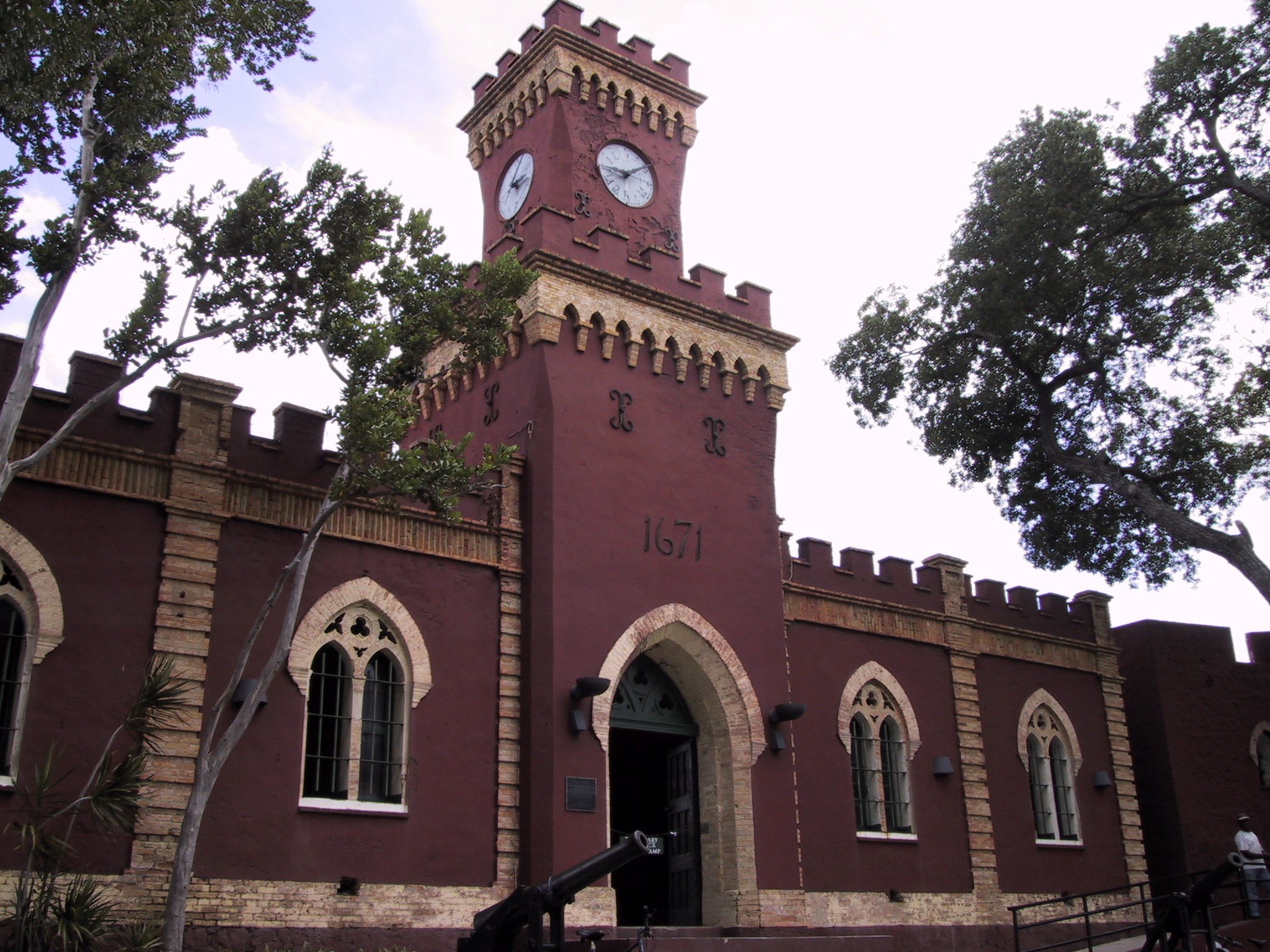
Charlotte Amalie is the capital of the United States Virgin Islands and the largest city in the territory, built around a deep natural harbour on the south coast of St. Thomas. It was a Danish colonial capital for 250 years before the United States bought the territory in 1917, and the Danish legacy is still legible everywhere — in the red brick and stucco buildings climbing the hillsides, in the street names (Dronningens Gade, Kongens Gade), and in Fort Christian, the 17th-century fortress that anchors the waterfront.
The city has two faces depending on when you arrive. When cruise ships are in port — which is often — the main shopping streets fill with thousands of passengers and the duty-free shops along Main Street become a relentless commercial gauntlet. After 4pm, when the ships leave, a quieter city emerges: shaded alleyways, old warehouses with colonnaded arcades, and the kind of unhurried Caribbean pace that the crowds make impossible to find earlier. The Charlotte Amalie Historic District is the main draw, a compact area of 18th and 19th century buildings that is one of the best-preserved Danish colonial streetscapes in the Caribbean.
Among the unusual sights: Blackbeard's Castle, a Danish watchtower built in 1679 that was given its pirate name by 20th-century tourism promoters; the St. Thomas Synagogue, one of the oldest in the western hemisphere, with a sand floor and an unbroken history going back to the Sephardic Jews who came from Brazil via Curaçao in the 17th century; and the 99 Steps, a stairway cut from ship's ballast brick that climbs from the shopping district to the hilltop residential streets above.