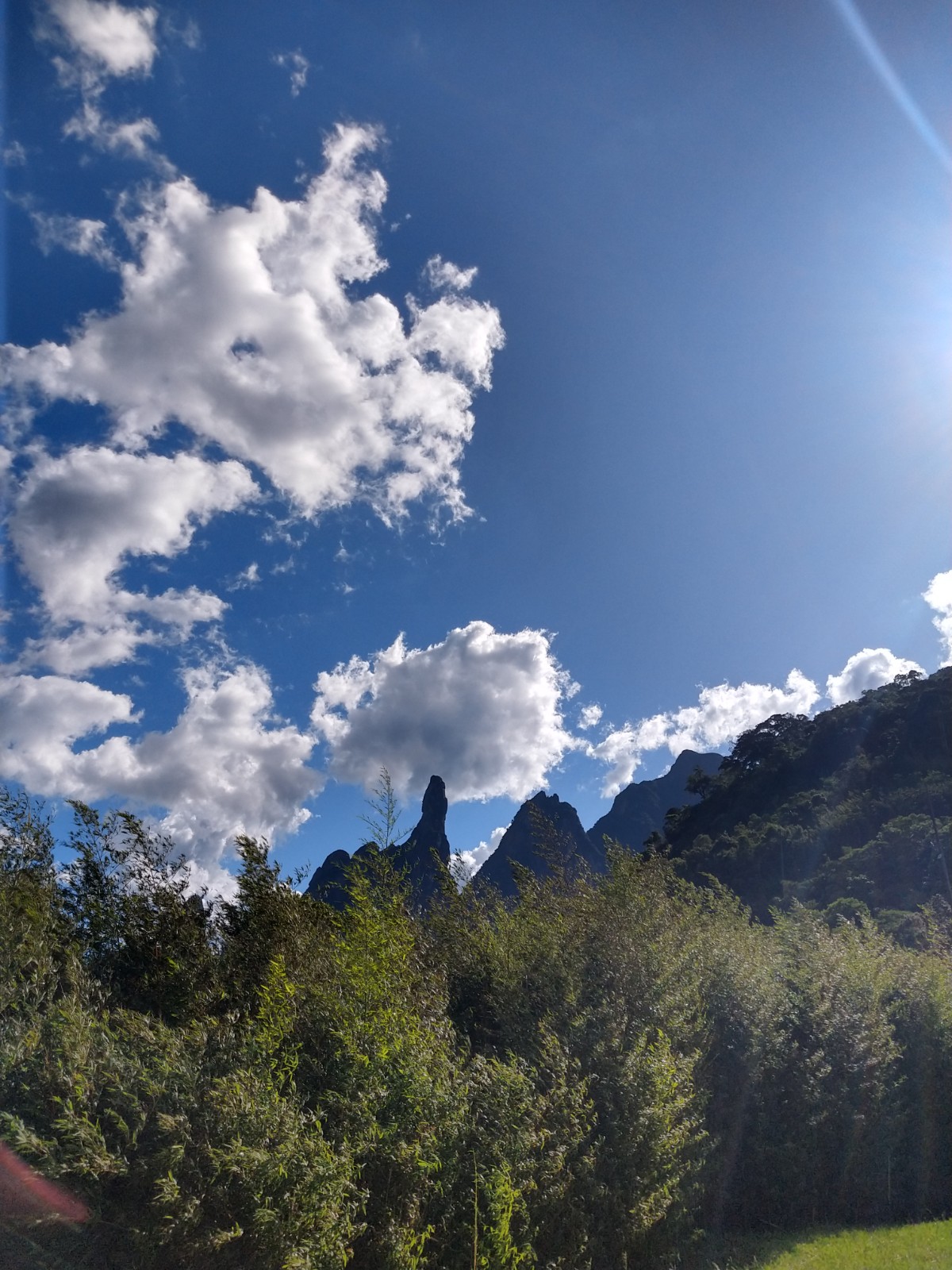
Serra do Mar mountain town near Rio, gateway to organ-pipe peaks in Serra dos Órgãos
Teresópolis is a mountain town about 90 kilometers northeast of Rio de Janeiro, sitting at around 870 meters in the Serra do Mar range. It has long served as a cool-weather escape for Cariocas fleeing the coastal humidity, and the temperature difference from Rio can be ten degrees or more. The town takes its name from Empress Teresa Cristina and retains some of the alpine pretensions that Brazilian mountain resorts tend to cultivate, with fondue restaurants and Swiss-style architecture mixed in with the usual Brazilian bustle.
The main draw is the Parque Nacional da Serra dos Órgãos, whose entrance is right at the edge of town. The park gets its name from the dramatic rock spires that line the ridgeline and supposedly resemble organ pipes. The Dedo de Deus, a striking pointed peak visible from the city, is the most famous landmark. Hiking trails range from easy walks through Atlantic Forest to serious mountaineering routes up the major peaks. The Travessia Teresópolis–Petrópolis is one of the classic multi-day hikes in Brazil, covering about 35 kilometers of ridge trail with stunning views.
The town itself is pleasant without being remarkable. The Praça Olímpica area has restaurants and shops, and the surrounding countryside is dotted with small farms, pousadas, and craft breweries that have proliferated in recent years. Teresópolis served as the base camp for the Brazilian national football team during the 2014 World Cup, at the Granja Comary training center. The weekends can get crowded with day-trippers from Rio, so visit midweek if you can.
Guide
Getting There
Teresópolis is about 90 kilometres northeast of Rio de Janeiro by road. From Rio, the most direct route follows the BR-116 (Via Dutra) north and then the BR-495 up through Magé and Guapimirim to Teresópolis — the journey takes around one and a half to two hours depending on traffic. The mountain road up from Magé via the RJ-122 is the more scenic alternative, with Atlantic Forest on both sides and dramatic views as you climb.
Bus services connect Rio's Novo Rio bus terminal to Teresópolis several times daily. The Única/Coletivos do Sul and Viação Teresópolis companies both run services; the journey takes around two hours. There is no train connection. Driving is the most flexible option if you want to explore the area — a car is useful for reaching the various park entrances and outlying pousadas.
Guide
When to Go
Teresópolis has a mild mountain climate year-round, with temperatures typically 8–10°C cooler than Rio de Janeiro below. The dry season runs from May to September — these are the best months to visit. Skies are clear, humidity is low, and the park trails are in good condition. July and August can feel cold at night, especially at altitude in the park, so bring warm layers.
The summer months (December to March) bring heavy afternoon rainfall — a tropical mountain pattern where mornings are often clear but clouds build rapidly after noon and thunderstorms are common by late afternoon. Hiking in summer can be wet and slippery, and flash flood risk in the park is real. That said, the waterfalls are at their most impressive and the forest is lush. The Christmas and Carnival periods see a big influx of Rio day-trippers; weekends generally become noticeably crowded.
The park is open year-round except in the event of extreme weather warnings. Midweek visits avoid the weekend rush from Rio.