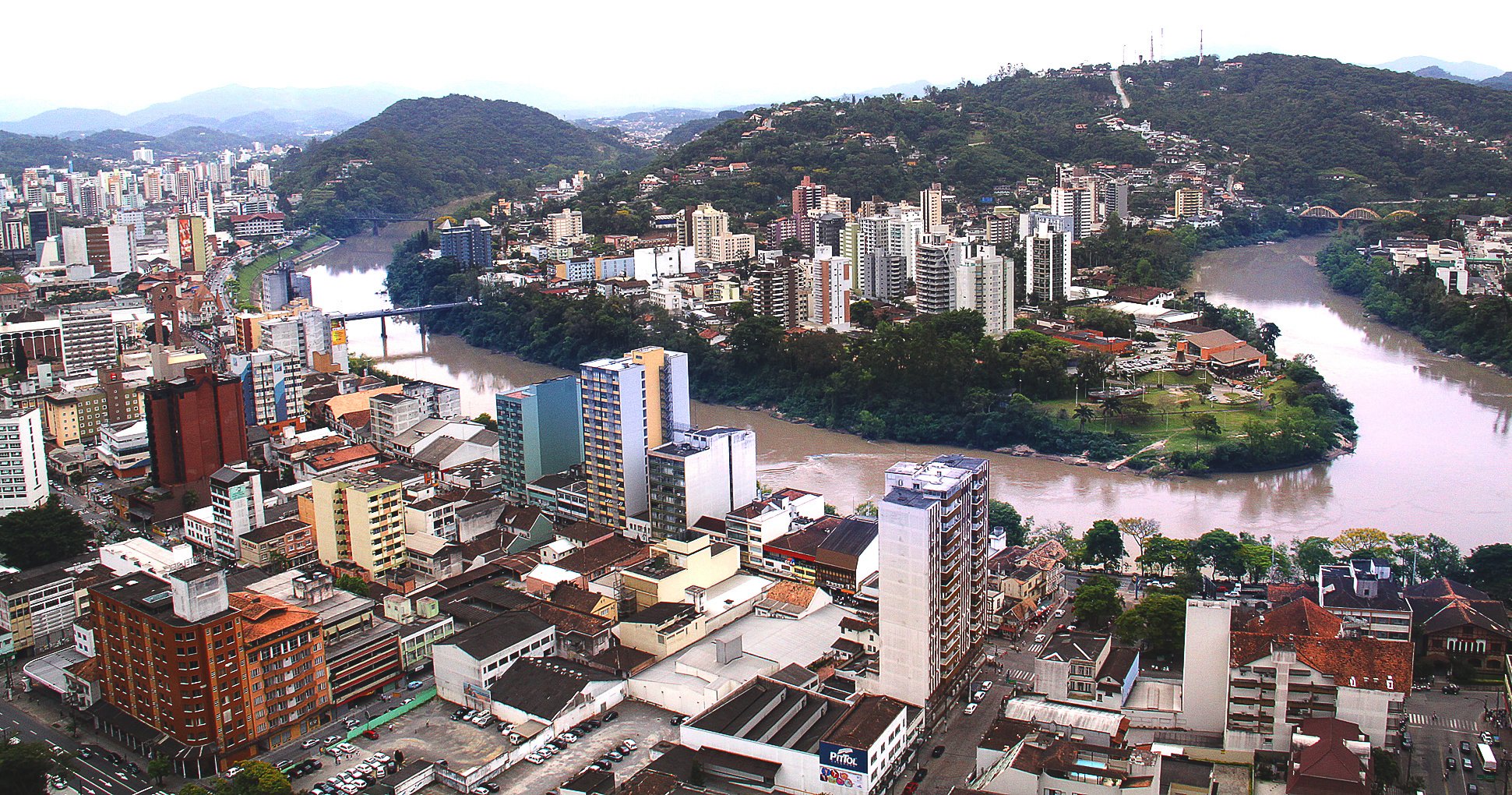
Blumenau is one of Brazil's most distinctive cities — a place where German heritage runs so deep that the streets, the architecture, and the beer halls could almost convince you that you had somehow landed in Bavaria. Founded in 1850 by German pharmacist Hermann Bruno Otto Blumenau, who led a group of settlers into the Itajaí Valley in what is now Santa Catarina state, the city grew into a thriving industrial and cultural hub that never forgot where it came from.
The city sits in the lush Itajaí-Açu River valley, about 140 km north of Florianópolis and 50 km inland from the Atlantic coast. The surrounding hills are green year-round, and the river defines both the geography and, in flood years, the drama of city life — Blumenau has suffered major floods throughout its history, including a devastating one in 2008.
What most visitors come for is the atmosphere and the beer. Blumenau hosts one of the world's largest Oktoberfest celebrations each October, second only to Munich's original. The festival draws well over a million visitors to Vila Germânica for two weeks of live music, traditional costumes, and enormous quantities of draft beer. Outside of Oktoberfest, the city's Germanic character is visible in the half-timbered buildings along Rua XV de Novembro, the Beer Museum, and the craft breweries including Bierland. For something more unexpected, the Fritz Müller Museum honors the German naturalist who corresponded with Darwin from this valley for decades.
With a population of around 350,000 and a standard of living well above the Brazilian average, Blumenau is a prosperous, tidy, and safe city by any measure. It is also a base for exploring some interesting destinations in the surrounding Santa Catarina highlands, including the almost entirely German-speaking town of Pomerode.