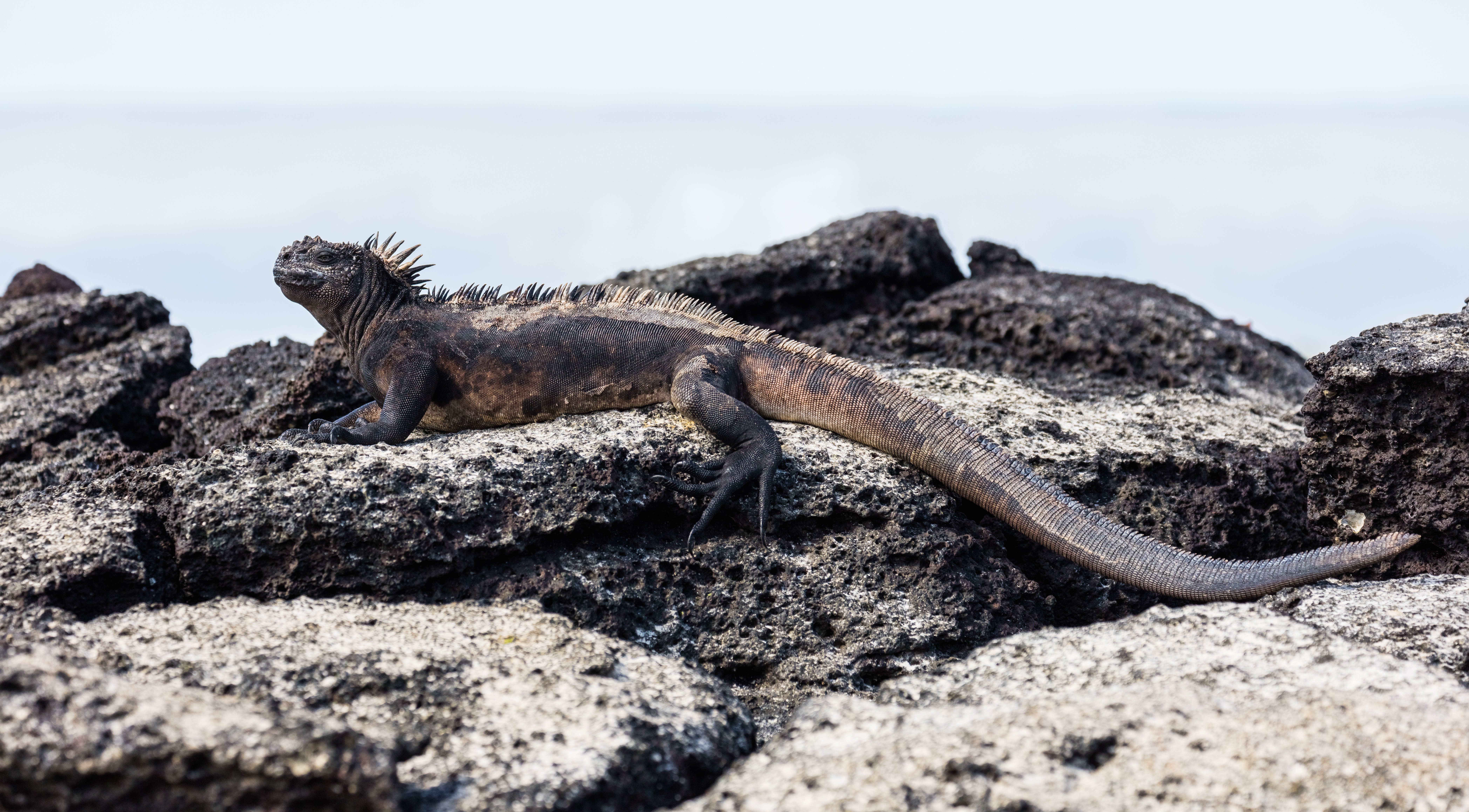
The Galápagos Islands are an archipelago of volcanic origin on the equator, about 870 km west of mainland Ecuador. The 13 main islands, six smaller islands, and numerous islets cover a land area of around 8,000 sq km. They became famous through Darwin's observations in 1835, which contributed directly to his theory of evolution by natural selection — the islands' isolation allowed species to evolve independently, producing creatures found nowhere else on earth.
The main islands are Fernandina, Isabela, Santiago, Santa Cruz, Floreana, Española, San Cristóbal, Genovesa, Santa Fe, Marchena, Pinta, Rábida, and Pinzón. Most visitors travel by live-aboard boat, visiting several islands on an itinerary guided by a licensed naturalist. The wildlife is extraordinarily tame — marine iguanas, giant tortoises, blue-footed boobies, and sea lions barely acknowledge human presence. Santa Cruz, with the town of Puerto Ayora, is the main hub for independent travellers.