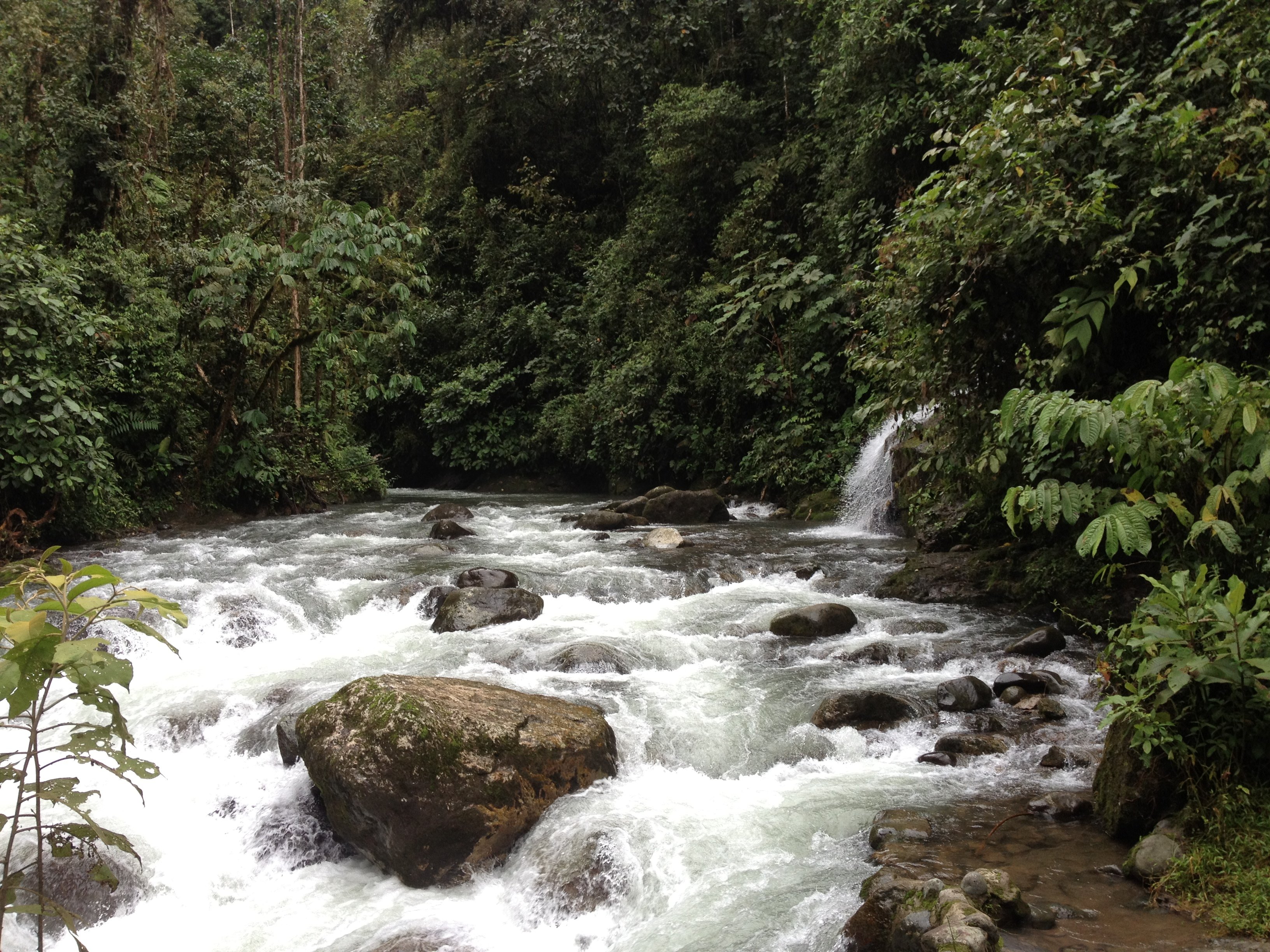
Mindo is a small cloud forest town about 90 kilometres northwest of Quito, sitting at 1,250 metres on the western slopes of the Andes where two of the world's most biodiverse ecosystems meet: the Tropical Andes and the Chocoan lowlands. The result is a birdwatcher's paradise of staggering density — over 500 species have been recorded in the immediate area, including hummingbirds in impossible colours, toucans, tanagers, and the extraordinary Andean cock-of-the-rock. More species per square kilometre live here than almost anywhere else on the planet.
The town itself is tiny — a grid of streets with guesthouses, restaurants, and tour operators catering almost entirely to visitors from Quito and abroad. What surrounds it is everything: cloud forest dripping with epiphytes and bromeliads, rushing rivers cutting through gorges, and a tarabita (cable car) that carries visitors across the Nambillo River valley to a trail system leading to a series of waterfalls. The waterfalls — seven of them in a row — are one of Ecuador's underrated pleasures: clear water dropping into green pools, accessible in a half-day hike.
Birdwatching is the primary reason to come, and the density means even non-specialists will see extraordinary things. The cock-of-the-rock lek near Paz Bird Sanctuary is one of South America's more reliable wildlife spectacles: males in blazing orange display at dawn, competing for females, entirely indifferent to watchers. The butterfly farm is an easier sell for non-birders — thousands of tropical butterflies in a large greenhouse, visible at all life stages.
Mindo is an easy day trip from Quito (two hours by bus), but it rewards an overnight stay or two. The town is busiest on weekends when Quitenos fill the guesthouses; come midweek for more space and quieter forest.