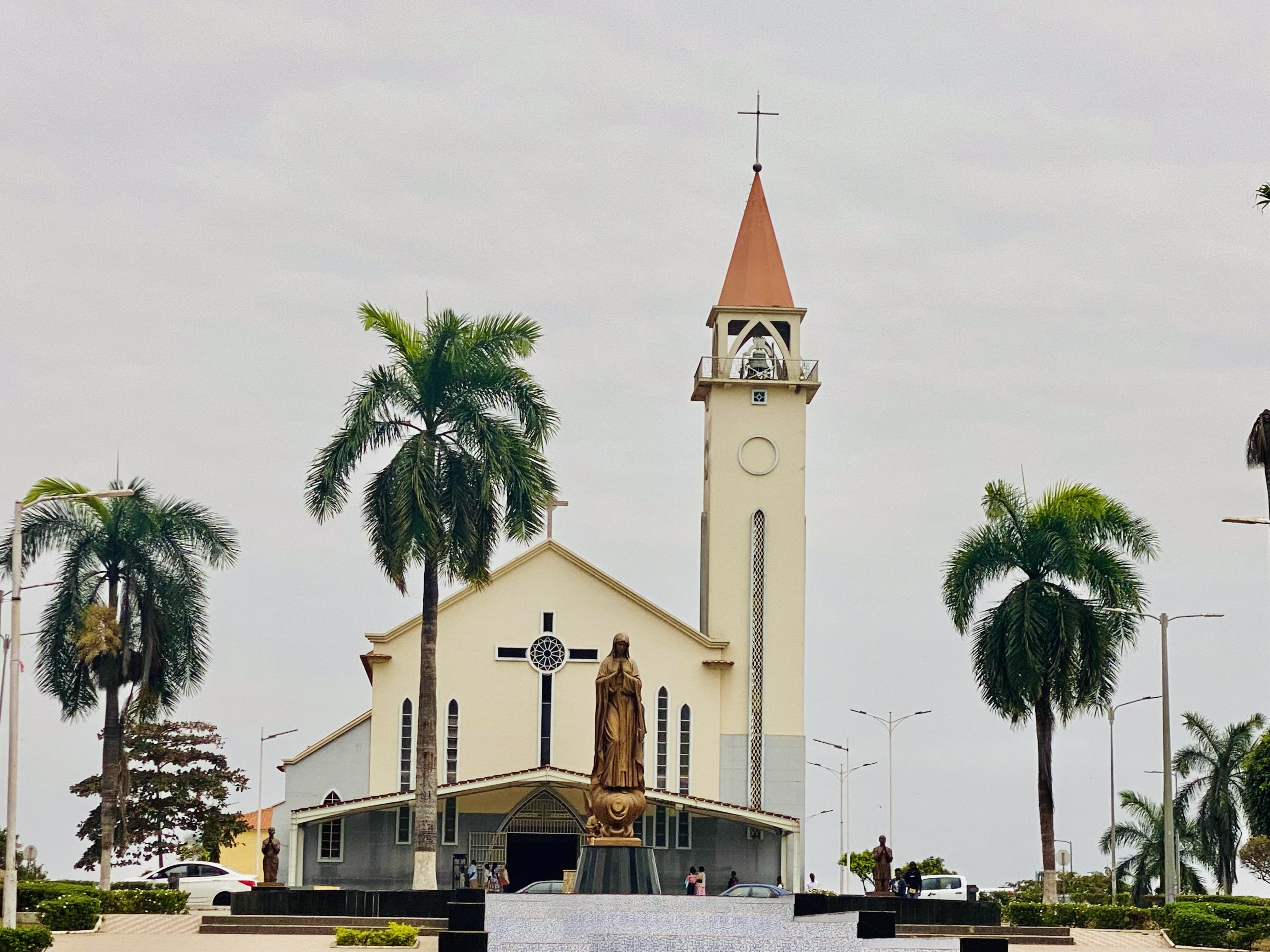
Cabinda is an exclave of Angola, a small wedge of territory separated from the rest of the country by a narrow strip of the Democratic Republic of Congo along the Congo River's mouth. The province punches well above its weight economically — the offshore oil fields here produce the majority of Angola's petroleum output, making this one of the most strategically important patches of land in Central Africa.
The capital, also called Cabinda, is a modest city on the Atlantic coast with a tropical climate and dense surrounding forest. The Maiombe Forest in the interior is one of the last significant patches of tropical rainforest in the region, home to chimpanzees and gorillas. Travel here requires some caution, as a low-level separatist movement has simmered for decades, though the city itself is generally calm. Infrastructure is limited outside the oil industry compounds, and independent travelers are rare — but those who make it find a place with its own distinct identity, culturally closer to the two Congos than to Luanda.
The central market is worth a morning visit, and the Atlantic coastline north of town has undeveloped beaches that are yours alone.