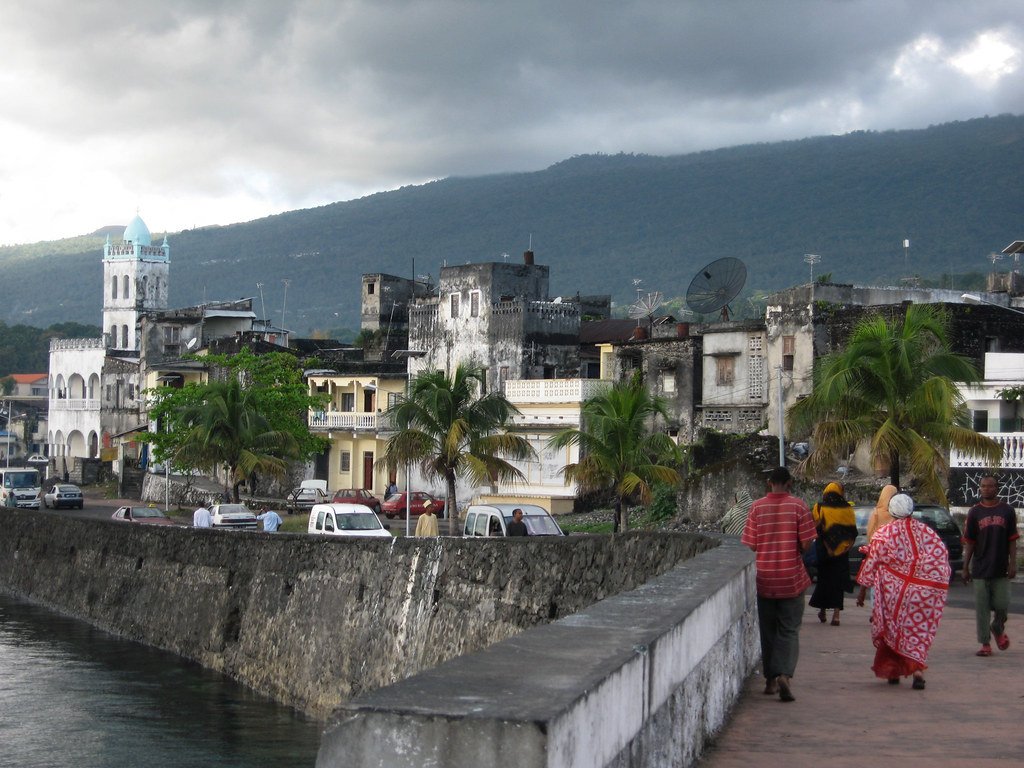
Known to the French as Grande Comore, Ngazidja is the largest and most populous of the Comoros islands, home to around 400,000 people and to Moroni, the national capital. It is the island most visitors see first, and for many it is the only one -- which is a pity, because the other islands are equally compelling. But Ngazidja has enough to justify several days.
The island is dominated by Mount Karthala, one of the world's largest active volcanoes, rising 2,361 metres from the southern third of the island. The crater is nearly a mile across. Karthala has erupted more than a dozen times since 1857, most recently in 2005 when ash fell on Moroni. The trek to the summit takes six to eight hours through tropical forest and volcanic scrub and is the signature outdoor adventure in the Comoros.
The northern two-thirds of the island is a rocky volcanic plateau called La Grille, lower and drier than the south. Agriculture is limited to areas below about 600 metres, and the remnants of dense tropical forest survive mostly on the upper slopes of Karthala.
Moroni's old medina is the cultural heart of the island — a quarter of narrow alleys, carved doors, and whitewashed coral-stone buildings that feels more like coastal East Africa or the Arabian Peninsula than sub-Saharan Africa. The old Friday Mosque, dating to 1427, overlooks the harbour.
Ngazidja is also the island where the Grand Mariage tradition is strongest. The anda ceremony is an elaborate, days-long wedding celebration that determines social status. A man who has not completed his Grand Mariage is excluded from village councils and serious decision-making. Families save for decades, and the celebrations are extraordinary to witness — gold jewellery, feasting, music, and dancing that can last two weeks.
The island's inhabitants are descended from a mix of Arab and African ancestors. Historically, Ngazidja was divided among twelve sultans, each controlling a different part of the island. Their complicated rivalries -- particularly the long struggle between the rulers of Bambao and Itsandra in the nineteenth century -- eventually led to French intervention and colonization.