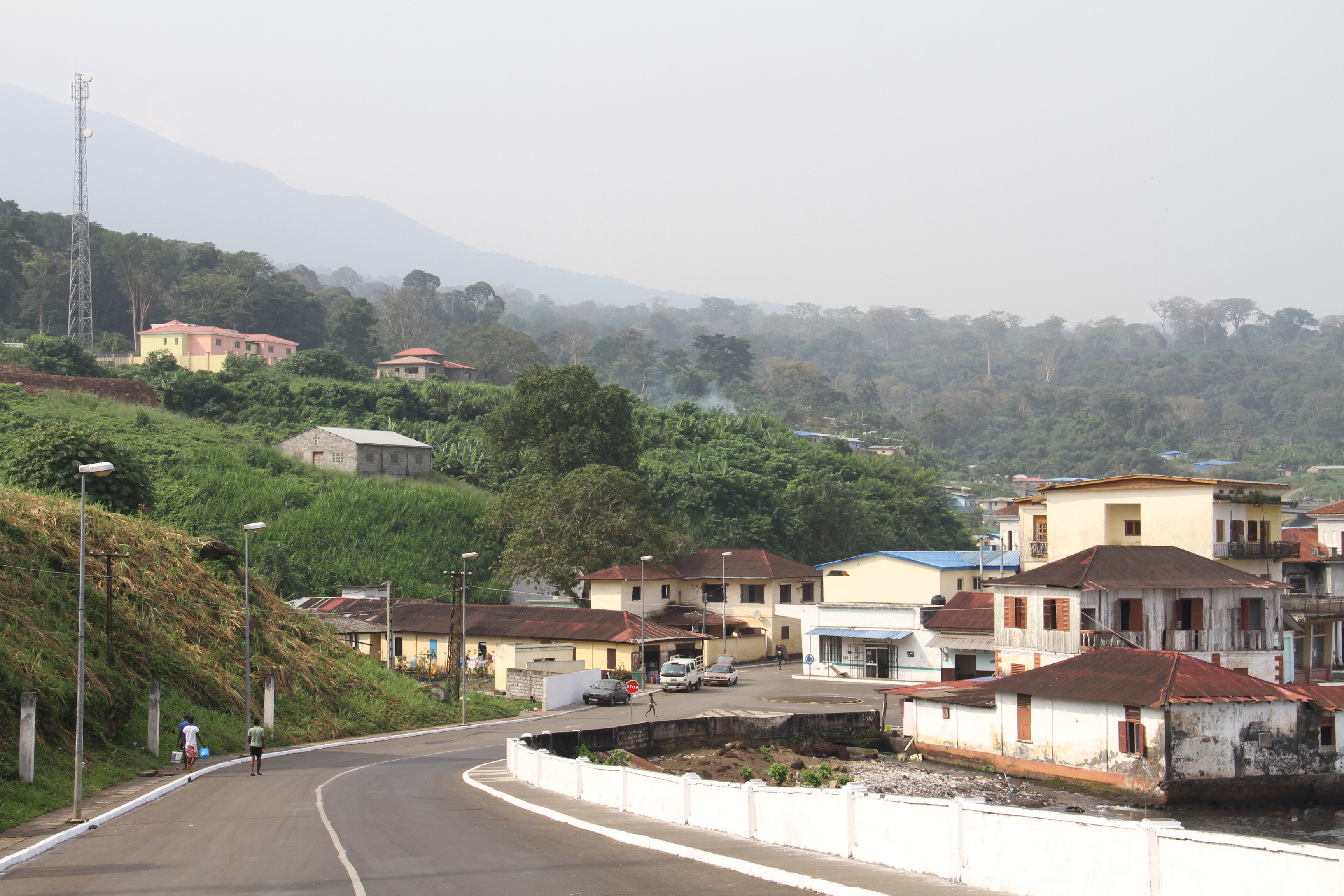
Less than 50 km from the capital Malabo, Luba is the second-largest town on Bioko Island and a useful base for exploring the island's southern coast. The town itself is a quiet port with a small fishing community, but its surroundings are the real draw.
The beaches near Luba are among the finest in Equatorial Guinea. Arena Blanca is a particular highlight — a stretch of white sand that sees few visitors and, in the dry season, plays host to an extraordinary congregation of migrating butterflies. Several small fishing villages dot the coastline nearby, and trails head into the forest offering a taste of Bioko's dense tropical interior.
South of Luba, the Luba Crater Scientific Reserve protects one of the most biodiverse patches of Atlantic forest in Africa. Forest elephants, chimpanzees, and nesting leatherback sea turtles are among the wildlife. The beaches near Ureca at the island's southern tip are among the most important leatherback nesting sites on the Atlantic coast.
Taxis and minibuses connect Luba to Malabo regularly, making day trips easy in either direction. The Luba Free Port, developed since 1999 to serve the offshore oil industry, sits alongside the traditional fishing community and gives the town an unusual dual identity.