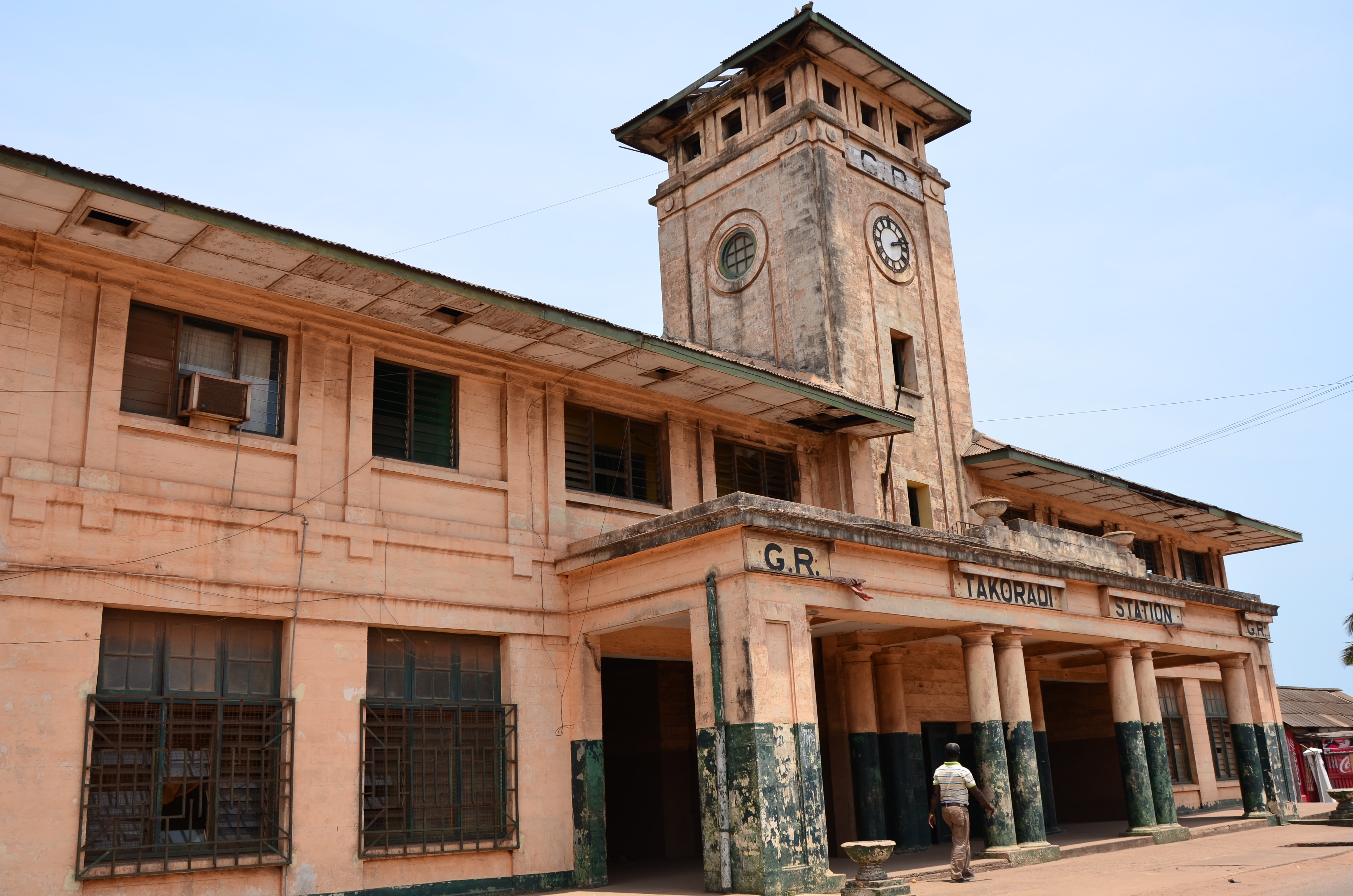
Takoradi is a busy port city in the Western Region of Ghana, on the Gulf of Guinea about 230 km west of Accra. It forms a twin metropolitan area with the older town of Sekondi a few kilometres east — together they are simply called Sekondi-Takoradi by locals — and between them they are home to around 450,000 people, making it Ghana's third-largest urban area after Accra and Kumasi. Sekondi is the administrative capital; Takoradi is the economic heart. Since the discovery of significant offshore oil in the Jubilee Field in 2007, Takoradi has also become Ghana's oil capital, which has brought new money, new traffic, and a noticeable rise in prices.
For travellers, Takoradi is mostly a transit stop on the way to the beaches and forts of the western coast. The town itself has a lively Market Circle — a bustling open-air market that is the real heart of the city — and a handful of restaurants and bars, but few sights of its own. What brings people is the region around it. Busua, Butre and Dixcove to the west are the best beach villages on the Ghanaian coast, with palm-backed sand and good surf; the small fishing village of Axim has the UNESCO-listed Fort São Antonio, one of the oldest European fortifications in sub-Saharan Africa; and the famous Cape Coast Castle and Elmina Castle — the most significant slave-trading forts on the West African coast, and deeply moving places to visit — are a couple of hours east along the coast road.
Takoradi has a small domestic airport with daily flights from Accra and is on the main coastal road. The coast here is hotter and more humid than the interior; November to March is the driest and most comfortable time.