Africa > Ghana > Accra
Accra is a sprawling, hot, exuberant capital of around four million people, strung out along the Atlantic coast where the Ga fishing village of Ghana's pre-colonial era ran into the British, Danish, and Dutch trading forts that later grew into the city. It is loud, sweaty, and fundamentally good-humoured: a place where modern banking towers, twenty-four-hour traffic, and air-conditioned malls coexist with open gutters, fishing pirogues drawn up on the sand, and the unending negotiations of the open-air markets. You will probably arrive here whether you meant to or not, and once you slow down enough to stop fighting the city, it rewards you.
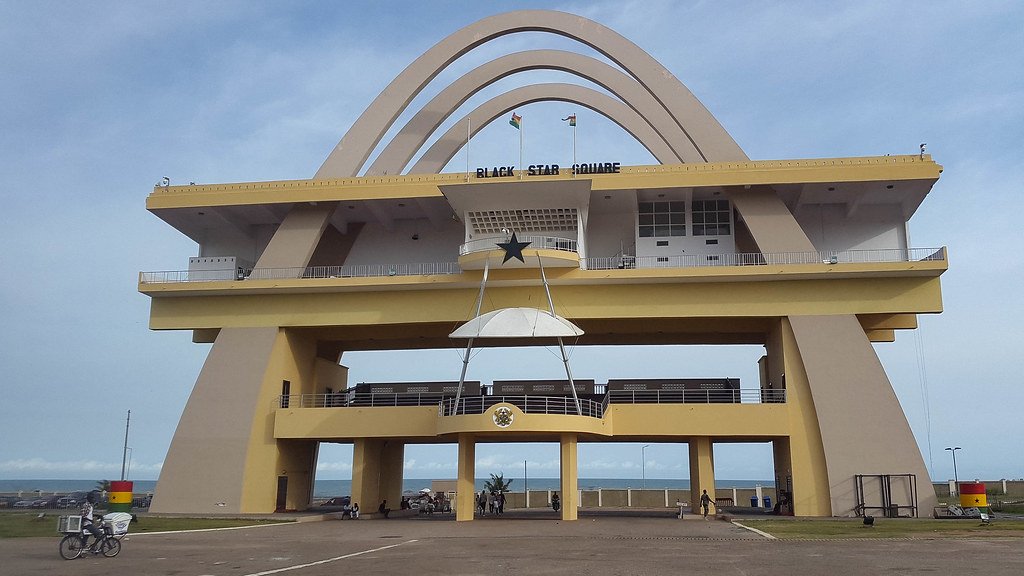
The historic core is the old Ga quarter of Jamestown, around the British James Fort and the red-and-white Jamestown Lighthouse. It is poor and worth walking, especially if you can time a visit for the Chale Wote street art festival every August, when the lanes fill with installations, drumming, and a citywide creative crowd. East from there, the colonial-era seafront leads past the Danish-built Osu Castle to the great civic axis of the city: Independence Square (also known as Black Star Square), the second-largest ceremonial plaza in the world, framed by the Independence Arch and the Black Star Gate. A short walk inland, the Kwame Nkrumah Memorial Park holds the marble tomb of Ghana's first president, on the spot where he declared independence in 1957.
Inland from the seafront sits Makola Market, the dense and unmissable commercial heart of the city, where the famous market queens still wield serious economic and political muscle. The National Museum and the nearby Arts Centre craft market round out a long but doable downtown day. The W.E.B. Du Bois Memorial Centre, in the leafier streets to the north, is the unexpectedly moving home and grave of the American civil rights pioneer who took Ghanaian citizenship at ninety-three.
For eating, drinking, and almost everything to do with the contemporary city, the action is in Osu, the expat-and-elite strip along Cantonments Road (still universally called Oxford Street), and increasingly in East Legon and Cantonments. Labadi Beach, east of the centre, is the in-town stretch of sand for drumming circles, grilled tilapia, and a strong undertow; for actual swimming, head out to Kokrobite on the road west.
Accra is also the natural base for trips out to the cool hills at Aburi, the canopy walkway at Kakum, and the slave-trading castles of Cape Coast and Elmina — the last a long but essential day trip, and a sobering complement to anything you've read about the Atlantic trade.