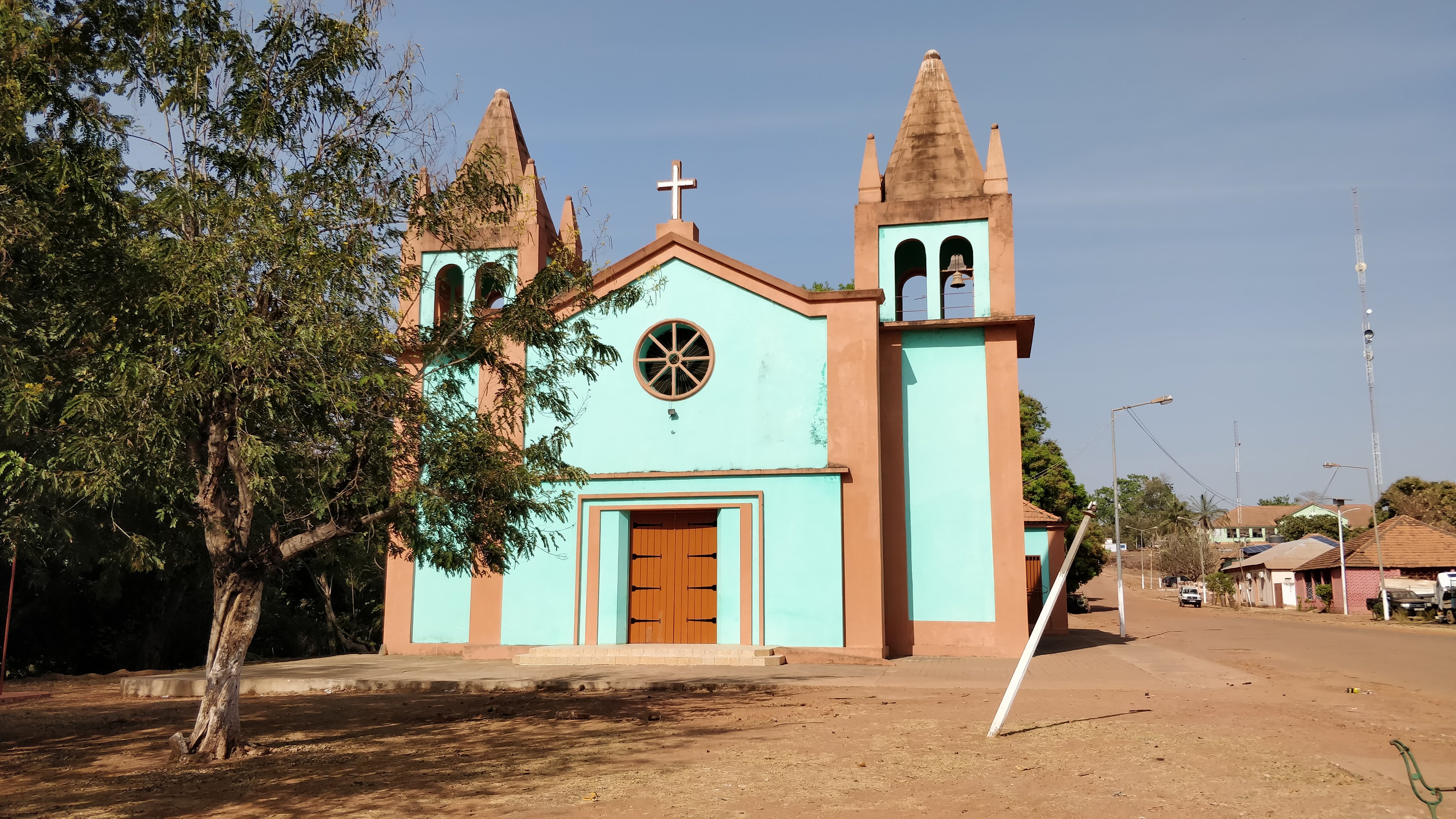
Bafata
©
Bafata

Bafata

Geba River town remembered as Amílcar Cabral's birthplace and a faded Portuguese colonial centre.

Bafata is Guinea-Bissau's second-largest town, though that says more about the country's modest urban landscape than about the size of Bafata itself. It sits on the Geba River along the main road from Bissau to the Guinea (Conakry) border, and most travelers pass through rather than linger.

There is not much to see or do here, but the town has a pleasant enough atmosphere and a lively market. Bafata was the birthplace of Amílcar Cabral, the independence leader, and his legacy is felt here. The faded Portuguese colonial centre and the Our Lady of Grace Cathedral are worth an hour's walk; the Geba River is pleasant at sunset. A few basic places to eat and sleep are available, but keep your expectations modest. If you are heading overland to or from Guinea, you will likely stop here for a meal or to break the journey.

Be aware that landmines from past conflicts remain a risk in the Bafata region. Stick to well-traveled roads and paths.

Guide

Getting Around

Bafatá's town centre is small enough to cover on foot. The colonial quarter, the market, the cathedral, and the Cabral birthplace are all within a fifteen-minute walk of each other on the bluff above the river.

Motorbike taxis (jakarta) are available at the main market square and near the transport terminal. They are the standard way to reach the outskirts of town or the river bank from the centre. Agree on a price before getting on.

There are no car rental agencies in Bafatá. If you need a vehicle for the surrounding area, arrange one in Bissau before leaving.

Roads outside the main highway deteriorate quickly. If you are exploring villages in the Bafatá region, a 4WD vehicle is recommended in the rainy season. Pay close attention to warnings about staying on known paths — landmines from the independence war and the 1998–1999 civil conflict remain present in some rural areas of the region.

Guide

Getting There

Bafatá lies about 170 km east of Bissau along the main RN2 highway, which is paved and generally in reasonable condition, though potholes and stretches of degraded tarmac are normal.

From Bissau: Shared taxis and minibuses (candongas) depart from the Bandim transport terminal in Bissau for Bafatá throughout the morning. The journey takes 3–4 hours depending on road conditions and the number of stops. There is no fixed schedule — vehicles fill up and leave when full. Shared taxis are faster but cost more than the minibuses. Confirm the price before boarding.

From Gabu and the Guinea (Conakry) border: Bafatá is roughly halfway on the Bissau–Gabu road. Bush taxis run between Gabu and Bafatá; the journey takes about 1.5–2 hours. From the border at Buruntuma or Pitche, you will need to change in Gabu.

By air: Bafatá has a small airstrip (ICAO: GGBF) north of town, but there are no scheduled commercial flights. It is used occasionally by NGO and charter aircraft.

There is no public bus service or railway. Road transport is the only practical option.

Guide

Things to Do

Bafatá rewards an hour or two of walking and not much more. The faded Portuguese colonial old town along the bluff above the Geba River — a handful of two-storey administrative buildings, a small market arcade, the old Praça (square), and the modest Cathedral of Our Lady of Grace — holds what remains of the town's 19th-century identity as a regional trading centre. The market is the most active part of town, busiest in the morning.

A small statue and birth house mark Bafatá's most famous son, the independence leader Amílcar Cabral, who was born here in 1924. The Geba River itself is wide, slow, and pleasant to look at from the bluff at sunset, though the bridge across it can be closed when river levels are high.