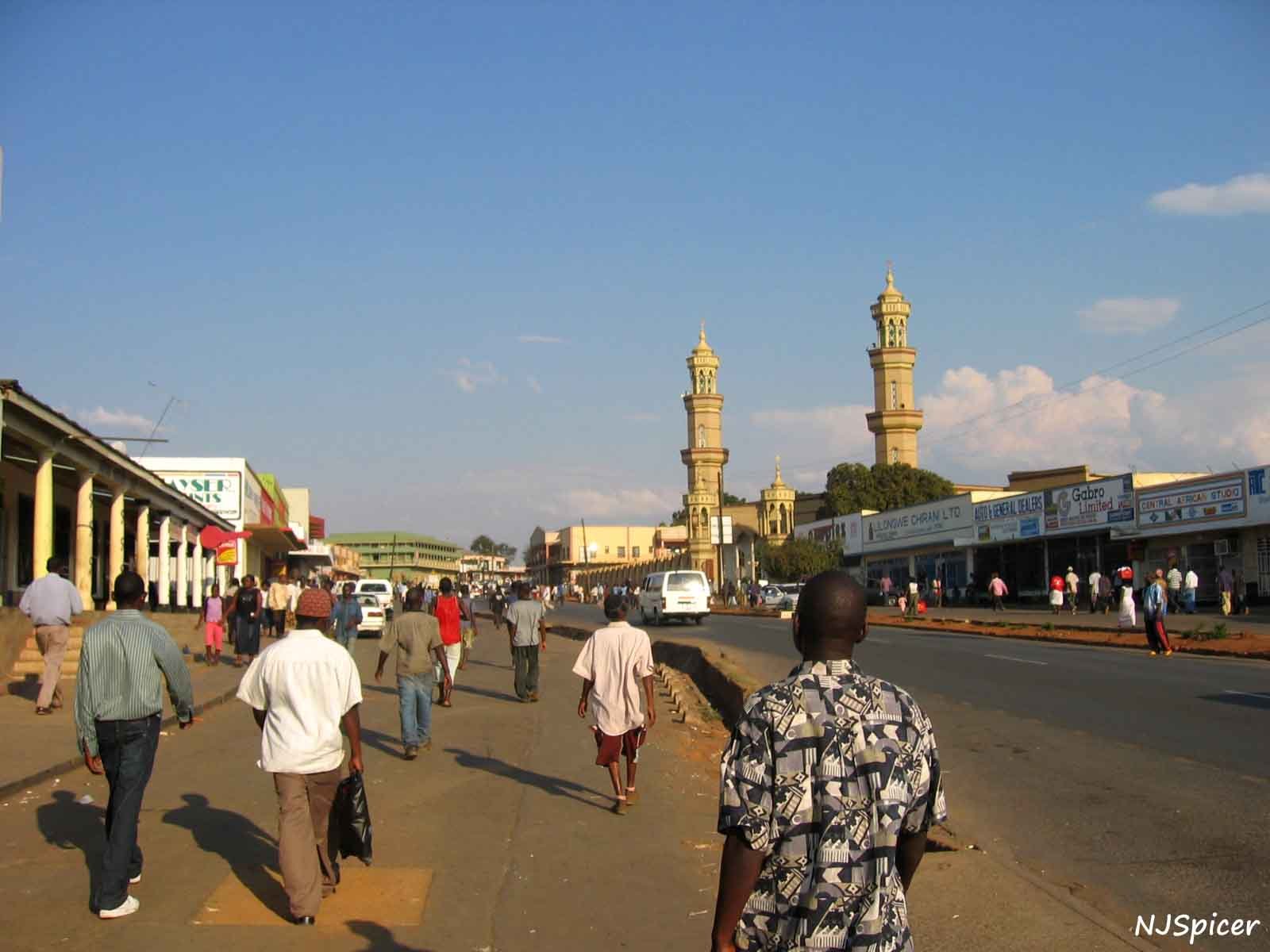
Lilongwe is the capital of Malawi and a city of sharp contrasts: a quiet, green, planned capital of wide avenues and government buildings on one side, and a busy, dusty African market town on the other, with about three kilometres of highway between the two. Most visitors to Malawi pass through it without lingering — Lilongwe is a practical stopover rather than a destination in its own right — but if you have a day or two to fill, it rewards a little exploration.
The city has two distinct halves. The Old Town in the south is where the original Lilongwe grew up around the Old Town Market on the Lilongwe river: busy, crowded, and full of the kind of chaotic African commerce — fish stalls, goat meat, secondhand clothing, Indian shops selling everything — that makes it the most interesting part of the city. The central market is worth half an hour. The nearby Lilongwe Wildlife Centre, a patch of miombo woodland inside the city limits, is a sanctuary for rescued primates, antelope, and an impressive bird list, and it's one of the better ways to spend an afternoon in the capital. The New Town (officially Capital Hill), laid out in the 1970s with South African backing after Lilongwe became the capital in 1975, is where you will find embassies, government ministries, international aid offices, and the modern shopping centres, dominated by the Parliament Building and the Kamuzu Mausoleum. It is leafy, orderly, and has almost no street life — a capital designed by committee.
The main reason most travellers stop is practical: to change money, stock up, hire a vehicle, or book onward travel. Lake Malawi — the country's main attraction — is a three-hour drive east to Senga Bay or five hours north-east to Nkhata Bay. Liwonde National Park, the best game reserve in the country, is about four hours south. If you're flying in, a night in Lilongwe is usually unavoidable; stay in the Old Town for atmosphere, in Area 43 or Capital Hill for the more comfortable business-style hotels.
Malawi is one of the poorest countries in Africa, and Lilongwe wears that honestly — there's no pretending to be somewhere it isn't. But it is also genuinely safe compared to many African capitals, and the Malawian reputation for warmth ("the warm heart of Africa") is not marketing: it is earned day to day in interactions with strangers.