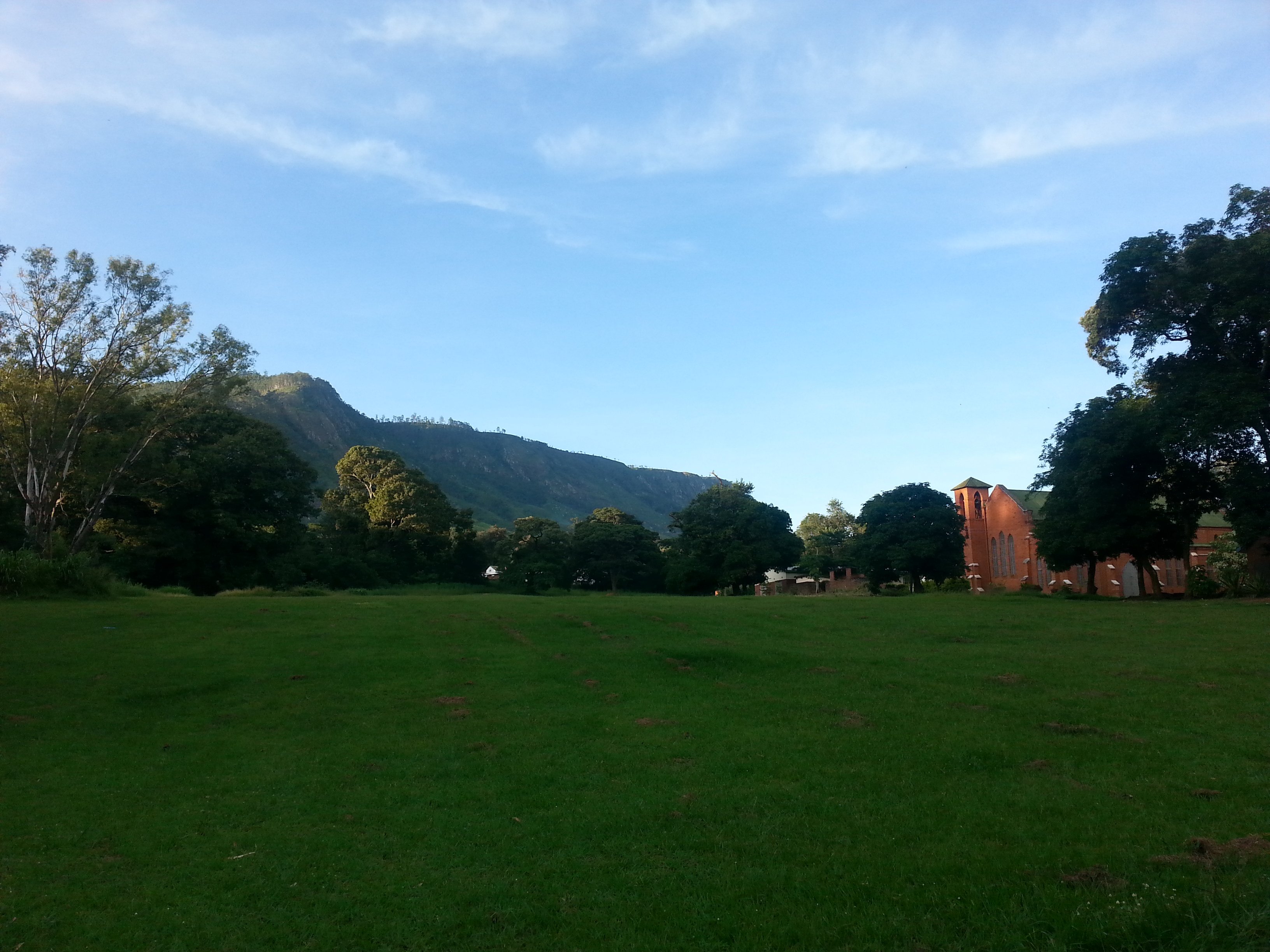
Zomba is one of the most attractive cities in Malawi — a former colonial capital draped along the lower slopes of the Zomba Plateau, with broad jacaranda-shaded avenues, half a century of red-brick colonial architecture, and an unusual amount of greenery. It served as Malawi's capital from 1891 through 1974, when the seat of government moved to Lilongwe, and the city has been quietly genteel ever since. The University of Malawi's main campus is here, which keeps it busier and more cosmopolitan than its size would suggest.
The setting is the headline. The Zomba Plateau rises directly above the city to over 2,000 metres, its forested escarpment a constant visible presence from the streets below. From the city centre you can be walking on the plateau in under an hour by car, which makes Zomba the obvious base for anyone planning to explore the massif. Even without leaving town, the views back up to the cliffs above are striking.
The old town divides between the colonial centre — the State House, old parliament building, and a string of grand homes from the protectorate era — and the busier modern centre with its market, bus rank, and university campus. The KIA shrine to John Chilembwe, the early-twentieth-century anti-colonial leader, is a short walk from the centre and worth a visit for the history alone.
Zomba is reached from Blantyre in about 90 minutes on the main M3 road north, with frequent minibus connections. It is also possible to reach by bus from Lilongwe and the lake. The climate is mild year-round thanks to the altitude (around 950 metres in the city centre); evenings can be cool, especially in winter. Most travellers stay a day or two and combine the city with a trip up onto the plateau.