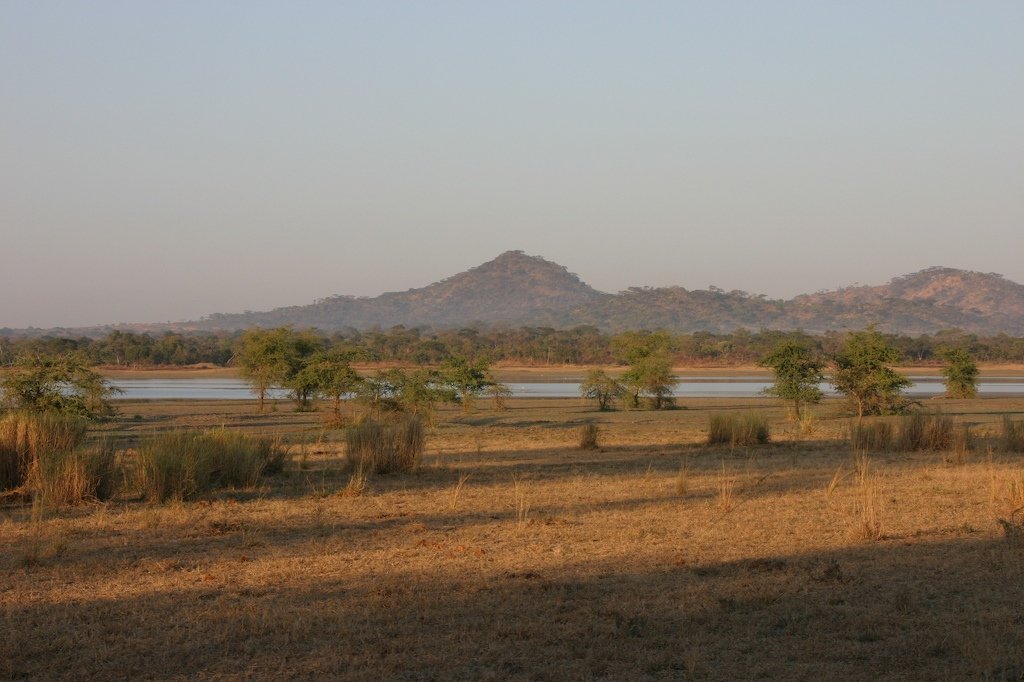
Vwaza Marsh is a 1,000 square-kilometre wetland and woodland reserve in the far north of Malawi, tucked against the Zambian border west of Mzuzu. It is one of Malawi's least-known parks and one of its most rewarding for travellers who prefer their wildlife unaccompanied by other vehicles. The centrepiece is Lake Kazuni, a shallow body of water at the southern entrance, where hippos and elephants come down to drink and where the only accommodation in the reserve looks straight out onto the action.
The reserve contains a mix of brachystegia woodland, dambo grassland, and the marshes themselves, all of which support good populations of elephant, hippo, buffalo, and antelope (sable, roan, kudu, impala). Lion and leopard are present but rarely seen. The birdlife is exceptional — over 300 species, including rare cranes, herons, and storks that congregate around the wetlands. The marshes themselves are seasonal, expanding dramatically after the rains and shrinking back to discrete pools in the dry season.
The accommodation hub is Lake Kazuni Camp, with simple chalets and a campsite at the entrance gate. From here a network of rough tracks runs into the reserve, suitable for self-drive in 4WD or for short walking safaris with armed scouts from the camp. The lake-edge hides at Kazuni are the best place to watch wildlife at close quarters; an evening sundowner here, with hippos grunting in the foreground and elephants drifting through the woodland behind, is what Vwaza is for.
Vwaza is reached from Rumphi, an hour from Mzuzu on the road that continues to Nyika National Park. It is often combined with Nyika in a single trip — the contrast between high-altitude grassland and low-altitude marsh is striking. The dry season (May to October) is best for game viewing; the rains turn the access roads into mud.